
.png)


A customer orders twice, then disappears. Nobody on your team notices, because nothing in your tools is watching for it.
That silence is where most of the damage happens. The business keeps buying new customers to replace the ones it quietly lost, and the cost of doing that climbs every year.
Loyalty is not a feeling you hope for. It is the sum of what your brand delivers, remembers, and gives back.
Building customer loyalty means designing that on purpose instead of leaving it to chance.
What is customer loyalty?
Customer loyalty is a customer's willingness to buy from you again when a competitor is one click away. It shows in behavior, not in survey answers.
Three levels are worth separating: habit, where someone reorders because it is easy; preference, where they choose you over a cheaper option; advocacy, where they recommend you without being asked.
Loyalty differs from retention. Retention counts who stayed; loyalty explains why. A customer locked into a contract is retained, not loyal, and you find out which at renewal.
It also differs from satisfaction. A satisfied customer will leave for a better offer; a loyal one gives you the chance to fix things first.
The critical importance of customer loyalty
The economics are lopsided. A returning customer costs nothing to acquire, already trusts your delivery, and needs no convincing about quality.
The gap is measurable. According to the Loyalty Benchmark 2026 by Loyoly, based on 600 ecommerce brands, program members generate 175.4% more lifetime value over twelve months than comparable non-members.
Loyal customers also stabilize revenue. When acquisition gets more expensive or a competitor cuts prices, a committed customer base absorbs the shock that a traffic-dependent business takes in full.
And they cost less to serve. People who know your products raise fewer issues, contact support less often, and cause fewer returns.
Understanding the key drivers of customer loyalty
Product and service quality
Nothing on this list survives a product that disappoints. Quality is the floor, and no rewards program compensates for a customer who received something worse than expected.
Consistency matters more than peak quality. A product that holds up every time beats one that is excellent four times out of five.
Great experiences are built from small services rather than grand gestures. A gift receipt, a spare part, an easy exchange: each costs little and each is remembered.
Exceptional customer service
Customer service is where a relationship is tested. Most customers only contact you when something has already gone wrong, which makes it the highest-stakes interaction you have.
Speed of first reply predicts satisfaction better than resolution time. Silence worries people more than a delay they were warned about.
Customer service is a business function, not a cost center. A business that staffs it properly sees fewer refunds, and the customer experience improves everywhere the team touches it.
Consistent brand experience and values
Your brand is what customers can predict about you. A great experience on the website and a careless one in the parcel read as two different companies.
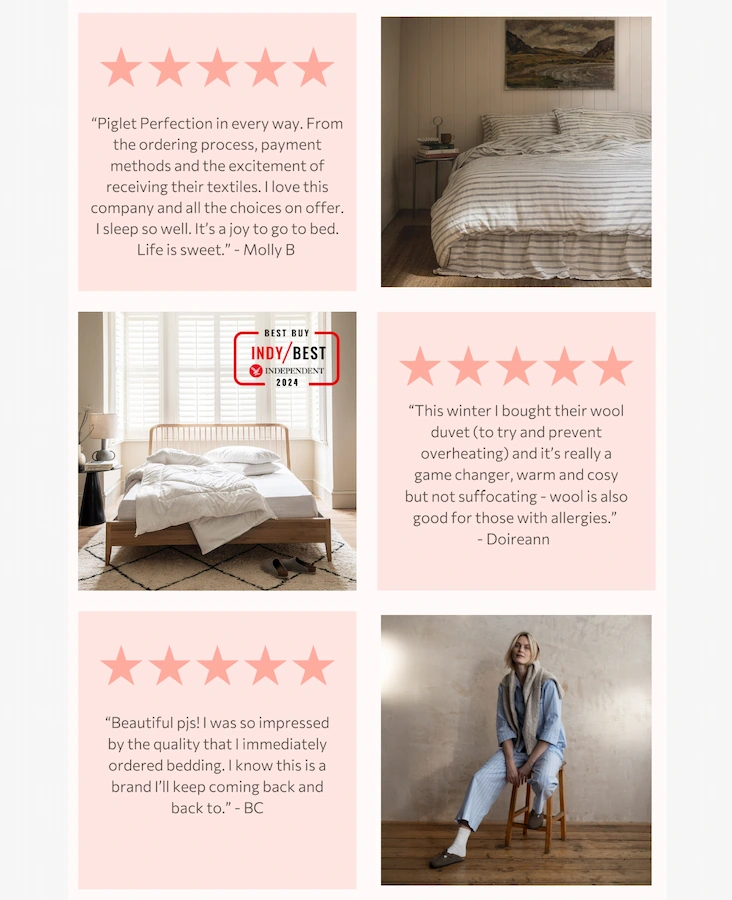
Values carry real weight now. The Industry Report 2025 by Loyoly found brand values weigh on 34% of consumers at first purchase, up seven points on the previous year.
Fair pricing and value proposition
Loyalty does not require the lowest price, but it does require a price that feels honest. Charging existing customers more than new ones is the fastest way to break trust.
The most important service you provide is the one nobody sees: keeping the promise you made at checkout. Customers who trust your dates stop checking, and that trust is what a positive relationship rests on.
Make the value proposition explicit. If people cannot say what they get from you that competitors do not provide, the relationship rests on habit alone.
Personalization and understanding customer needs
Personalization starts with the data you already hold. Purchase history, sizes, and stated preferences tell you more than any third-party segment.
The line to respect is intrusion. A recommendation based on a recent order lands well; a reminder about something browsed ten minutes ago feels like surveillance.
Community and emotional connection
People stay with brands they feel part of. A private group, an early look, or a vote on the next range creates an attachment that discounts never buy.
Emotional connection is also the hardest thing for a competitor to copy. A pricing advantage lasts a quarter; a community takes years to build.
Shared experiences build stronger loyalty than shared price cuts. A behind-the-scenes visit, a repair session, or a customer story on your blog gives people something to belong to.
Creating loyalty is less about grand strategies than about solutions to small problems. Your customers name those problems in their feedback, and a brand that reads it closely already knows what to fix.
Proven strategies to build and enhance customer loyalty
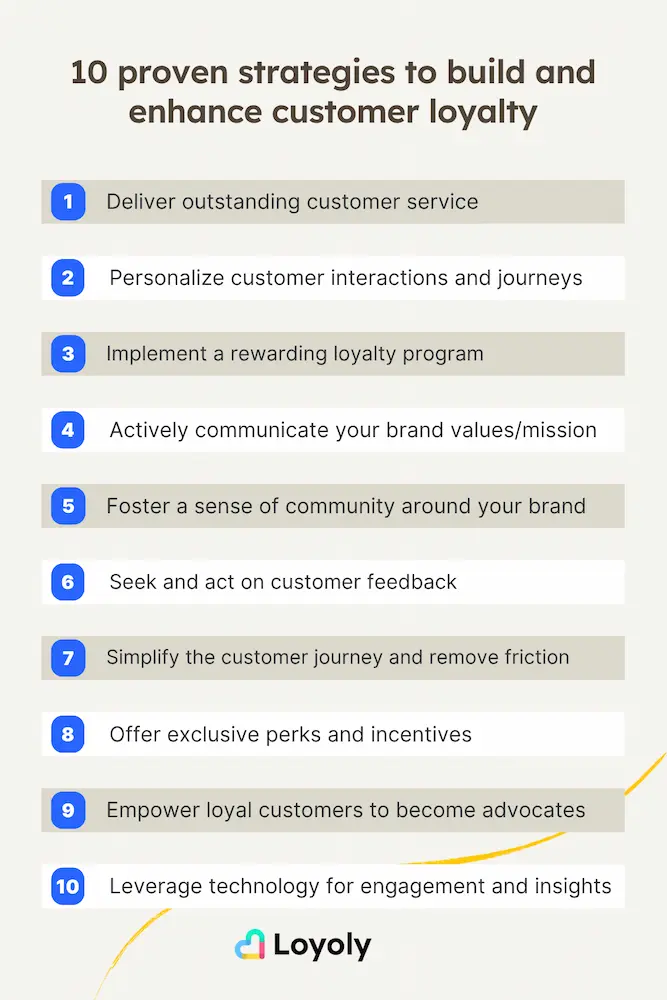
1. Deliver outstanding customer service
Make yourself easy to reach. A visible phone number, an address that answers within a working day, and honest hours beat a chatbot that loops.
Give your team room to decide. An agent who can offer a gesture without escalating settles in minutes what otherwise becomes a public complaint.
Publish your service standards and hold to them. Customers who know they will hear back within a working day contact you calmly, and a business that answers well turns a complaint into trust.
2. Personalize customer interactions and journeys
Segment by behavior rather than demographics. Someone who orders monthly and someone who has not ordered in a year need different messages, not the same newsletter.
Use what customers told you. Preferences given at signup are accurate and consented, which makes them worth more than anything you could infer.
Personalization is the cheapest way to improve the customer experience. Use what you know about the products someone bought, their sizes, and the channel they chose, so each message reads as written for one person.
3. Implement a rewarding loyalty program
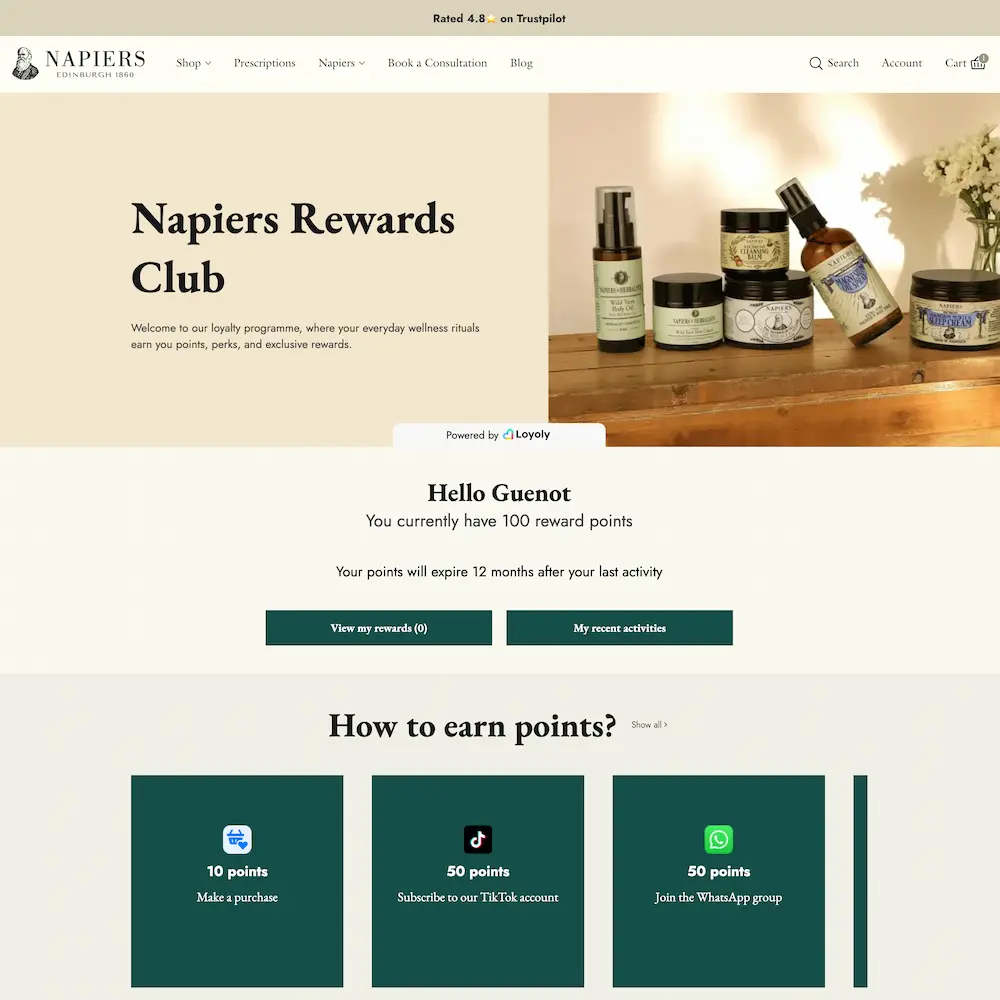
A customer loyalty software does the work nobody has the time to do by hand: crediting points on each order, managing tiers, and surfacing the reward at the moment it converts.
Design the first reward to be reachable in one or two orders. If it takes six months, people stop paying attention long before they get there.
Programs help most when they stay simple. Products people already want, rewards they understand, and a strategy the whole team can explain beat any sophisticated design.
Reward more than spending. Completing a profile, leaving a review, or sharing a photo all give you something valuable, and they let you recognize customers between purchases.
The point of a program is to improve customer retention without cutting price.
A well-built program improves the customer experience rather than bolting a discount onto it. The customer sees a balance that grows, a status that means something, and a reason to return.
4. Actively communicate your brand values and mission
Say what you stand for in places customers actually read: the product page, the packing note, the order confirmation. An about page nobody visits does no work.
Show the proof alongside the claim. A named supplier or a published figure carries what an adjective cannot.
Your blog is the natural place for this. A post explaining how a product is made, or why you changed a supplier, does more for trust than a values page nobody opens.
5. Foster a sense of community around your brand
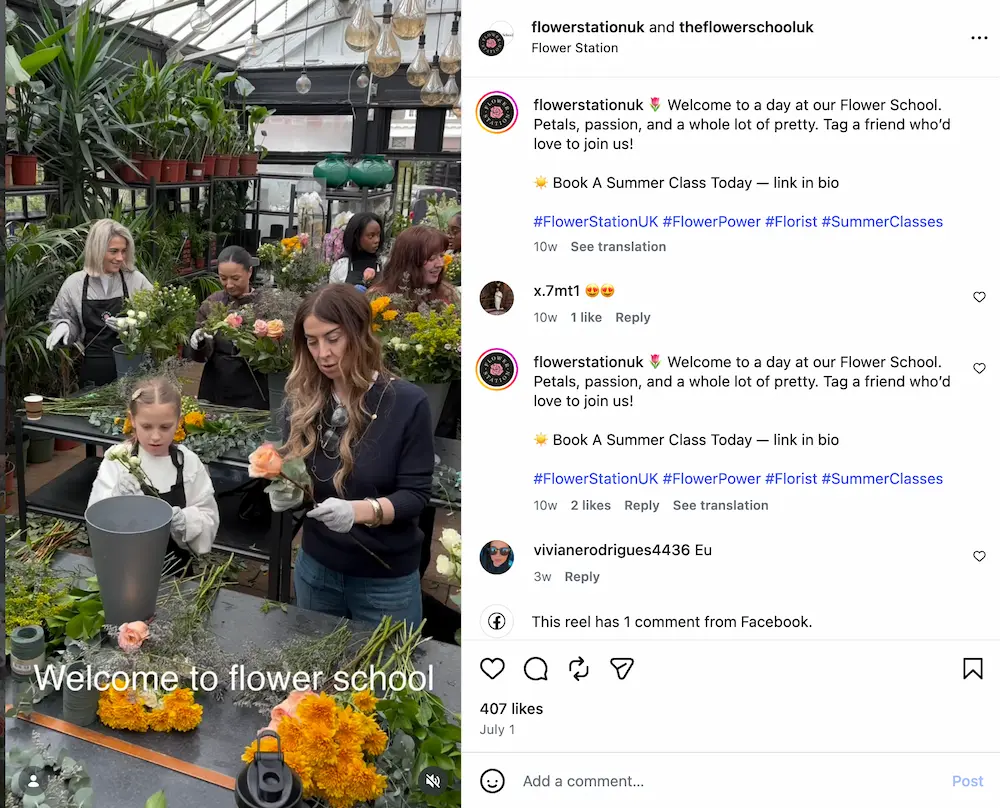
Give people a reason to gather that is not a sale. A group where customers help each other, a workshop, or an early look at what is coming next.
Community needs staffing. An unanswered group damages your brand faster than never opening one, so budget the time before you launch it.
Social media works differently from a community you own. Share the questions customers ask on social media, then answer them properly on your blog, where the answer stays findable.
6. Seek and act on customer feedback
Ask at the moment the experience is fresh. A two-question survey after delivery gets better answers than a long form sent weeks later.
Close the loop out loud. Telling customers what changed because of their feedback is the cheapest loyalty you will ever earn, and it makes the next round of feedback richer.
Feedback is only valuable if someone owns it. Give one person the job to read it every week, and let the whole business see what customers keep asking for.
Long-term relationships need maintenance. Ask for feedback after the experiences that matter, act on it, and say what changed: that loop is what turns a first order into a habit.
7. Simplify the customer journey and remove friction
Every extra step between wanting and buying costs you orders. Guest checkout, saved addresses, and a search that works are loyalty features, whatever your analytics call them.
Buy from your own store on a phone once a month. It surfaces more problems in ten minutes than any audit you could commission.
Look at where customers give up. Analytics tools show you the step that loses people, and fixing one bad screen does more to improve the experience than a redesign.
Map the experiences your customers actually have, not the one your site diagram shows. The gap between the two is where loyalty leaks.
8. Offer exclusive perks and incentives
Exclusive access beats another discount. Reserving a new range for members for forty-eight hours costs nothing and signals who matters.
Keep some perks unannounced. A gift in the parcel or a reward credited for no reason lands harder than a benefit people expected.
Services work as perks too. Free repairs, a fitting guide, or a subscription that saves reordering all give a customer a reason to stay, and none of them is a discount.
9. Empower loyal customers to become advocates
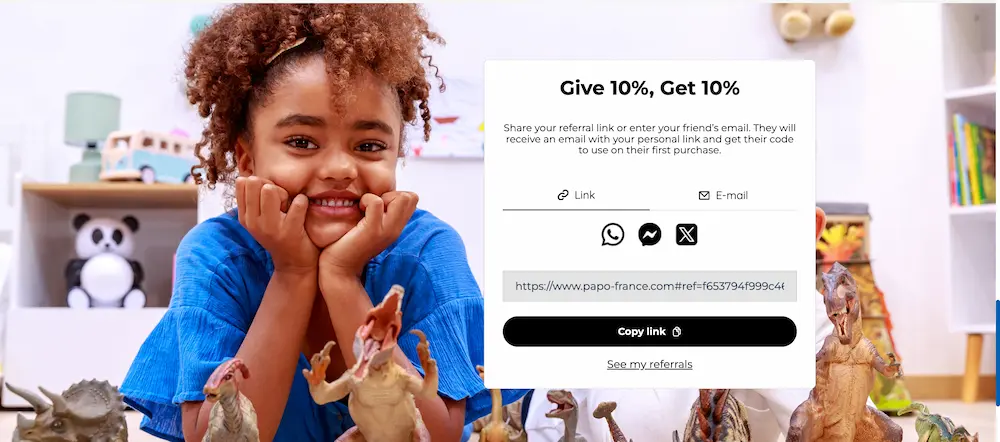
Your best customers will recommend you if you make it a single gesture. A referral software turns word of mouth into something countable: a unique link, a reward on both sides, validation at the friend's first paid order.
The conversion gap is wide. Loyoly's Loyalty Benchmark 2026 puts first-purchase conversion at 37.1% among invited friends, well above any paid channel.
Reward the advocate as well as the friend. Someone who gets nothing for the introduction feels like an unpaid salesperson, and the invitations stop.
Advocacy is the clearest signal a relationship is working. Customers who share your brand with a friend are telling you the experience was good enough to put their own name behind.
10. Leverage technology for engagement and insights
Three tools carry most of the load: a CRM that holds the history, an emailing solution that acts on it, and a loyalty platform that rewards the behavior you want to see more of.
Connect them or the effort leaks. A reward that your support team cannot see, or a segment your campaigns ignore, produces reports nobody reads.
Choose tools that give you insights, not dashboards. Data you cannot act on is a cost; data that tells you which customers to help first pays for the software.
Measuring customer loyalty: Key metrics and analysis
Customer lifetime value (CLV)
CLV combines average basket, purchase frequency, and how long someone stays. It is the metric that lets you compare an acquisition budget and a loyalty budget on the same scale.
Track it by cohort, not as a single company average. A blended figure hides the fact that last year's customers behave nothing like this year's.
Net Promoter Score (NPS)
NPS asks how likely someone is to put your name forward. Read the trend rather than the absolute score, and read the comments before the number.
Follow up on detractors within the week. A bad score you act on is worth more than a good one you file.
Repeat purchase rate
This is the most honest indicator on the list, because it counts what people did rather than what they said. Split it by first, second, and third order.
The jump from one order to two is where most brands lose the game. Fix that step before optimizing anything further down.
Understand this one before optimizing anything else. A business that knows its repeat rate by cohort can price acquisition properly; one that does not is guessing.
Churn rate
Churn in ecommerce is silent. Nobody cancels, they simply stop ordering, so you have to define the point at which a customer counts as gone.
Set that threshold on your own rhythm. If people normally reorder every two months, four months of silence is your signal, not twelve.
Satisfaction, engagement, and referral signals
Customer satisfaction surveys, program engagement, and referral volume complete the picture. Each one catches something the others miss.
Scores tell you how the experience felt. Customer service tickets tell you where it failed, and the two together give a business a fuller picture than either alone.
Watch how many earned points get spent. Loyoly measures only 16.1% of credited points actually redeemed across 600 brands, and a balance nobody spends motivates nobody.
Building customer loyalty for long-term growth
The role of data in loyalty initiatives
Declared data is the asset a loyalty program builds. Birthdays, preferences, and channel choices are accurate because customers gave them to you in exchange for something.
Handle it properly. Say what you collect and why, keep your privacy terms readable, and delete what you no longer use.
Making loyalty a company-wide effort
Loyalty fails when it belongs to marketing alone. Support sees the issues first, logistics decides whether the promise holds, and product decides whether people come back at all.
Give those teams the same customer view and a shared metric. A management team that reviews repeat purchase rate monthly gets a different company than one that reviews acquisition only.
Loyalty is a business strategy, not a marketing campaign. The companies that treat their customer base as an asset make different decisions from those that count it as a list.
Size is not the constraint. A small business that answers every message beats a large one running sophisticated strategies with no time for its customers.
Frequently asked questions about customer loyalty
What is the difference between customer loyalty and retention?
Retention measures who stayed. Loyalty explains why they stayed, and whether they would stay without a contract, a lock-in, or a discount holding them there.
How do B2B and B2C loyalty strategies differ?
In B2B the buyer is rarely the payer and terms are negotiated. Service level, training, priority stock, and dedicated conditions do the work that rewards do in B2C.
How often should you ask for customer feedback?
After the moments that matter: a first order, a support case, a return. Two questions each time beats one long survey a year that nobody finishes.
What are the most effective types of loyalty rewards?
Store credit and free products come first, because their value is obvious. Exclusive access works well on brands with a strong identity, and point multipliers convince almost nobody.
Can a CRM system help build customer loyalty?
Yes, as the place your customer history lives. It does not reward anything on its own, so pair it with a loyalty platform and an emailing tool that act on what it knows.
Loyalty is built in the ordinary moments: an order that arrives when promised, a reply that solves the issue, a reward that shows up without being chased. None of it is dramatic, and all of it compounds.
At Loyoly, we help more than 600 ecommerce and retail brands turn one-off buyers into repeat customers, through loyalty, referral, and post-purchase engagement. If customer loyalty is on your roadmap this year, it is worth a conversation: book a demo.




.webp)