Create referral programs that celebrate every valuable interaction. With Loyoly, you can transform data into engaging content and reviews, recognizing and rewarding the actions that genuinely fuel your brand's growth.


Go beyond traditional programmes and discover the future of post-purchase engagement.


Referral program software turns your existing buyers into an acquisition channel. It gives each customer a unique link, tracks who signs up or buys through it, and pays out the agreed reward to both sides automatically.
Without it, referral is a spreadsheet and a discount code, which works until the tenth participant and then quietly stops. The software handles the parts that do not scale by hand: attribution across devices, reward distribution, reminder timing, and the fraud checks that keep the whole thing honest.
The category sits between your shop and your customer data. It reads orders from your e-commerce platform to know when a recommendation qualifies, and pushes the resulting profiles back into your CRM so the people who advocate are visible everywhere else you work.
AReferral is not affiliate marketing, and the two need different tools. An affiliate program pays commission to publishers, creators and partners who promote you to an audience they own. A referral program rewards actual customers for recommending you to people they know personally.
The distinction matters because the trust mechanics are opposite. An affiliate recommendation is a paid placement. A customer recommendation carries the weight of a personal relationship, which is why referred buyers convert at rates no paid channel reaches.
That difference runs all the way into the product. Software built for affiliates optimizes commission tiers, tracking cookies and payout schedules for people who are effectively media partners. Software built for referral optimizes sharing friction and reward design for people who are not marketers and will only ever send a handful of invitations.
In practice, one cannot substitute for the other. An affiliate tool asked to run a customer program produces a clumsy experience and no useful reporting, because it was built to manage partners rather than to make recommending effortless.
Referral is the only acquisition channel that gets cheaper as it grows, because the people doing the work are already your customers.
A recommendation from a friend clears the doubt that advertising has to spend money to overcome. The Loyoly Industry Report 2025, a survey of 1016 French consumers, found that 59% of loyal customers are willing to recommend a brand around them, ahead of every other action they will take for free.
That willingness already exists in your base. Referral software is simply the mechanism that lets you collect it instead of hoping it happens on its own.
Paid channels bill you per click whether the visitor converts or not. Referral pays out only when someone actually buys, which turns acquisition cost into a variable you control rather than an auction you bid in.
The conversion gap is the reason it works. Across the 600+ e-commerce brands in the Loyoly Loyalty Benchmark 2026, 37.1% of invited friends go on to make a first purchase. Home and decoration reaches 44.1%, petcare 42.2%.
Referred buyers arrive pre-qualified, and the people who refer them are worth more too. Loyoly measures LTV 30% higher among customers who refer than among those who do not.
The act of recommending strengthens the relationship it comes from. Someone who has publicly vouched for you has more invested in the relationship than someone who has only bought from you.
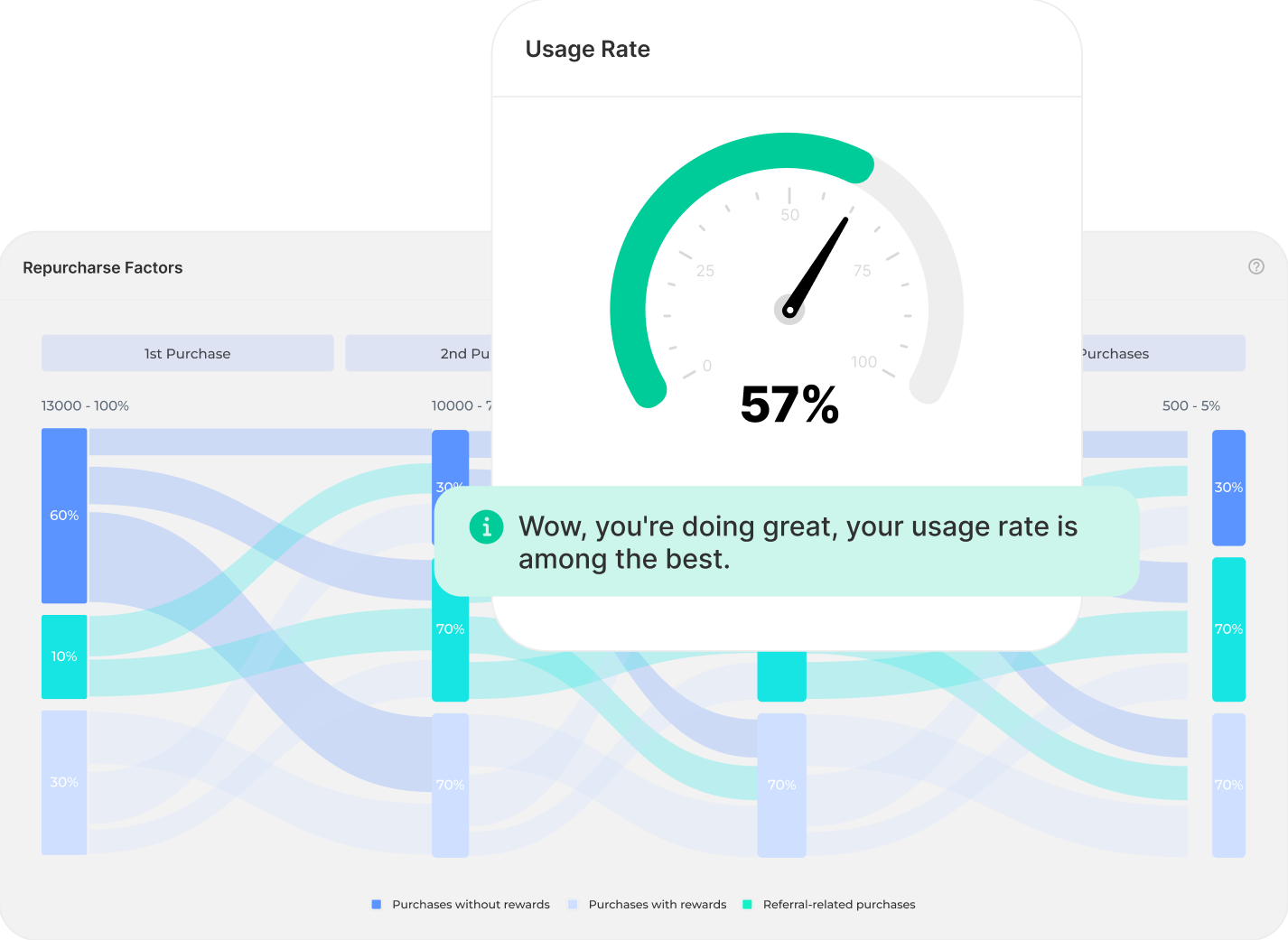
Referral and retention feed each other. A customer who brings a friend has a reason to come back with them, and the friend arrives already primed by someone they trust.
This is why referral belongs beside your loyalty program rather than in a separate tool. The same person earns points, climbs tiers and recommends you, and splitting those behaviors across two systems makes it impossible to see the full picture of what they are worth.
A referral program tells you which customers advocate, which segments respond to which incentives, and which touchpoints actually generate sharing.
That data closes a loop most brands never close: you learn not just who buys, but who brings others. Those two groups overlap less than you would expect, and knowing the difference changes how you segment.
This list covers what changes outcomes once the program is live, based on what Loyoly does rather than on a generic feature grid.
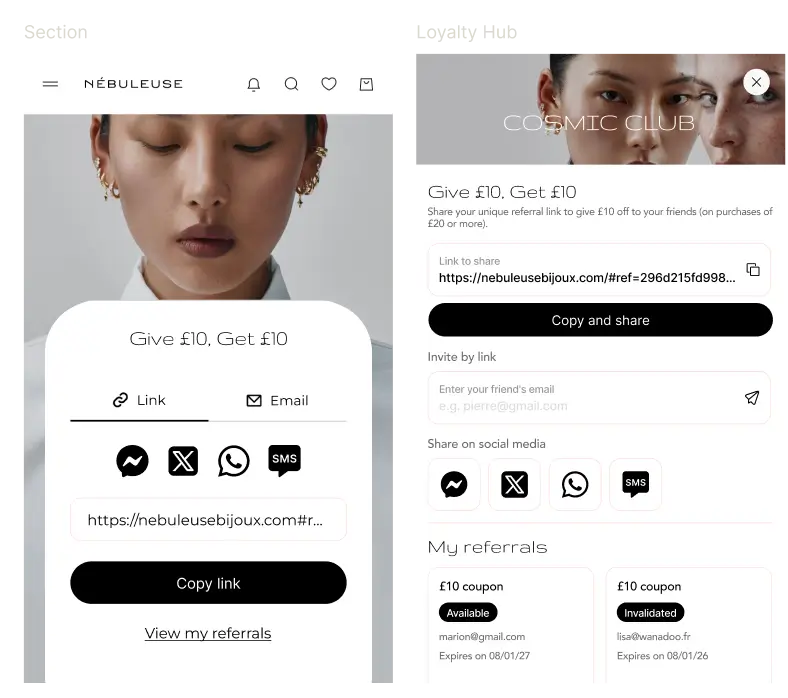
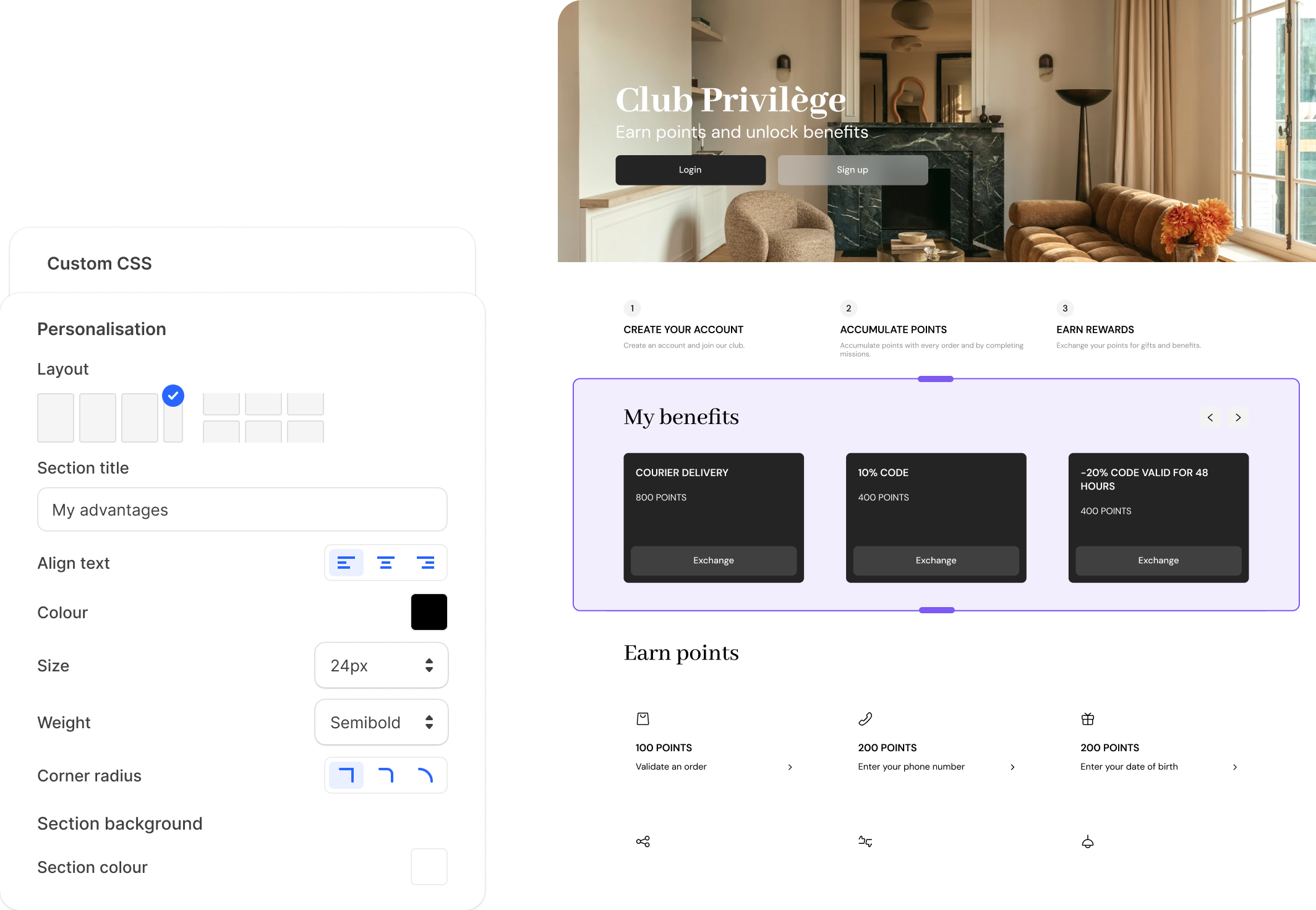
Your referral pages should look like your brand, not like your vendor. Loyoly provides ready-to-use pages you can brand, custom reward definitions, white labeling and a CSS page builder on the Premium plan.
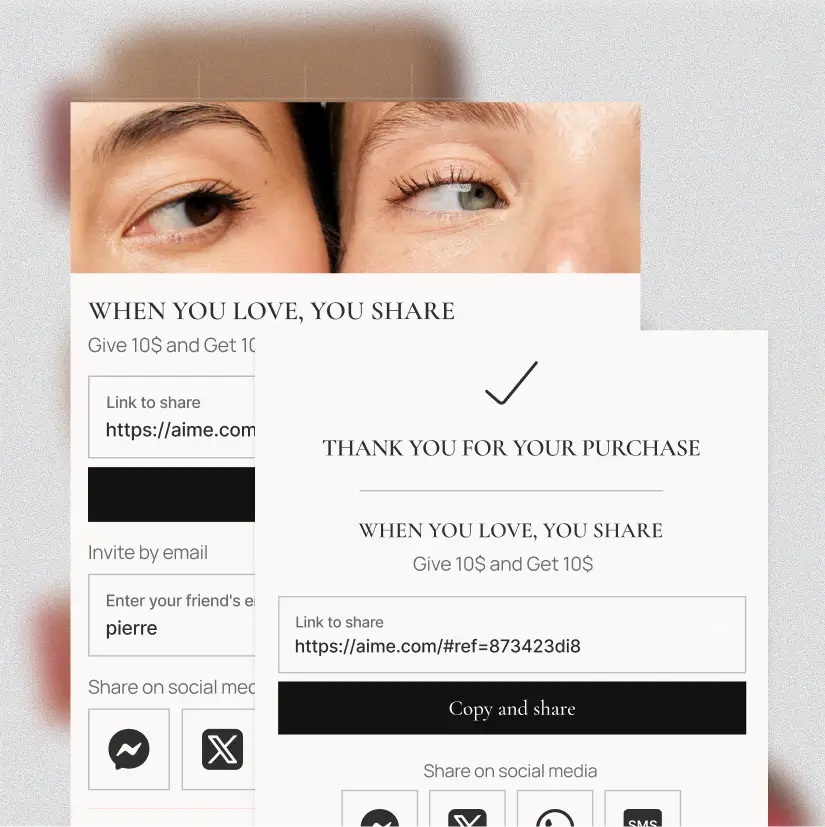
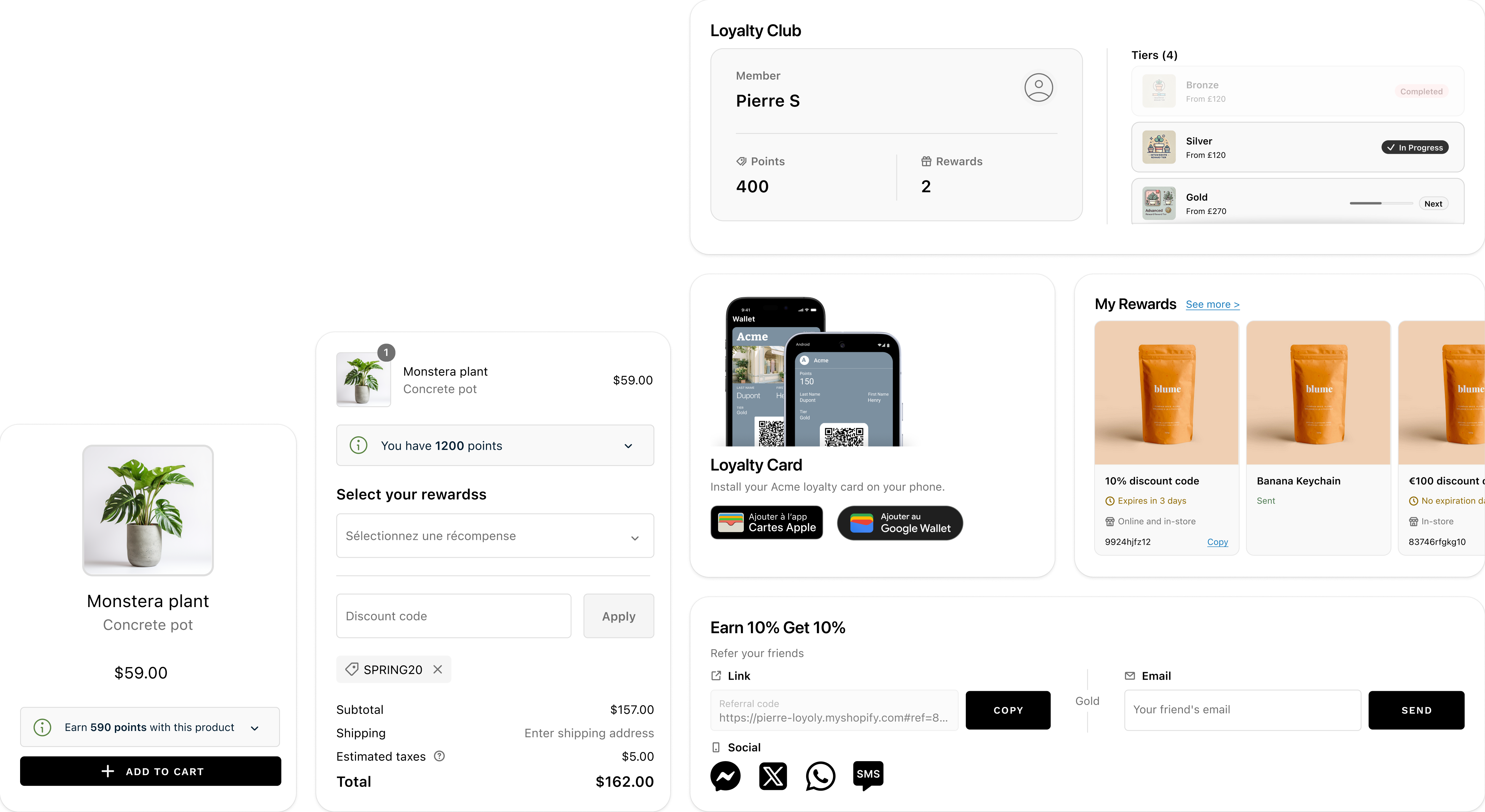
Sharing friction is the single biggest lever on participation, and it is mostly a channel question. Loyoly lets customers send their link through WhatsApp, SMS, email, X or Messenger, so recommending you takes one tap in an app they already have open.
A program nobody sees produces nothing. Built-in extensions surface referral on a dedicated page, inside the customer account and on the thank-you page, which is the moment enthusiasm peaks.
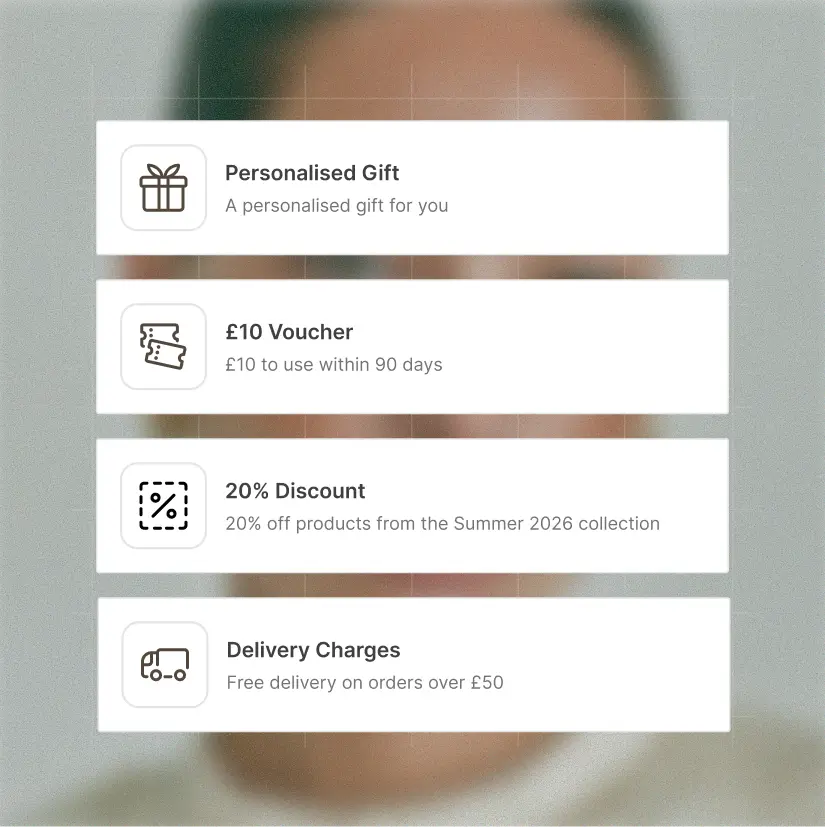
Referrer and friend do not want the same thing. Loyoly handles discounts, promo codes, loyalty points, gifts and store credit, configured independently for each side.
Store credit deserves particular attention. A promo code gets used once and forgotten. A credit balance sits in the customer account as something they own and do not want to waste, which pulls them back on its own.
A flat reward stops motivating after the first success. Progressive goals give advocates something to climb toward, with larger payouts as they bring in more people, which is what turns an occasional sharer into a repeat one.
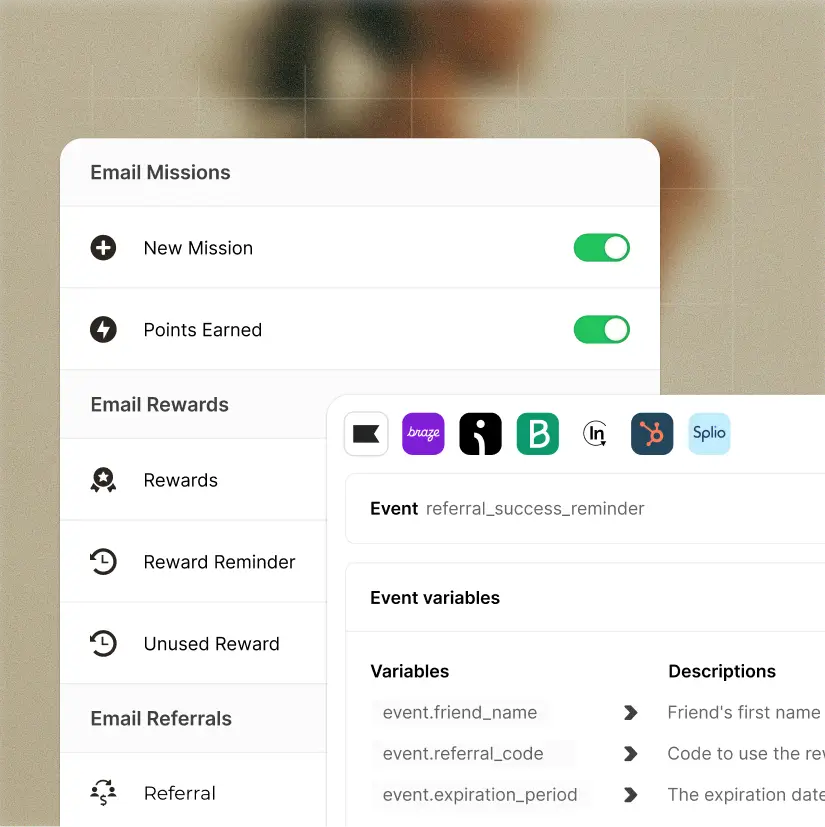
Loyoly sends referral invitations and reminders at the right moment automatically, triggered by lifecycle signals rather than sent on a fixed schedule. It also follows up with your best advocates to prompt repeat sharing.
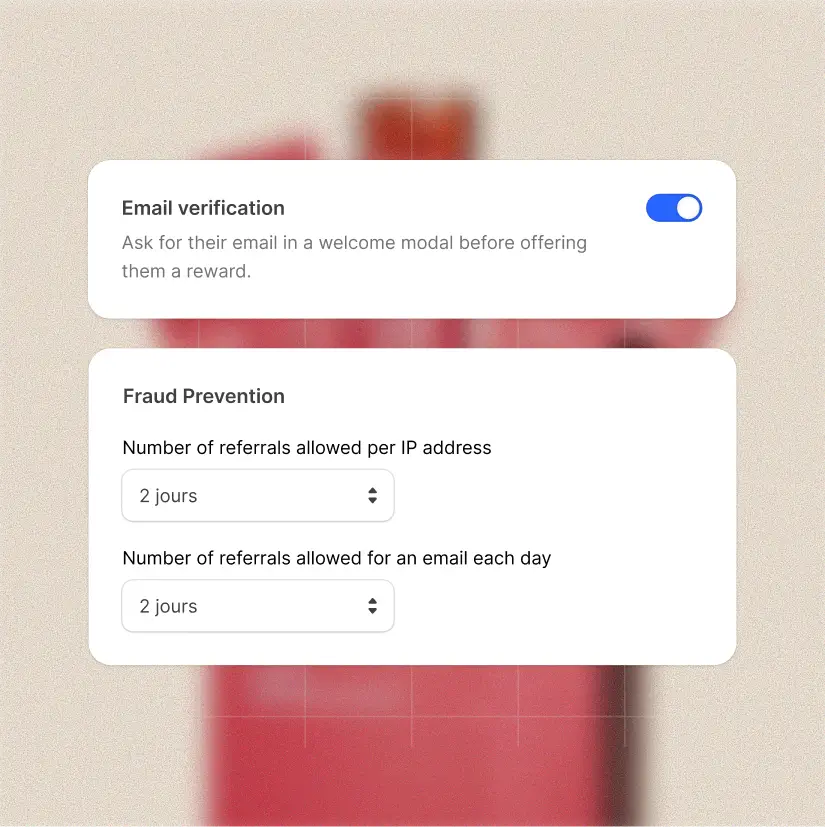
Any program that pays out attracts people who game it, and self-referral is the most common form. Loyoly limits referrals by IP address, automatically detects suspiciously similar email addresses, and lets you block or unblock an individual manually.
Check this before you sign. A program without these controls will pay real money to the same person twice, and you will find out from your finance team rather than your dashboard.
Referral data is only useful where the rest of your customer data lives. Loyoly runs natively on Shopify, Shopify Plus and PrestaShop, and connects to Klaviyo, Braze, Brevo, HubSpot, Insider, Omnisend, Gorgias, Recharge and Typeform among others, with webhooks for anything custom.
If your stack depends on a specific connector, confirm it exists before committing. Anything requiring custom development on either side is rarely quick.
Two audiences, two standards. For your team, everything is configured from the back office with no code and no developer time. For customers, sharing has to work in one tap or it does not happen.
Small brands use Loyoly for its simplicity, larger ones for advanced tracking, fraud controls and deeper integrations. Pricing is indexed to monthly order volume, so the cost follows the results rather than arriving as a step change.
This is the structural difference between Loyoly and a standalone referral tool. Points, VIP tiers, engagement missions, wallet and referral run in one system and one plan, on the same customer record.
The practical consequence is that a referral can pay out in loyalty points, a tier upgrade can be triggered by bringing in a friend, and your reporting shows one customer rather than two half-customers in two tools.

Four mechanisms do the work. Any tool worth paying for handles all four without manual intervention.
Each customer gets a unique link. When someone opens it, the software records the visit and ties any resulting order back to the person who shared it, across devices and sessions.
Attribution is where cheap tools fail. If a friend clicks the link on mobile and buys on desktop three days later, weak tracking loses the connection and the referrer never gets paid. That single failure kills participation faster than any reward problem.
Once an order qualifies, both sides receive what they were promised, without anyone approving it manually. With Loyoly you define rewards for the referrer and the friend separately, as discounts, promo codes, points or gifts, and the payout runs on its own.
Speed matters here. A reward that lands days after the qualifying order breaks the link between the action and the payoff, and the participant stops sharing.
Most people who join a referral program never share anything, not because they refuse but because nobody reminded them at a moment when it made sense.
Good software sends the invitation when the customer is most receptive, typically just after a positive experience, then follows up with the ones who shared before. Loyoly triggers these messages on customer behavior and lifecycle signals pulled from your CRM, and follows up automatically with the advocates who already brought someone in.
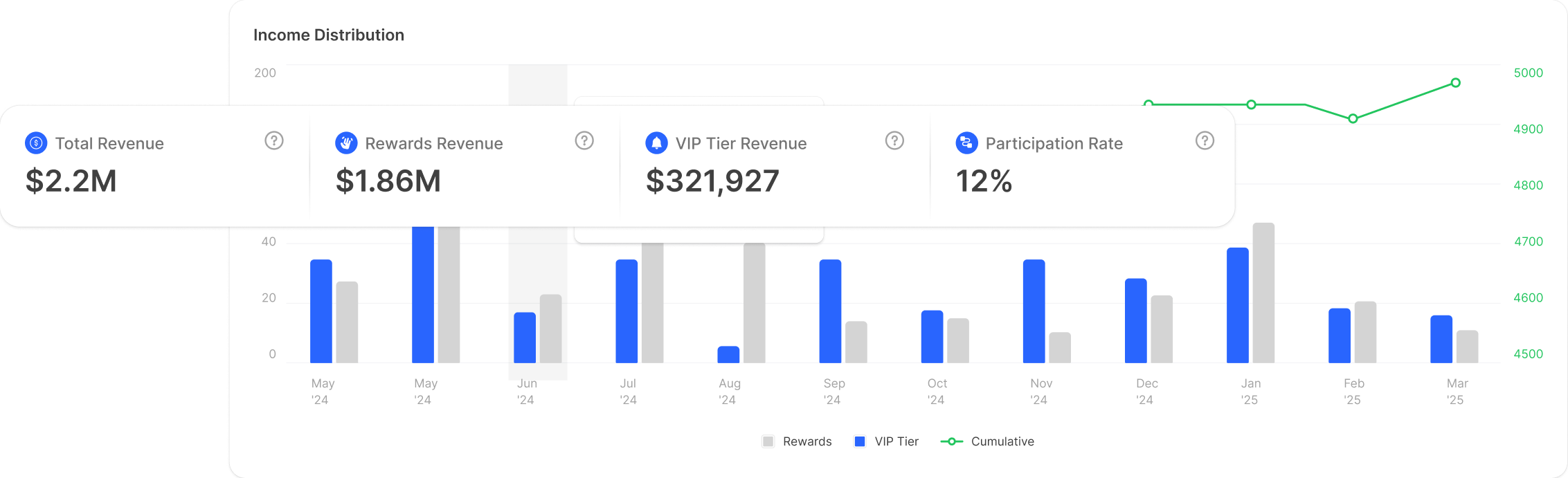
You need to know three things: how many people shared, how many friends converted, and what the whole thing earned against what it paid out.
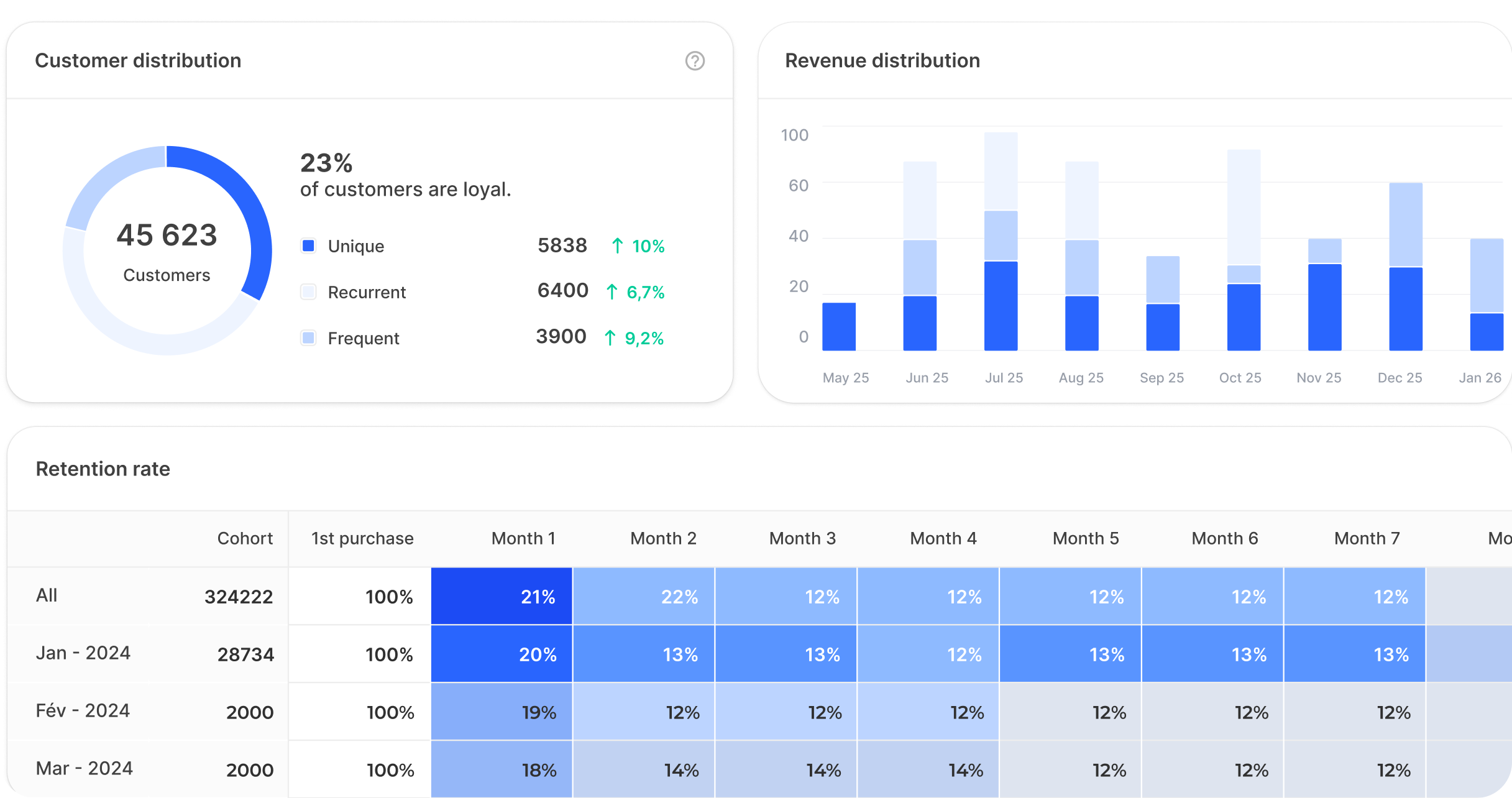
Anything less and you are running a discount scheme with extra steps. Loyoly reports on distribution by segment and cohort behavior, so you can see which groups drive the channel rather than just the total.
Four questions settle most of the decision, and none of them is a feature comparison.
Recruiting buyers at a lower cost, raising the worth of your best advocates, or waking a dormant base do not produce the same design or the same rewards.
Write the number down before the first demo. It is the only way to judge whether a capability you are being shown will move it or simply look impressive.
Be wary of per-module grids where every capability carries its own line. With Loyoly, referral starts at 37 € per month on its own, or 99 € per month bundled with loyalty, with no mandatory setup fee.
Ask what happens when volumes rise. Pricing indexed to monthly orders scales with the results, while a fixed tier structure produces a jump you did not plan for.
Plug-and-play installs in hours and suits small teams testing the idea. Its ceiling arrives quickly: little customization, few connectors, and a functional limit you hit as soon as the program takes off.
Custom development is the opposite trade, total freedom against a high cost and permanent maintenance, and it only makes sense for genuinely unusual mechanics. All-in-one platforms sit in between and cover what most teams need, which is where Loyoly is positioned.
You are handing a vendor your customer records, so ask about hosting, encryption and documented GDPR compliance rather than assuming them.
On support, ask for the response time and the name of the person who will follow your account. Loyoly answers in under two minutes, assigns a dedicated account manager from the Premium plan, and runs onboarding as a strategic exercise rather than handing over documentation. A free 7-day trial lets you judge before committing.
Four European e-commerce companies, four different setups. In all four, referral runs alongside loyalty inside the same platform.
Recommendation sits at the center of the Jolly Club, alongside tiers and an extension that shows the balance while people pay. It produced 637,000 € in revenue, a 69x monthly return, tripled LTV, and collected over 15,600 opt-ins and 1,900 reviews.
The lesson is about placement. Surfacing the mechanic inside the payment flow, rather than on a page people have to go looking for, is what drove signups.
This refillable home and hygiene label launched Pimpant Family with tiers, recommendation and a checkout integration. It reports 240% more LTV, 2.7 times more orders and a 17x monthly return, with 71,600 opt-ins and 3,300 reviews gathered along the way.
Look at the opt-in volume rather than the headline. A setup designed to collect consent converts retention work into an owned audience you can reach again without paying for it twice.
Club Coucou Suzette pairs earning on purchase with a flat 5 € for each side of a recommendation, plus engagement missions.
Average order size rose 54%, LTV grew fivefold, and the return reached 7x monthly, with active members buying three times more often than everyone else.
This digestive health company runs four VIP tiers, review and photo missions, and a 20 € reward for referrer and friend alike. In six months it carried 18% of total sales, lifted LTV by 25% and recorded 30,000 customer actions.
That last figure is the revealing one. Thirty thousand actions in half a year means people are doing something other than buying, which is exactly what keeps you present between orders.
Most underperforming programs fail on design rather than on the software. These four account for the majority of it.
Simplicity is not a nice-to-have, it is a documented driver. The Industry Report 2025 found that 33% of consumers cite the simplicity of the process as what pushes them to refer, ranking it above pride in the brand.
Motivation itself is straightforward: 61% say a financial benefit for themselves is the main trigger, and 45% cite a benefit for the person they invite. Build for those two before you design anything clever, and be careful about over-rewarding. The same study shows willingness to recommend actually drops 5 points when the recommendation is motivated by a reward rather than made spontaneously.
This is the largest gap in the category. 47% of consumers say they rarely or never share a referral code, while only 17% do so often.
That is rarely refusal. It is a program sitting on a page nobody visits, mentioned once in a welcome email and never again. Surface it where customers already are: the account page, the order confirmation, the post-purchase sequence, and the moment a review comes back positive.
A referral that goes unrecorded is worse than no program, because someone made the effort, told a friend, and got nothing for it. That person does not try again.
The benchmark shows referred buyers accounting for 1.5% of all new customers on average, with sports and fitness reaching 2.4%. Brands well below that number usually have an attribution problem rather than an enthusiasm problem, and the fix is technical rather than promotional.
Referral raises questions no other channel does. Did my friend use the link? When does my reward arrive? Why was my code refused? Every one of those is a participant deciding whether to bother again.
A vendor that leaves those unanswered turns a working program into a support backlog, and the participants who gave up rarely come back to it.