Engage customers after every purchase, reward meaningful actions, and activate loyalty across all channels with a flexible loyalty platform.


From automated workflows to deep analytics, everything you need to run a world-class post-purchase experience without a developer on standby.


.png)


A loyalty platform is the layer that turns one-off buyers into repeat customers. It tracks what each customer does, credits points or rewards for those actions, and gives your team the controls to decide what gets rewarded and how much.
The basic mechanics are simple: a customer earns points, reaches a threshold, and redeems something worth having. What separates a modern tool from a stamp booklet is everything around that loop. Tiers that create standing, invitations that bring in new customers, missions that reward actions beyond the checkout, and analytics that tell you whether any of it is making money.
Most solutions sit between your shop and the rest of your stack. They read order data from your e-commerce platform, push enriched profiles back into your CRM, and connect to your checkout system so in-store and online activity land in the same place. A loyalty layer does not replace your messaging tool or your review provider. It feeds them.
That distinction matters when you compare vendors. One that tries to own every channel locks you in. One that integrates cleanly leaves you free to change everything around it later.
Acquisition keeps getting more expensive, and the buyers you already have are the cheapest growth available. A structured approach is what makes it predictable instead of accidental.
A first order rarely pays for itself once you count what it cost to win. Everything after it is where the margin lives, which is why the relationship matters more than the transaction.
Consumers put a price on that relationship. The Loyoly Industry Report 2025, based on a survey of 1016 French consumers, found that 26% of loyal buyers will pay more for a brand despite cheaper competitors, up 8 points year on year.How loyalty drives sustainable growth
Predictability is the underrated part. When you know how many buyers will return, how often, and for what basket, you plan stock, cash and hiring differently than a business living order to order.
It also compounds. Each returning buyer costs nothing to reacquire, so each cycle lands at a better margin, and that gap widens the longer the relationship runs.The competitive edge in a crowded market
A discount is copied overnight. A base of people attached to your brand is not, and that asymmetry is the whole argument for building rather than promoting.
The downside of ignoring it is just as real. 30% of consumers say poorly rewarded loyalty is enough to break their relationship with a brand, so the choice is rarely between acting and staying neutral.
The figures below come from the Loyoly Loyalty Benchmark 2026, measured across 600+ e-commerce brands, and from the Industry Report 2025. Operational indicators are calculated over 30 days, long-term indicators over 365 days against a matched cohort who never enrolled.
Retention is the first reason brands build a program, and buyers confirm it works. 23% say an attractive loyalty program brings them back, a figure that gains 10 points between the first order and the second, which is exactly where retention is won.
The effect is measurable. Participants order 121.5% more frequently over 12 months, and it holds in every sector measured, from +87.6% in health and supplements to +147.2% in apparel.Increased customer lifetime value (CLV)
CLV, also called LTV, is where the compounding happens. Enrolled buyers generate 175.4% more lifetime value than a matched group who never joined, over 12 months.
The spread by sector is wide: home and decoration reaches +263.5%, apparel +195%, petcare +134.7%. Read the number carefully before presenting it internally. It compares engaged participants to a matched cohort, so it reflects the effect of taking part, not a promise that everyone who enrolls triples in worth.A higher average order value (AOV)
Home and decoration leads at +34%, health and supplements follows at +28.7%. The mechanism is straightforward: a benefit reduces the perceived cost of adding one more item, and thresholds give people a reason to reach a specific basket size.Stronger engagement between orders
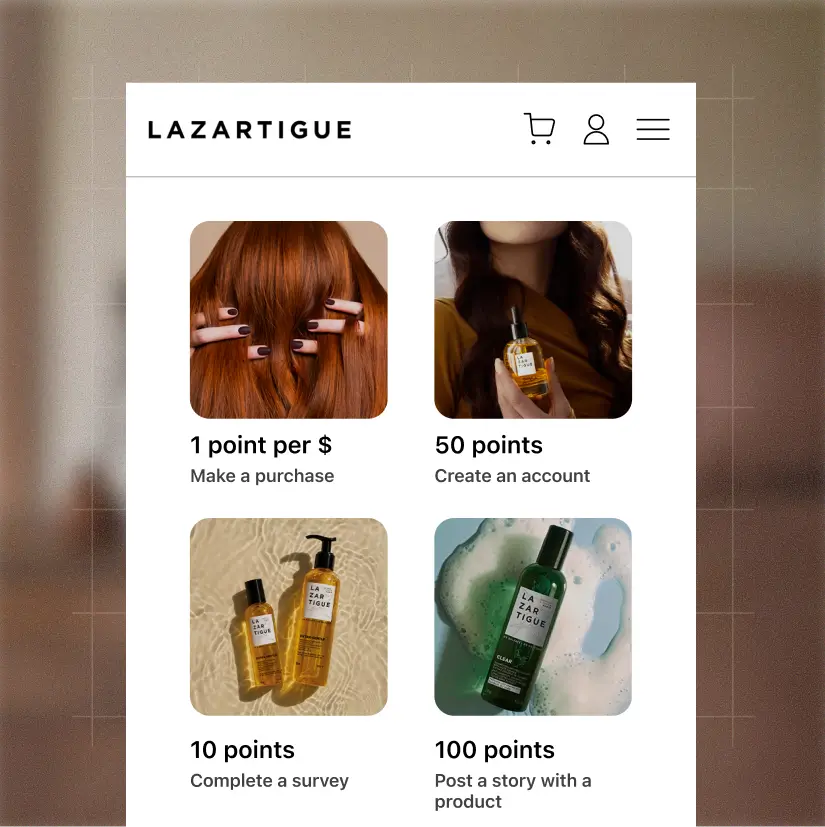
This is what happens between purchases, and it is the part most brands leave empty. A good program gives people something to do when they are not buying: complete a profile, leave a review, share content, invite a friend.
Those actions earn rewards, so participation rises. Across the benchmark, 9.8% of active buyers complete at least one engagement mechanic in a given period, and health and supplements brands push that to 18.8%.Valuable first-party customer data
Every rewarded action is a data point you own. Birthdays, phone numbers, product preferences, survey answers, opt-ins: all collected with explicit consent because the buyer gets something in exchange.
That zero and first-party data flows into your CRM and makes segmentation possible. Without it, personalization is guesswork built on order history alone.Sharper segmentation and better marketing decisions
A program generates two things you cannot buy: declared preferences and observed behavior, tied to the same record.
Used well, that combination sharpens segmentation, informs which perks to promote in which season, and identifies the cohorts worth a dedicated campaign. It also sets communication frequency, which is easy to get wrong. 39% of consumers accept messages at least weekly, but 25% will walk away from a sender that over-solicits them.More referrals and word-of-mouth
Recommendation is the only acquisition channel a loyalty tool controls. Across the benchmark, 37.1% of invited friends make a first purchase, a conversion no paid channel matches, and people arriving this way account for 1.5% of all new customers on average.
There is headroom in that second figure. 47% of consumers rarely or never share their referral codes, while 61% say a financial benefit for themselves is what would push them to. The gap between willingness and action is usually a design problem: rewards too small, sharing too awkward, or the setup simply not visible when it would be used.Differentiation competitors cannot copy
Discounting is easy to match. Recognition, access and community are not.59% of loyal buyers are willing to recommend a brand
59% of loyal buyers are willing to recommend a brand around them. That willingness is the asset a program converts into revenue, and it cannot be bought with a promo code.
The sequence is the same whichever vendor you pick. Here are the five stages, in the order your buyer moves through them.
It starts with signup. Keep it to one click from the account area or a dedicated space, because every extra field costs you members.
The profile then fills in gradually, as people hand over details in exchange for a benefit. You end up with a living record rather than an abandoned form.
Once the profile exists, the tool applies your rules without supervision. An order lands, it credits. A threshold is crossed, it moves the tier. A benefit is claimed, it debits and issues the code.
Everything sits in the mapping between actions and credits, which you can change whenever you need without touching the rest. That is what lets you correct an over-generous design mid-flight.
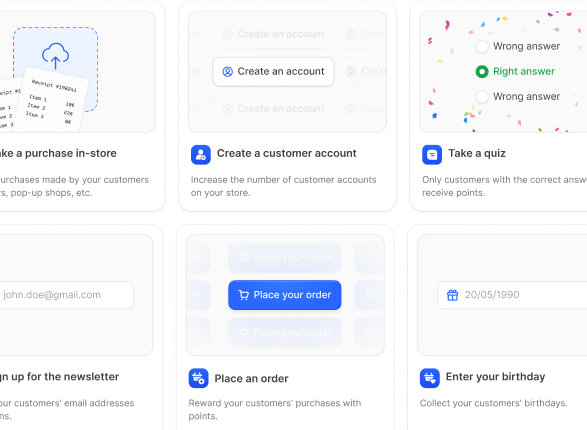
Between two orders, the program has to stay alive. Missions fill that gap: a review to leave, a profile to complete, a post to share.
Each completed action credits the balance and returns a piece of information. It is the one stage in the cycle where you get something from a buyer who is not spending.
The tool fires the program's own messages: welcome, tier reached, balance about to expire, benefit unlocked.
These are configured once and then run. They matter as much as the mechanics, because someone unaware of their balance will never use it.
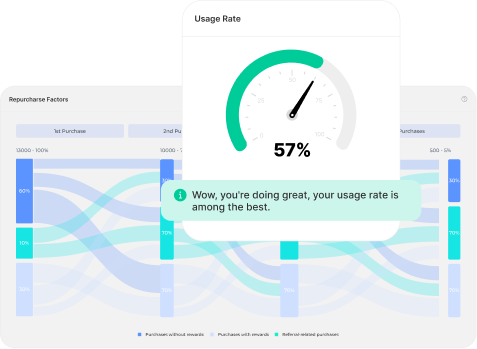
Once you are live, four numbers tell you whether it is working: the share of orders carrying a benefit, at 6.5% cross-sector, the proportion of the balance actually spent, at 16.1%, participation in the missions, at 9.8%, and the LTV gap between members and everyone else.
A balance nobody spends is the warning sign most often missed. People accumulate without ever getting anything, which means your first threshold sits too far away.
No single mechanic covers every angle. These are the five building blocks Loyoly supports natively, with what each one does before what Loyoly makes of it.
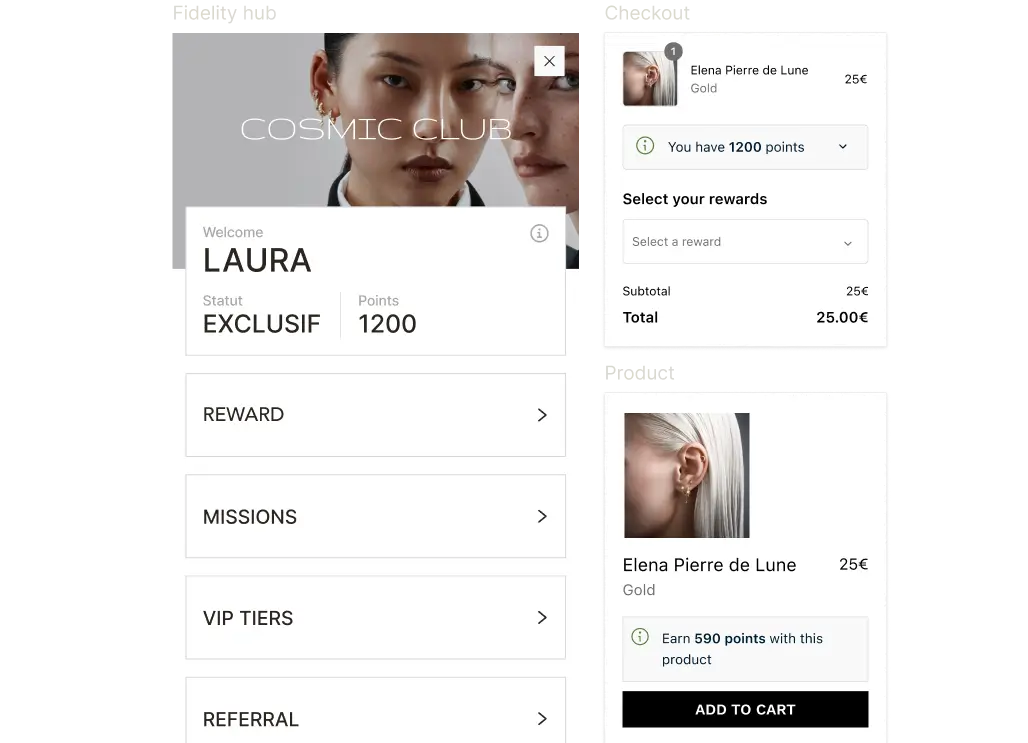
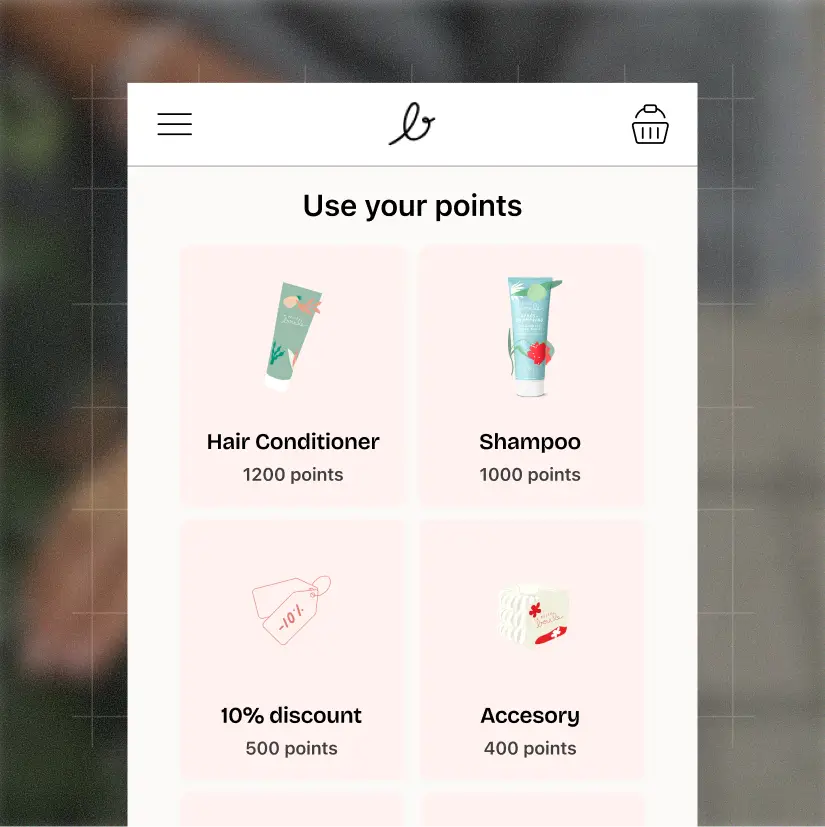
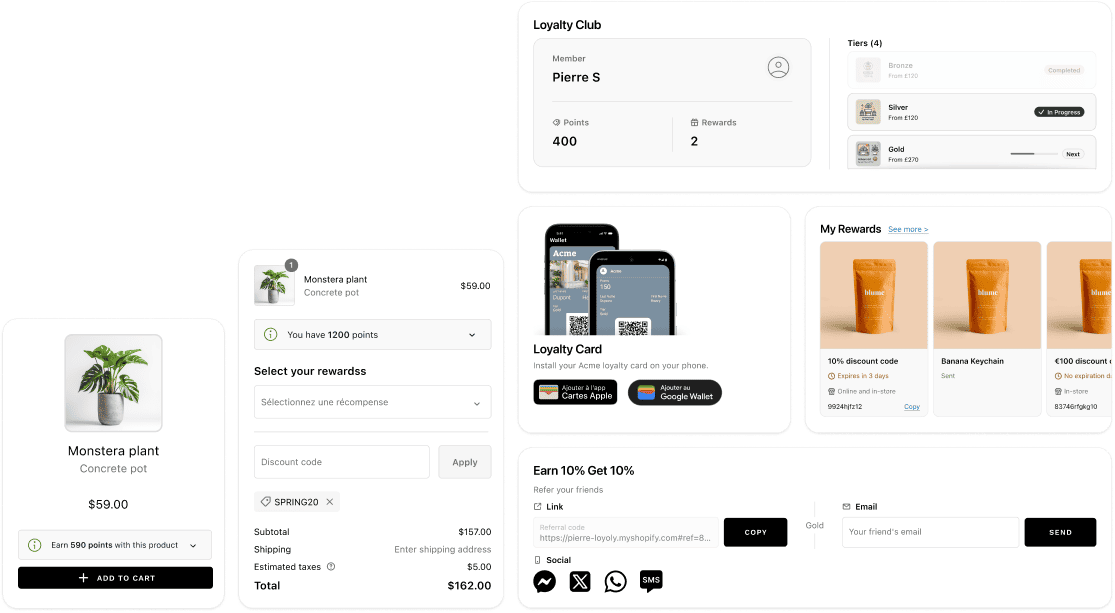
This is the core block. The loop is short: a buyer earns on orders, reaches a threshold, then trades the balance for something worth having, a voucher or a gift.
Three settings decide the outcome: the earn rate, how reachable the first redemption is, and what sits in the catalog. With Loyoly, the balance grows on purchases and on missions alike, signup takes one click, and the catalog accepts vouchers, free products, experiential perks or fully custom gifts.
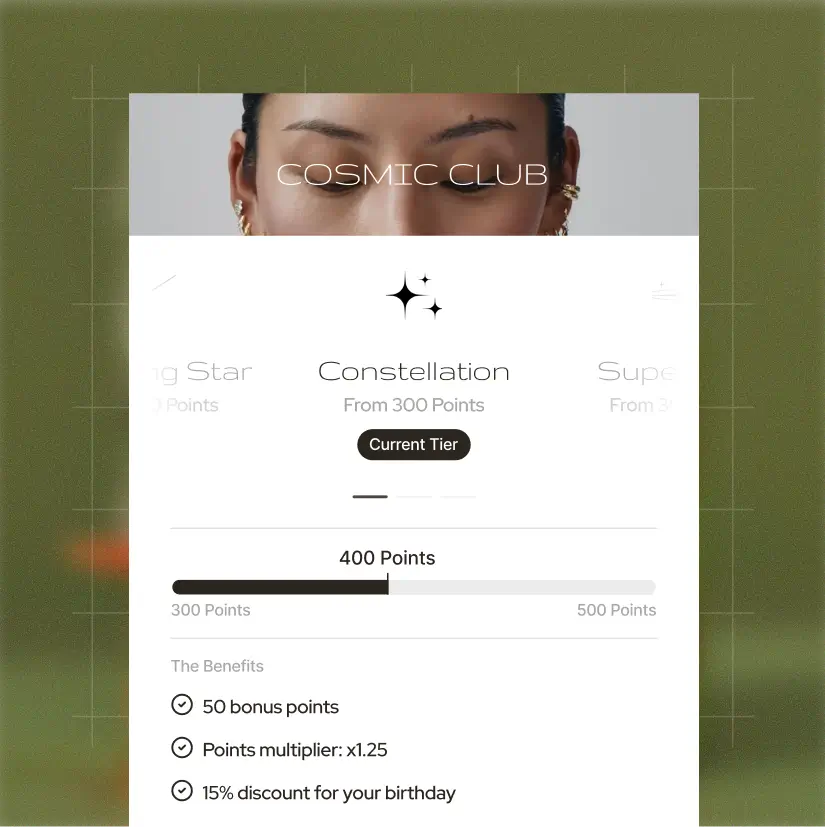
Tiers create standing, and standing drives behavior that discounts cannot. Someone close to the next level will spend to reach it.
What a level unlocks decides everything. With Loyoly, thresholds, names and perks are all yours to define, so a top tier can mean priority support and early drops rather than simply a deeper discount.
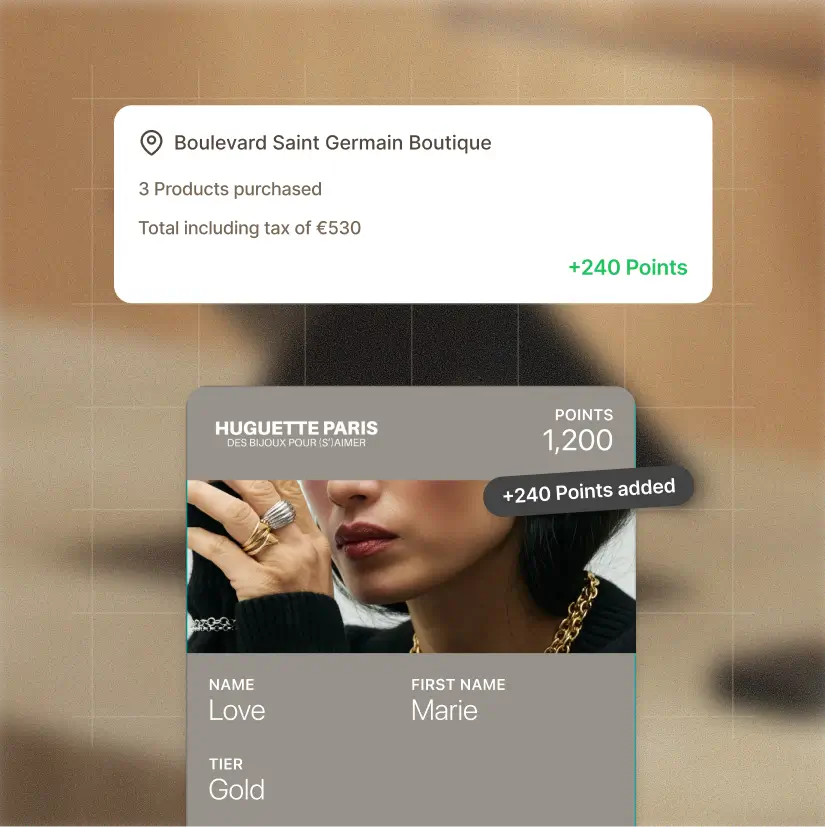
A wallet pass replaces the paper stamp card and fixes its main flaw, which is being forgotten. It lives on the phone, needs no app install, and shows a balance that updates on its own.
The real gain is the channel that comes with it. Loyoly issues cards natively for Apple Wallet and Google Wallet, push notifications reach read rates around five times those of standard email, and geolocated triggers can drive foot traffic when someone passes near one of your locations.
Recommendation turns your existing base into an acquisition channel. Each buyer gets their own link, both sides are rewarded once the order lands, and you pay after the sale rather than per click.
Two mechanics decide whether it works: attribution across devices, and fraud control. Loyoly covers both, with IP limits, similar-address detection and manual blocking. One clarification: an ambassador here is a loyal customer who recommends you, not a paid influencer. Loyoly does not run influence campaigns.
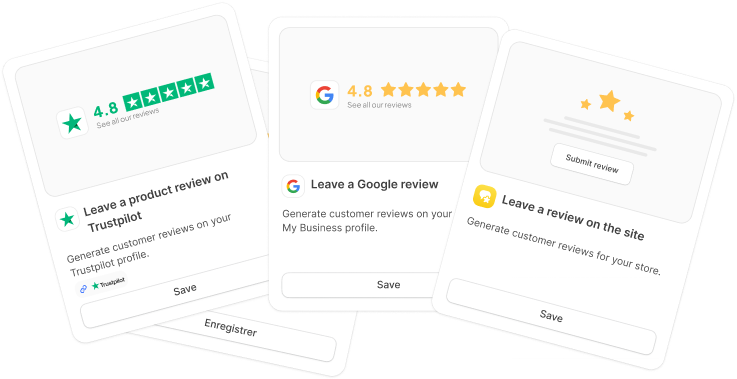
This block rewards actions that have nothing to do with buying: following an account, sharing a story, or producing a photo or video of your product.
The gain is double. These actions keep the relationship alive between orders, and the content feeds your social proof at a fraction of studio cost. Loyoly collects usage rights automatically and files everything in a reusable library, which is the part brands most often forget.
Feature lists all look similar in a sales deck. These are the ones that change what your program can actually do once it is live.
Your catalog should match your margin, not the vendor's template. Look for solutions that handle transactional rewards (vouchers, free products, promo codes), experiential rewards such as early access or event invitations, and fully custom incentives you define yourself.
The mix matters more than the count. Experiential rewards build attachment without eroding margin, which is why they belong in the structure from day one rather than as an afterthought.
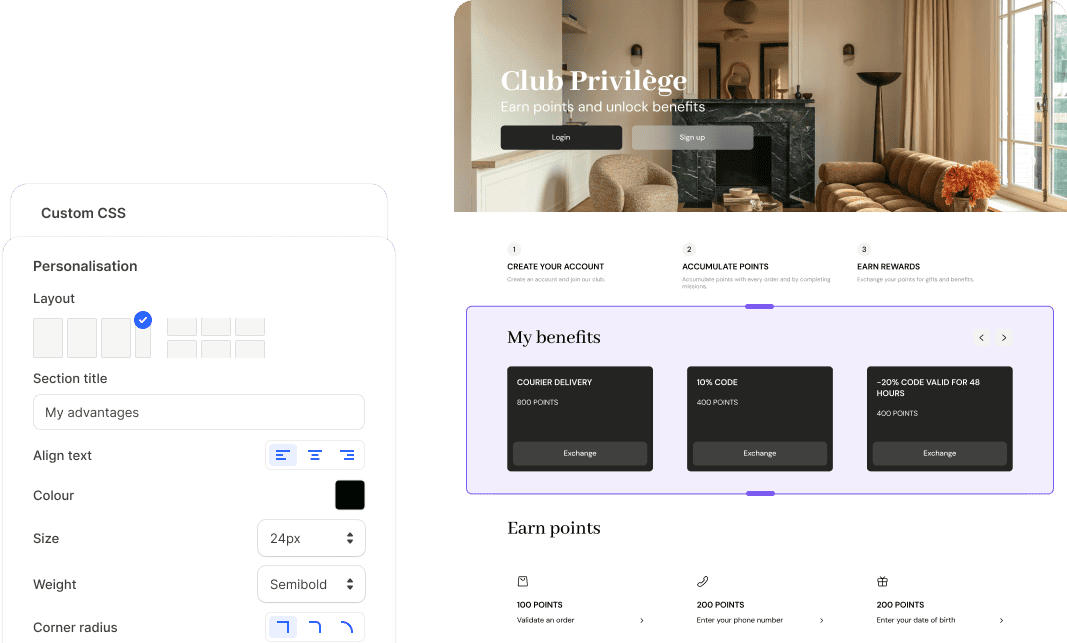
Check whether you control the progression rules, whether tiers can be branded to look native to your shop, and whether benefits can be non-monetary.
The last point separates a real tier from a dressed-up discount. Anything that only grants a bigger percentage off is a volume rebate wearing a badge.
Points remain the backbone of most programs because buyers understand them instantly. The design question is liquidity: are they actually being spent?
The benchmark puts the cross-sector usage rate at 16.1%, with food and beverage reaching 21% and home and decoration trailing at 11.6%. A low rate usually means the first reward sits too far away. Make the first redemption reachable within one or two orders and the habit forms.
Gamification covers a spread of mechanics: challenges that reward a sequence of actions, badges that mark milestones, leaderboards that rank participants publicly. Vendors vary widely in what they support, so check the specifics rather than the category label.
Challenge-style mechanics are the most transferable across sectors. Public leaderboards work for community-driven brands and fall flat everywhere else, so test the appetite before you build around them.
Word-of-mouth belongs inside the loyalty tool, not beside it. The same buyers who earn rewards are the ones who recommend you, and splitting the two across vendors breaks the reporting.
Look for a single link that works across email, SMS and WhatsApp, configurable incentives for both sides, progressive milestones, and fraud controls. Those controls matter more than they sound: they are what stop a program from paying out twice to the same person.
If you sell in-store as well as online, a program that only sees your website is measuring half your business. Native checkout integration lets people earn and redeem in either channel, and unifies the record behind it.
Loyoly connects to Shopify POS, Cegid and Fastmag, and its receipt scanning feature extends the same logic to buying done at third-party retailers, where you would otherwise have no visibility at all.
Integrations decide whether the program becomes part of your operation or another dashboard nobody opens. The essentials are your e-commerce platform, your messaging and marketing stack, your review provider and your helpdesk.
Loyoly is native on Shopify, Shopify Plus and PrestaShop, and connects to Klaviyo, Braze, Brevo, HubSpot, Insider, Omnisend, Gorgias, Recharge and Typeform among others, with webhooks for anything custom. Check that your specific stack is covered before you sign, because a missing integration is rarely quick to build.
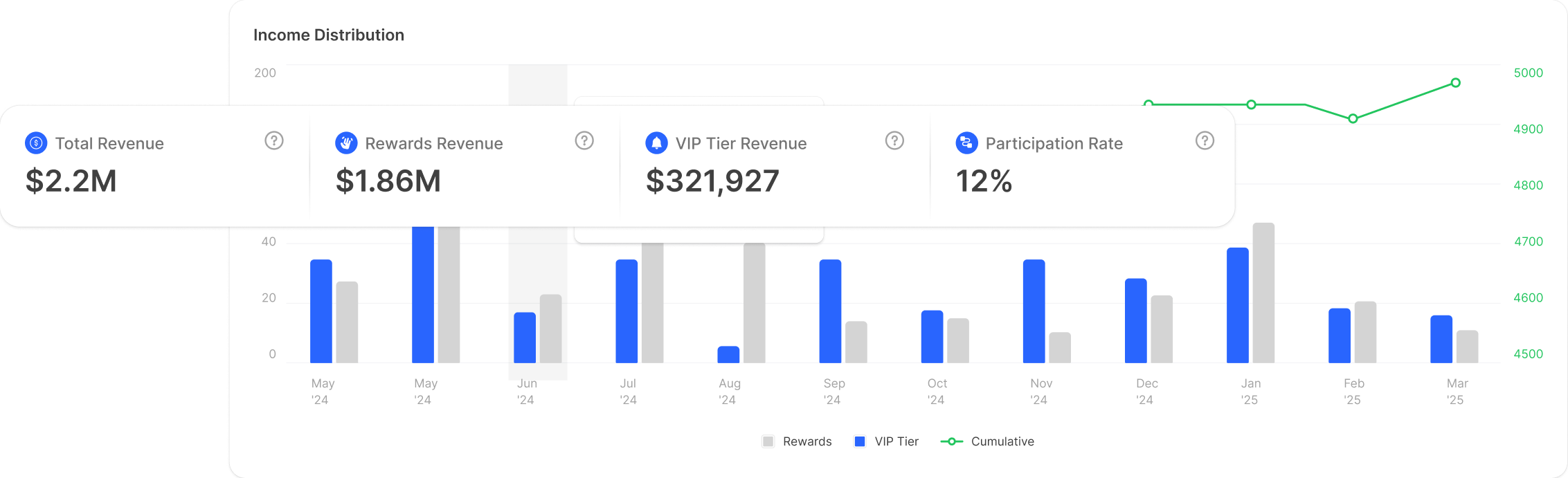
Engagement metrics feel good and prove nothing. What you need is the revenue view: lifetime value and basket size for members against everyone else, repeat purchase rate, tier performance, and cohort trends over time.
The single most useful number is that comparison against a similar group who never joined. Without it, you are reporting on people who were already your best buyers.
Personalization runs on the data your program collects. Segments built on real behavior, declared preferences and tier level will outperform generic sends, whatever technology sits behind them.
AI is increasingly used across the category to score churn risk, recommend incentives and time communications. Treat vendor claims here with the same scrutiny as any other feature: ask what the model actually decides, what data it uses, and what changes if you switch it off.
A wallet pass puts your program on the home screen instead of in a forgotten account page. Balance, tier level and preferred location update in real time on the pass itself.
Check that visuals can be edited remotely for seasonal operations, and that the pass carries your branding rather than the vendor's. Those two details decide whether people keep it.
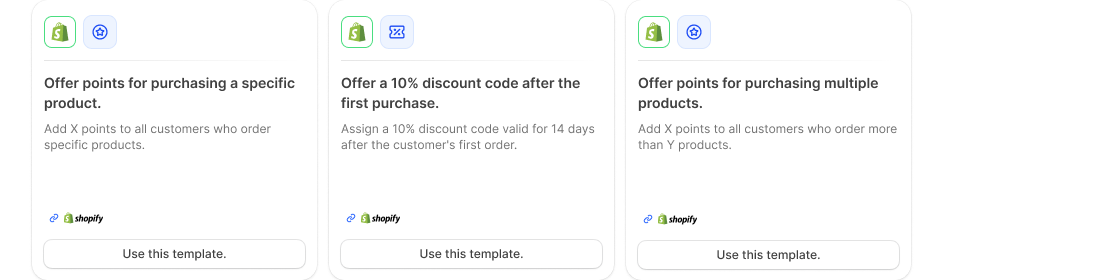
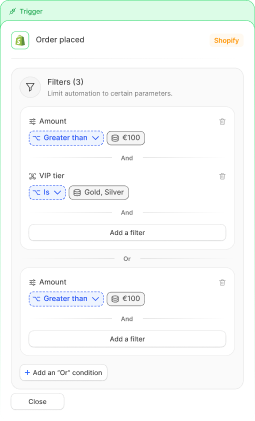
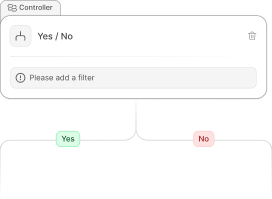
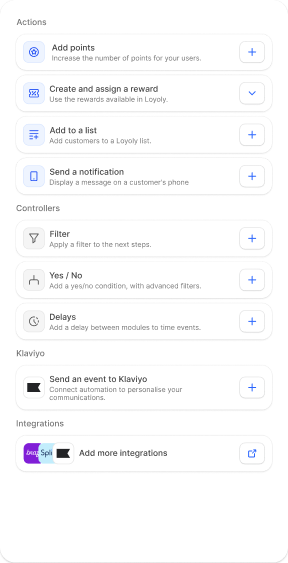
Automation is what keeps a program running without someone watching it. Look for workflows built on triggers (an order, a recommendation, a completed mission, a redeemed benefit), conditions based on customer properties, and actions such as crediting a balance or granting a perk.
Be precise about scope here. A loyalty tool sends the messages tied to the program itself, such as invitations, reminders and tier upgrades. Your campaigns stay in your own messaging stack, which the tool should feed with fresh opt-ins and enriched profiles rather than try to replace.

Start from the number you want to move. Raising order frequency, lifting basket size, or cutting acquisition cost through recommendation do not produce the same design.
On budget, be wary of per-module pricing. With Loyoly, loyalty and referral start at 99 € per month with no mandatory setup fee, and pricing follows your monthly order volume.
A tool your team never opens returns nothing. Check that configuration needs no developer and that launch is counted in days rather than quarters.
With Loyoly, everything is set from the back office and launch takes 1 to 30 days depending on complexity. A free 7-day trial, with no card and no commitment, lets you test before deciding.
The right choice is the one that still fits in two years. Confirm your e-commerce platform is supported, your current stack is connected, and going from a few hundred to several thousand orders a month does not mean rebuilding.
A missing integration always costs more than quoted. List your stack before the demos, not after.
This is the most underrated criterion and the one that decides the outcome. A badly framed program produces mediocre results whatever tool you picked.
Loyoly answers in under two minutes and assigns a dedicated account manager from the Premium plan. Onboarding is strategic rather than documentary: the team designs and configures with you, then keeps helping on the numbers after launch. Pick a vendor that stays available once the deal is signed.
Four European e-commerce brands, four different approaches, each measured against its own starting point.
The perinatal nutrition label built the Jolly Club around VIP tiers, invitations and an extension that shows the available balance during checkout.
Over the period: 637,000 € generated, a 69x monthly return, and lifetime value tripled.
This refillable home care brand combined VIP tiers and word-of-mouth in a setup called Pimpant Family.
It reports 240% more LTV, 2.7 times more orders, and over 71,600 opt-ins collected along the way.
The accessories label structured its club around earning on purchase, two-sided invitations and engagement missions.
Average order size rose 54%, with the program returning seven times its cost.
This supplements company runs four VIP tiers and review missions.
In six months the setup carried 18% of total sales and recorded 30,000 actions completed by members.