.webp)
.png)


Your traffic is up. Your revenue is flat.
That gap is the most common story in ecommerce, and the reflex is always the same: buy more visitors. It is the most expensive answer available, and it treats a conversion problem as a volume problem.
The people already on your site are free to reach. Most stores lose more sales to friction than to a shortage of visitors.
How to increase online sales comes down to two things: removing what stops people buying, and giving the ones who did a reason to come back.
This guide groups the ways below by where the money leaks: your website, the product pages, the checkout, then acquisition, email marketing, offers and service. None of them needs a bigger budget.
1. Understand your target audience and define buyer personas
You cannot appeal to everyone, and trying to is why most product pages say nothing. Start by describing the three customers who order most often.
Build personas from real behavior, not from a workshop. Purchase history, service tickets and customer feedback tell you what your audience actually wants, in their own words.
Name the objection each persona has before buying. A first-time buyer worries about trust; a returning one asks whether the new item is worth it.
Each persona needs an offer of its own, and making that distinction is most of the work. A discount converts a price-driven shopper; early access is more likely to win the one who cares about your brand.
Focus on the personas most likely to order again. A business that knows its best customers can aim its marketing at people who look like them.
Research the competition while you are at it. Knowing what your customers considered before choosing you is one of the most valuable things you can learn.
Segments need messages of their own, and different offers. Targeting the right buyers with the right offer is what makes a marketing budget go further.
2. Optimize your website for maximum conversions
Your website is the sales floor, and most online stores are badly laid out. Every extra click between landing and payment costs you customers.
Speed is the first thing to fix, and one of the few free ways to increase sales. A site that takes four seconds to load on mobile loses a large share of its audience before a single product appears.
Make the primary action obvious to customers on every page. If a visitor has to hunt for the buy button, your layout is working against you.
Cut what does not help someone decide. Pop-ups, carousels and autoplay video look busy and rarely increase conversions.
Free tools like PageSpeed Insights show you what to improve first, and a faster website keeps more customers. Most websites can improve load time by a third in an afternoon, and that alone lifts sales.
Give customers the options they expect on your online store: wishlists, saved baskets and a quick route back to what they were viewing. Each one is a modest increase in sales.
Include a search box that works, with filters that make choosing easy. Few options increase orders so cheaply. Shoppers who use it convert at a much higher rate. A poor one loses customers at the last moment.
3. Craft compelling product pages and descriptions
Product pages are where a sale is won or lost. They have to answer what a shopper would otherwise ask a salesperson.
Write for the objection, not for Google. Size, materials, durability and what happens if it is wrong matter more than keyword density.
Use specifics. "Fits a 15-inch laptop" works better than "spacious", because a shopper can picture it.
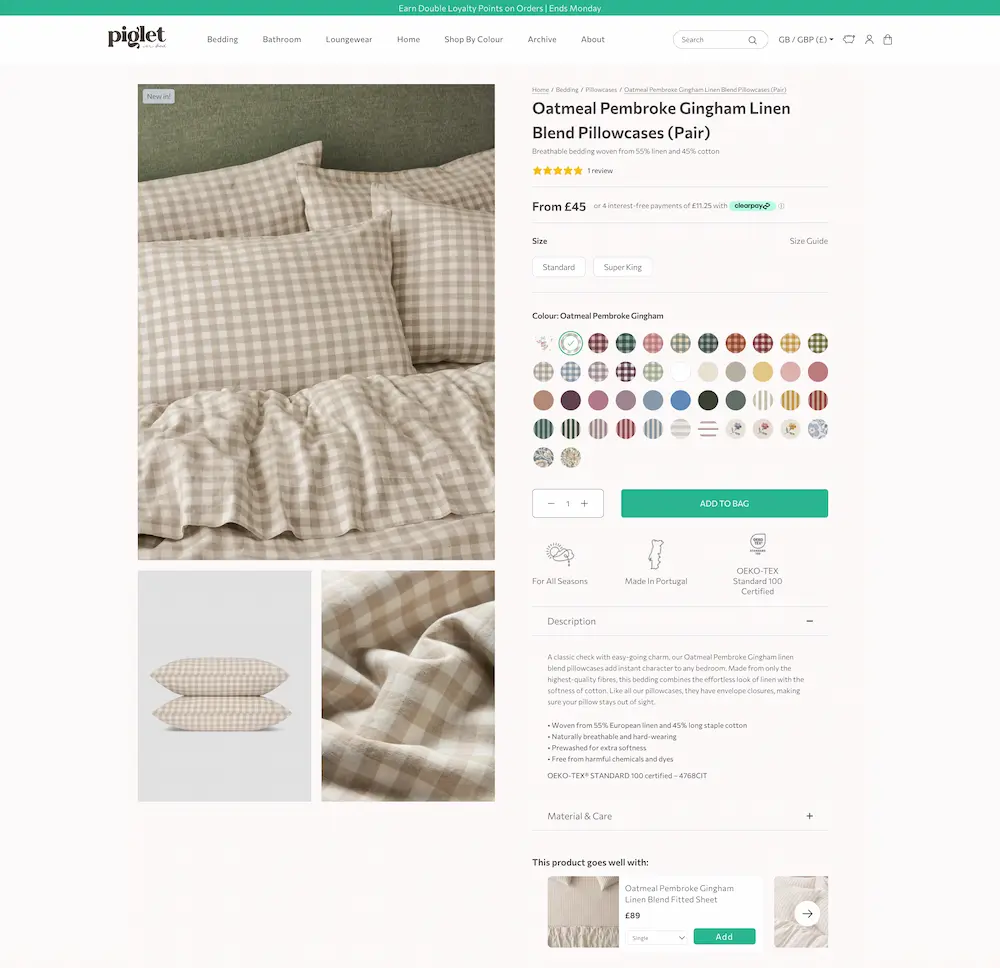
Put the essentials above the fold: price, delivery date, stock, ratings and the buy button. Anything below is a bonus.
Include the detail a shopper would otherwise have to ask for: sizing, materials, care, compatibility. Every missing answer sends someone to a competitor.
Put the key benefits near the top, where the eye lands. Three bullets naming what the product does are worth more than a paragraph of atmosphere.
Include a comparison where it helps. Shoppers choosing between two of your own products decide faster when the difference is spelled out.
💡 Our advice: rewrite your three strongest product listings first. They already carry the visits, so every fix there pays back immediately.
4. Streamline the checkout process
Checkout is the single highest-value step on your site. Every field you remove sends more customers through to the end.
Offer guest checkout. Forcing account creation is the most common self-inflicted wound in ecommerce, and few changes increase completed orders so quickly.
Show the full price early, delivery included. Unexpected shipping at the final step is the leading cause of abandoned baskets.
Offer several ways to pay. Cards, digital wallets and installments each suit a different buyer, and completion rises with every option you add.
Making the process shorter is the single highest-return change in ecommerce. Two steps beat four, and one beats two.
Free delivery at checkout is the most effective offer in ecommerce. If you cannot afford it on every basket, the simplest way is to offer it above a threshold.
Check which options your target buyers already use before adding anything exotic. A wallet nobody in your market has is a development cost with no return.
5. Build trust and credibility
A visitor who does not trust your brand will not order, whatever the price. Credibility is built from visible signals rather than from claims, and it drives more orders than any ad.
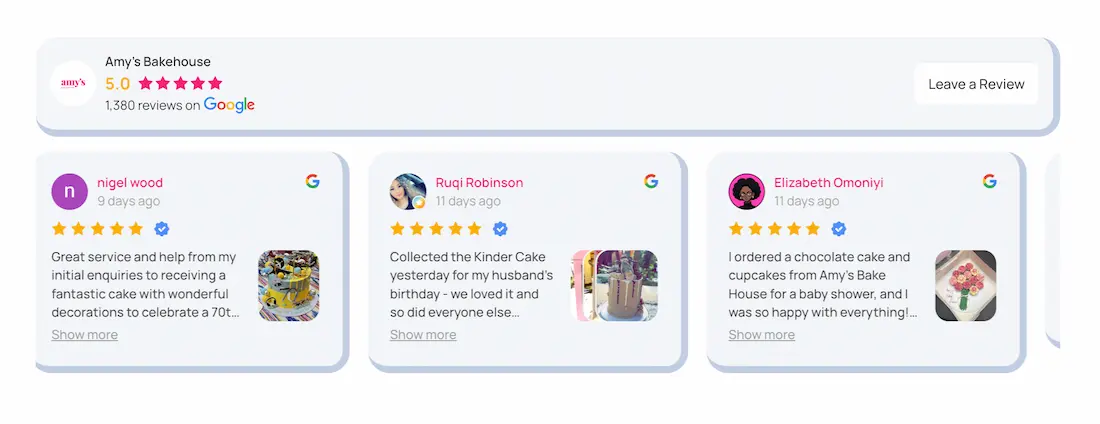
The data is clear. According to the Industry Report 2025 by Loyoly, conducted among 1,016 consumers, 54% name positive customer reviews among the deciding factors in a first purchase from an unfamiliar brand.
Show a real address, a phone number and honest delivery dates. Those are the key signals a first-time buyer looks for. Every missing detail gives a visitor an excuse to leave.
Publish your returns policy where buyers can find it, because free returns encourage a first order. Generous terms increase orders more often than they increase returns.
Social proof helps here too, including content your own customers create. Customer photos, testimonials and visible order counts all make a young business look established.
Credibility builds slowly, not overnight. A business that answers every question publicly earns something no marketing budget can buy.
Testimonials are effective on high-value purchases, where a decision takes longer. A quote from a customer with a similar business does more than any guarantee you write yourself.
6. Drive targeted traffic to your store
More visitors only help if they are the right ones. A thousand curious browsers are worth less than fifty buyers searching for your product.
Split your marketing channels by intent, for example Google against social media. Search captures demand that already exists; social media and blog content create it.
Build the marketing channels that keep working after you stop paying. Organic search and referral both improve with age; paid traffic stops the day the budget does.
Track your acquisition spend by channel. One strong channel usually pays for two weak ones, and the average hides both.
Google is where most high-intent buyers start looking, which makes it the highest-value marketing channel for most brands. A store that ranks for the products buyers look for gets customers who already decided to order.
Social media works differently: it creates demand rather than capturing it. Short video and creator posts are both strong ways to drive potential customers toward your website.
⚠️ Careful: do not judge a channel on its first month. Organic growth takes a quarter to show anything, and cutting it early is the most common mistake here.
7. Turn your customers into a referral channel
Every paid channel gets more expensive each year. The one that does not is the shopper who tells a friend, and most stores leave it to chance.
Referral marketing is the cheapest online source of sales. The Loyalty Benchmark 2026 by Loyoly, based on 600 ecommerce brands, puts first-purchase conversion at 37.1% among invited friends.
A referral software makes word of mouth countable: a unique link per buyer, a reward on both sides, and validation when the friend places a first paid order.
Reward the referrer as well as the friend. Someone who gets nothing for the introduction feels like an unpaid salesperson, and the invitation quietly stops going out.
Referral works differently from other ways of buying growth. The customers who arrive this way already trust someone who buys from you, and that trust is why they convert so well.
Watch for self-referral from the first week. A rule tied to a paid first order removes most of it without any manual review.

8. Implement effective email marketing strategies
Email remains the highest-return channel in ecommerce, and consumers agree. The Loyoly study found 76% prefer email above every other channel.
Create the flows before the campaigns. Marketing that runs itself is the best kind. Welcome, browse abandonment, cart recovery and post-purchase run themselves and outperform anything sent by hand.
Segment customers by what they buy. Someone who bought twice should not receive the same message as someone who never has.
Email marketing also serves information, not only offers. A guide, a restock note or a launch announcement can drive sales without a discount.
Your list is the only audience you own. Social platforms change their rules whenever they like, and your own list keeps working through all of it.
Grow the newsletter everywhere: at checkout, in the footer, after delivery. Every subscriber is someone you can reach for free.
This is also the easiest channel to improve. Sharper subject lines, timing and segmentation all increase sales without extra budget.
9. Increase customer retention and repeat purchases
Everything above works on the sale in front of you. The cheapest online sale is the second one, from someone who already trusts you.
Most stores try to grow by acquisition alone and put nothing into the reorder. That is how revenue stays flat year after year while nothing else changes.
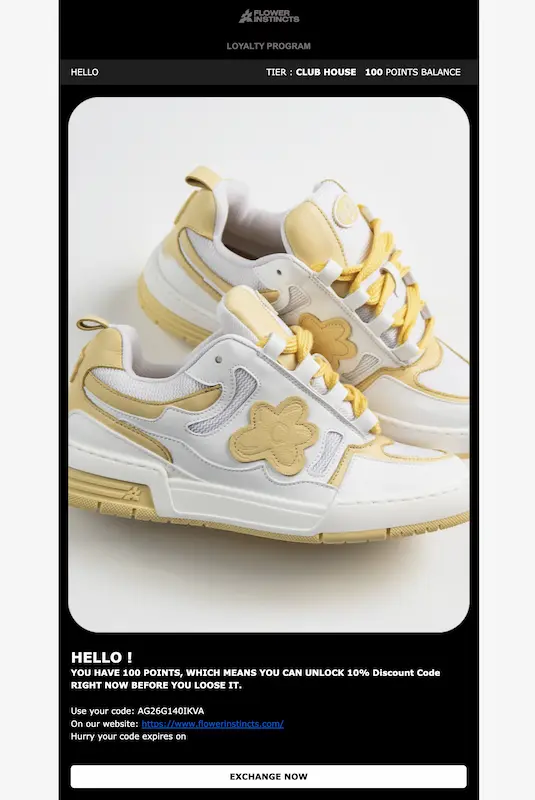
A customer loyalty software does what nobody can run by hand: it credits points on each order, manages the tiers, and surfaces the reward at the moment it converts.
Give people a reason to return that does not depend on a price cut or a one-off offer. Points, tiers and store credit are three ways to build a balance the buyer owns and does not want to lose.
Retention needs its own focus. A business that treats the second order as a marketing channel tends to work the whole experience harder, from the website to the follow-up, and that is a different strategy from chasing new buyers.
The gap is large. Loyoly's Loyalty Benchmark 2026 puts members at 121.5% more orders over twelve months than a comparable set of non-members.
.webp)
10. Create irresistible offers and promotions
An offer works when it removes a specific hesitation, and several formats will do it. Free delivery answers price anxiety; a free sample answers doubt about the goods.
Rewards beat markdowns on margin, and offering them costs you less. Across the Loyoly panel, vouchers attract 71% of respondents and free products 57%, both cheaper than a blanket price cut.
Give every offer a deadline and honor it. A permanent sale is not an offer, it is your price.
Vary the offer so customers cannot predict you, and keep the mechanics easy to explain. A brand that discounts every month has taught people to wait.
Offering something free is often cheaper than money off, and buyers value that offer more. A free sample, free delivery or a free upgrade costs you stock rather than margin.
Loyalty points are another way to encourage a bigger basket without discounting. Offering points rewards the next purchase instead of cheapening this one.
Making an offer feel exclusive increases its value in the customer's eyes. Early access for members works better than the same discount available to everyone.
11. Enhance customer service and experience
Service quality decides whether a first order becomes a second one. Loyoly recorded 33% of respondents abandoning a brand over unresponsive support.
Answer within one working day, in the channel the customer used. That experience is what they remember, and it drives the next sale. Speed matters more than the polish of the reply.
Treat the whole customer experience as the product: the online store, the parcel, the emails and the experience when something goes wrong. That is what people describe to friends.
Fast answers sell. Buyers who get a useful reply within the hour order more often than the ones who never asked, and the experience stays with them.
People remember the whole experience, not any single moment. A brand that delivers well earns a bigger basket next time.
Make it simple to contact you. A visible email address, a real name and a phone line do more for the customer experience than any chatbot.
Support that helps rather than deflects is a competitive advantage. Most online businesses treat it as an expense, which is exactly why it pays off.
👍 Note: the customers who complain are not the problem. The ones who leave in silence are, and they never appear in any report.
12. Leverage content marketing and valuable content
Content marketing is slow and it compounds, which is why it drives more sales than paid traffic over a year. A blog that answers real questions keeps bringing in customers long after you stop writing.
Write what your buyers search for before they are ready to buy. A guide or a how-to article will reach them at exactly that moment.
Make it genuinely valuable rather than an advert in disguise. Readers can tell the difference, and so can search engines.
Link every blog article to the products it discusses, including the ones people rarely find. Writing without a path to the checkout is a library, not a strategy.
A blog is the cheapest content strategy a young business can build. Two useful posts a month will out-earn most paid campaigns within a year.
A guide is also how you reach potential customers early, months before they buy. Comparison guides do the same job. People researching a purchase find your business months ahead of the order.
Guides and comparison posts are the two formats that perform, because both earn credibility before anyone sees a price.
Write the guide your customers actually need. Buying advice, sizing help and care instructions will each drive sales for years.
13. Utilize social proof beyond reviews
Customer feedback is the obvious form of social proof, but not the only one. Customer photos, order counts, press mentions and visible communities all reduce risk.
Photos and video from buyers work on social media precisely because they are not yours. A shot from a real customer carries more weight than any studio image.
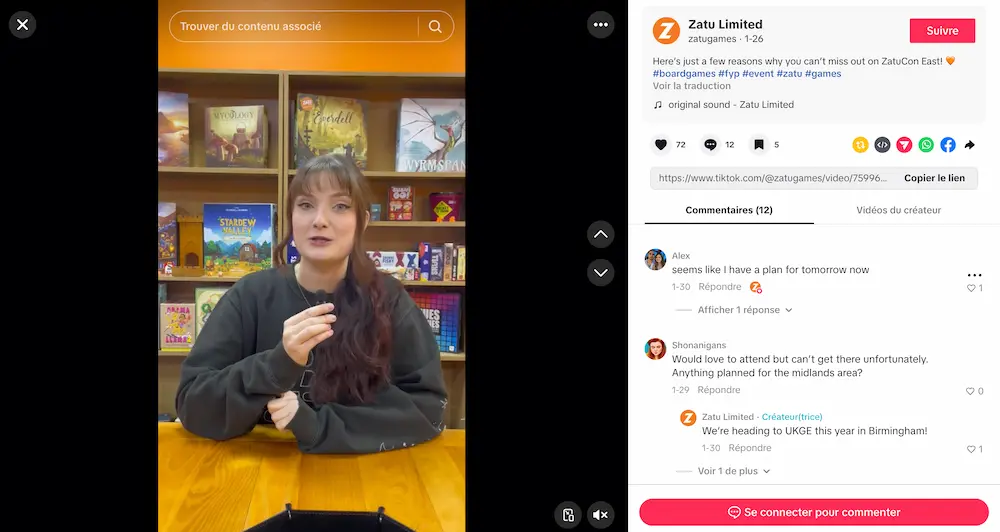
Loyoly rewards customers for creating and posting that content, which turns social proof into a repeatable process rather than luck.
Show testimonials with a name, a photo and a date, including a job title where it helps. Anonymous ones read as invented, and they lose you the trust they were meant to build.
Social media is where most of this proof lives, and it is an effective place to show it. Consider reposting the strongest examples weekly. Posts from real buyers reach potential customers your own media never will.
Pick the social platforms your buyers actually use, based on your own data. Two social media accounts run properly beat five run badly, and the right choice depends on your audience.
Encourage customers to post about the experience, for example after delivery. Loyoly rewards that behavior directly, which is how a brand turns happy buyers into a marketing channel.
.webp)
14. Test offers, samples, and shipping thresholds
A free shipping threshold is the fastest test you can run, and free delivery is what customers ask for most. Set it 20 to 30% above your current basket and watch what happens.
Handle delivery pricing carefully, whatever type of product you are selling. It is possible to lose more sales here than anywhere else on the site. Loyoly measured 39% of respondents walking away from a brand after a rise in delivery fees.
Samples pay off where a product has to be experienced, and they can drive a first purchase on their own. In beauty and food, for example, a sample converts better than any description.
Test one variable at once and give it a full purchase cycle. Two days of data on a modest store is noise, not insight.
Try free delivery on a single category first. Watch the margin as closely as the order count.
Try a free gift above a threshold as well. Buyers respond to free products more strongly than to the equivalent money off.
Set the target up front. Deciding afterward what counts as success is how ineffective offers survive.
⚠️ Careful: honesty is not a brake on sales. Every hidden condition you remove costs you a little margin and saves you a support ticket, a return and a bad review.
15. Be clear and honest about products and policies
Honesty converts better than wishful copy, and it is among the cheapest ways to earn credibility. A page that names the limitation sells more than one pretending there is none.
Publish delivery times you can meet, and make the terms simple to find. A promise you miss loses you the customer and earns a bad review at once.
Make your policies findable and readable. Terms hidden in a footer produce support tickets and abandoned baskets in equal measure.
The returns policy matters more than most brands think. In the Loyoly study, 28% of consumers break with a brand after a change to it.
Honest product detail also reduces returns, which improves your margin as well as the experience. Buyers who see exactly what is coming send far less of it back.
Say what an item does not do. A business that is upfront about it reaches the right customers and loses fewer of them later.
16. Make customer service and contact information visible
A visible contact route is a trust signal before it is a service channel, and an important one. Many visitors check that it exists and never use it.
Put it in the header or the footer of the site, not on a separate page nobody visits.
Name the hours you actually reply, so people know what to expect. An unanswered chat widget does more damage than no chat at all.
Give your team the customer's history, whatever devices they are working from. Loyoly pushes its data into Gorgias, so the agent can see who they are talking to.
Service is a sales channel in disguise, and a cheap one. Answering a sizing question in two minutes closes a sale your product page could not.
Put your contact details in every order confirmation. Shoppers who can find you when something goes wrong are far more likely to return.
17. Boost online sales by featuring bestsellers and high-intent products
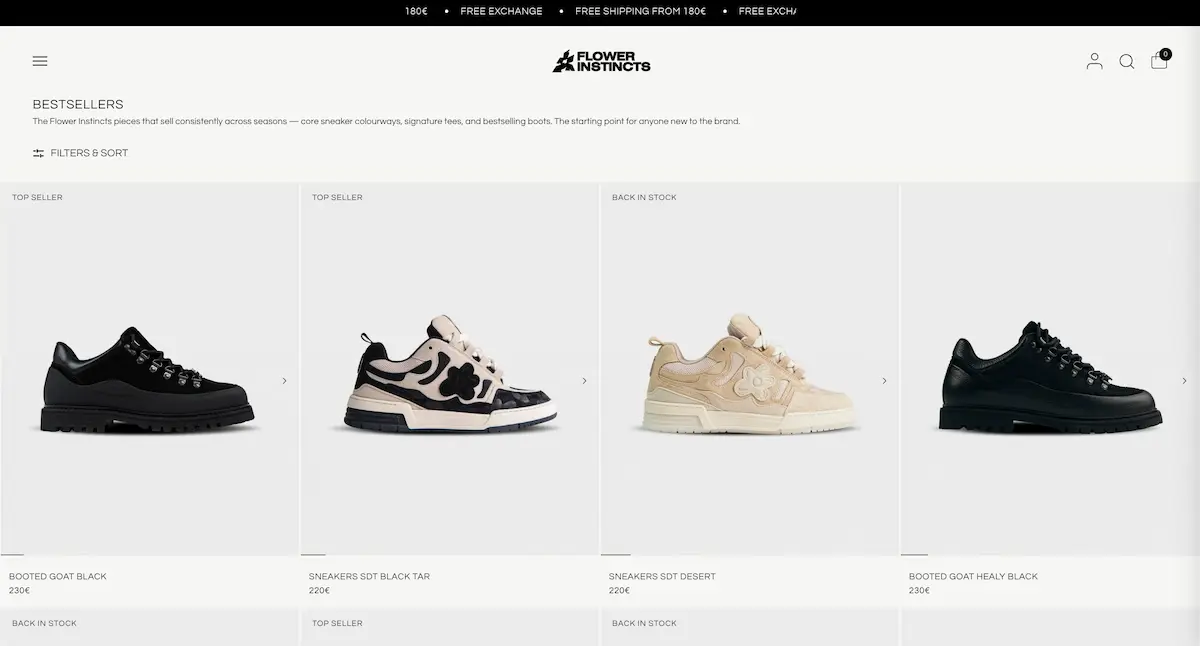
Your best sellers already proved they convert. Putting them where people land is the cheapest merchandising decision available.
Feature high-intent products near the top of your category views, and boost the ones already selling well. Shoppers rarely scroll far, and what they see first shapes the basket.
Use "most popular" labels honestly. A badge that reflects real orders helps a customer choose; one that does not gets noticed.
Rotate the selection seasonally, because purchases change shape through the year. A homepage that never moves signals a business that is not paying attention.
Group the strongest products into a visible collection. It gives new visitors an obvious way in and drives sales toward products you know convert.
Let the numbers drive the selection rather than taste, including the margin on each line. What your customers actually buy is not always what you would choose to promote.
Feature the items with the strongest margins as well, since those are what fund everything else. Increasing sales on your strongest lines is worth more than lifting them everywhere.
💡 Our advice: pick three products to push this quarter, not thirty. A homepage that recommends everything recommends nothing.
18. Optimize for mobile buyers
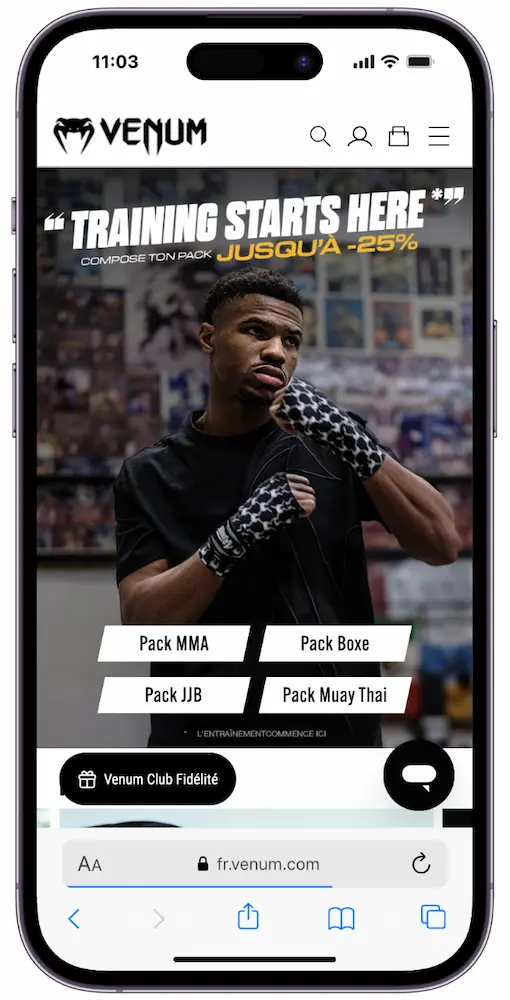
Most ecommerce visits happen on mobile, and most digital storefronts are still designed on a laptop. Test everything on a real device, on a real connection.
Design for a thumb on a small screen. Buttons big enough to hit, forms short enough to finish, and no horizontal scrolling anywhere on the site.
Payment is where the largest drop-off usually sits on a phone, whatever the business. Long forms are the reason, and there is a simple fix.
Keep the images light. Mobile buyers on a slow connection abandon long before a heavy hero image finishes loading.
Digital wallets are the biggest single win here. Apple Pay and Google Pay remove the typing, and typing is where mobile buyers give up.
Check your site on the devices your buyers actually use. An old Android and a small iPhone reveal problems a desktop preview never will.
Phone buyers behave differently from desktop ones. They compare in more places and decide in less time.
Mobile buyers also browse in short bursts, so a shorter path matters even more here than on desktop.
19. Improve the design around the buying decision
Good design reduces doubt rather than decorating, which is the whole point. Every element near the buy button either helps the decision or delays it.
Group the reassurance: delivery date, returns, stock and payment options in one visible block beside the price.
Improving that block is among the highest-return changes available. It costs an afternoon and it lifts orders across the catalog.
Use contrast for the primary action and nothing else. When five things shout at once, the customer hears none of them.
Watch where buyers hesitate. Session recordings show the exact moment someone stalls, which no analytics dashboard will.
Build for the decision, not for the award. A plain layout that makes the benefits obvious will out-sell a beautiful one that hides them.
Spell the benefits out beside the price. Free returns, a guarantee and a delivery date do more for sales than any hero image.
20. Use photos and video to answer product questions
Photos do the job a shop assistant would, which makes them a selling tool rather than decoration. Six angles, a scale reference and a close-up answer most of what a shopper wants to see.
Video closes the gap photos cannot. Thirty seconds of the product in use removes more doubt than three paragraphs of description.
Include images from real customers where possible. They show the product as it arrives, which is what buyers are actually asking about.
Show the box too. Anyone buying a gift wants to see what will land on the doorstep.
It is also the strongest content for social media. The same clip works on your product page, on Instagram and in a paid campaign.
Show the item in a real setting, for example in the kind of home your buyers live in. Studio images convey the idea; a photo on a kitchen table conveys the reality.
👍 Note: buy from your own store on a phone once a month. It surfaces more problems in ten minutes than any audit you could commission.
21. Split test revenue pages to increase ecommerce sales
Test where the money is: product, cart and payment. A homepage test rarely moves the numbers at all.
Change one thing per test, and make the goal explicit before you start. Three simultaneous changes produce a result you cannot attribute to anything.
Run each test to significance, whatever the tools say early on. Calling a winner after two days is how teams convince themselves of things that are not true.
Keep a record of what you tested, including the results that disappointed you. Most businesses rerun the same failed experiment within a year.
A modest improvement on a high-traffic page is worth more than a big one anywhere else.
Create a test calendar. One experiment a fortnight is enough for most businesses, and it builds a record of what actually works.
Focus on one improvement per cycle. Steady gains beat a big redesign, and they are far less likely to break something already working.
22. Use honest urgency as a marketing tactic
Real urgency works: low stock, a sale that genuinely ends, a cutoff before a holiday. Invented urgency destroys trust the moment it is spotted.
Show the real number when stock is low, because a specific figure lands harder than a vague claim. "Three left" is credible; a permanent "going fast" banner is not.
Use delivery deadlines rather than countdown timers. "Order by 2pm for tomorrow" is useful information and a deadline at once.
Never fake scarcity, because a brand only gets caught once. One screenshot of your permanent countdown resetting costs more than the sales it generated.
Used properly, urgency is a marketing tool rather than a trick. It encourages a decision people were going to make anyway.
Seasonal deadlines are the most honest example. A cutoff for Christmas delivery is genuinely useful, and it drives sales at the same time.

23. Upsell and cross-sell strategically
Cross-sell on the product page, where the customer is still deciding what to buy. An upsell after card details are open reads as a trick.
Suggest complements, not alternatives, and target them to what is already in the basket. Showing a similar product at that moment reopens a decision already made.
Keep it to three options, and make the benefits obvious. A crowded recommendation block gets ignored entirely and slows the page.
The results justify the effort. Across the 600 brands in the Loyalty Benchmark 2026, rewarded baskets run 21.1% higher than unrewarded ones.
Loyalty points are a strong alternative to a discount here. They increase the value of the basket without lowering what you charge.
Present the upgrade before the basket, not after. Shoppers are open to a better version while choosing, and closed to it once the decision is made.
⚠️ Careful: a cross-sell that reopens a settled decision loses more than it wins. Suggest complements, never alternatives.
24. Bundle your offerings for added value
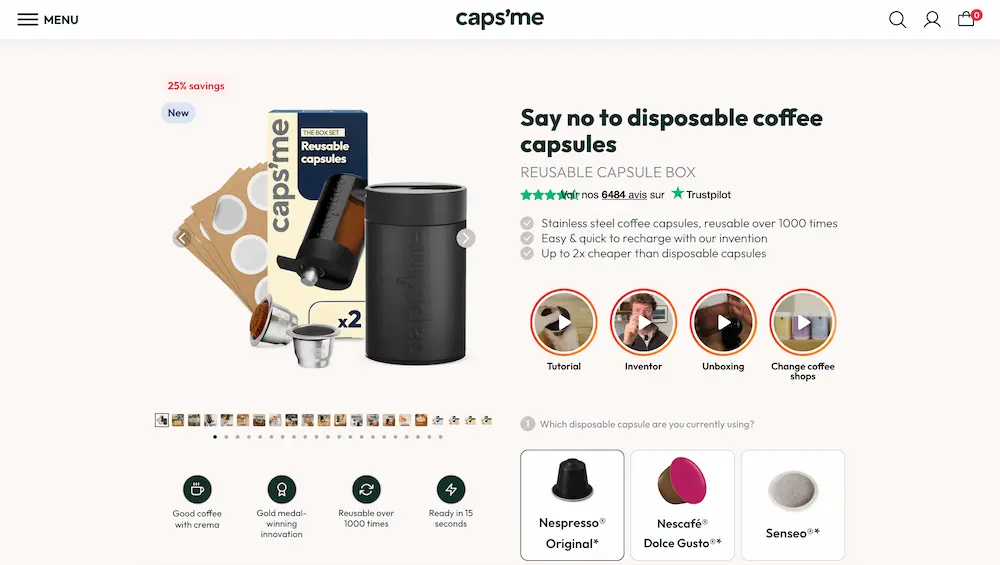
A bundle raises the basket without teaching anyone to wait for a markdown. Price it below the sum of its parts and the value is obvious.
Making the saving visible is most of the job. Name the bundle, price it plainly, and show what the buyer keeps.
Create bundles around a use case: the starter set, the gift set, the refill pack. Customers understand those instantly. Categories make poor bundles.
Bundles also move slow stock alongside your strongest lines, which improves inventory as much as revenue.
Keep them simple. Three products maximum, and no conditions that need a second reading.
Bundles also make gifting easier, which matters more than most businesses realize. A ready-made set removes the effort of choosing.
If a shopper has to calculate what they save, the offer is not doing its job. Few tactics increase order value so easily when the maths is done for them.
25. Analyze sales data and consult analytics tools regularly
Most stores have the reports and never open them. Conversion by device, revenue by source and items per basket answer most questions.
Read cohorts rather than totals. A business can grow for six months while every cohort weakens, and only cohort analysis reveals it.
Pick one key metric per quarter and let it drive every decision. Teams tracking fifteen numbers act on none of them.
Connect Google Analytics for what your platform cannot answer, particularly how people found you in the first place.
Your reports show which products to promote and which to drop, and which strategy is actually working. Reports and tools are only useful when someone acts on the insights they produce.
Set aside an hour each month for this, with one goal in mind. Most businesses collect far more than they ever use, and the difference is purely a matter of habit.
26. Adapt to emerging trends (e.g., AI search, social commerce)
AI search is changing how buyers find products. Answer-style pages and structured product detail now matter as much as classic keywords.
Social commerce and AI search reward the same things: accurate product detail, real feedback and a site that loads fast. The basics are the strategy.
Social commerce keeps growing, but selectively across platforms. The Loyoly panel puts Instagram and TikTok at 16% for brand contact.
Try new channels with a small budget and a single objective. Most trends will not suit you, and finding out costs little.
Do not chase every trend at the cost of the basics. A faster site beats a presence on a network nobody in your audience uses.
Google rewards the same signals AI tools do: good structure, honest content and fast pages. Improving for one improves your position in the other.
Try one new platform each quarter with a modest budget. Most digital trends will not suit your business, and finding out early costs very little.
💡 Our advice: spend on the basics before the trends. A checkout that loads in two seconds beats any presence on a network your buyers do not use.
27. Refine your value proposition and make it obvious
Your value proposition is the reason someone orders from you rather than the marketplace selling the same item for less.
Say it in one line, above the fold, throughout the website. If a visitor cannot repeat it after ten seconds, it is a slogan.
Test it against a competitor, for example by reading their homepage next to yours. If they could copy your sentence word for word, it is not a proposition.
Make it concrete: free next-day delivery, a lifetime guarantee, or a product nobody else stocks. Adjectives are not propositions. Your homepage should say it in the first screen.
State it everywhere: the homepage, the product pages, the email footer, the packaging. Consistency is what makes it stick.
Carry the proposition into your ads too. A visitor who arrives expecting one thing and finds another leaves within seconds.
28. Simplify your sales journey
Each step in the journey is a chance to lose a customer. The shortest path from interest to purchase usually wins.
Map the journey as a buyer sees it, from ad to inbox, and note every way out. Most teams have never done it end to end.
Remove the steps that serve you rather than the buyer: the newsletter gate, the survey, the forced account. Every removal is an increase in completed orders.
One page, one job. Anything trying to inform, convert and collect an email does none of the three well.
29. Strengthen calls to action (CTAs)
A strong call to action says what happens next, which builds confidence at the moment it matters. "Add to basket" beats "Submit", and "See delivery options" beats "Learn more".
Use one primary action per page. Two competing buttons split attention and reduce both.
Show the CTA again further down. A visitor who reads to the bottom should not have to scroll back up to buy.
Match the CTA to customer intent, and consider what stage they are at. A first-time visitor may need "See how it works" before "Buy now" makes sense.
Test the wording. Small changes to a call to action often produce a bigger increase in sales than a full redesign.
Make the next step possible from anywhere. A sticky buy button on mobile keeps the option available however far someone scrolls.
👍 Note: a call to action that names the outcome beats a generic one. “See delivery options” tells a buyer what happens next; “Learn more” tells them nothing.
30. Capitalize on holidays and seasonal campaigns
Seasonal peaks are the easiest sales in the year, and the most contested. Shape the campaign two months ahead, not two weeks.
Create gift-focused collections and delivery deadlines, and offer them to repeat buyers first. "Gifts under £30, delivered by the 23rd" sells better than a homepage banner.
Warm your customers before the peak, with an offer they can only get early. A campaign to customers who already trust you outperforms paid ads during the most expensive weeks of the year.
Plan the quiet season too. A January offer to last quarter's buyers costs nothing and fills a gap.
Write the emails in advance. The businesses that do well in December decided what to sell in October.
Involve your best customers in the plan, and offer them something first. Early access for returning buyers turns a seasonal campaign into a loyalty benefit at no extra cost.
31. Consider offering a subscription model
Subscriptions suit anything consumed on a predictable cycle, where purchases repeat naturally. They turn one purchase into a stream, with nothing to spend on the second.
Make canceling simple and say so, because people buy more freely when they can leave. A subscription people feel trapped in produces refunds and complaints.
Offer a real benefit for committing: a lower price, free delivery, or early access to new products. The offering has to be worth the commitment.
A lower price on the first delivery only is a good low-risk entry point for potential subscribers. It lowers the barrier without giving away margin on every order that follows.
Start with the products your customers repurchase most, and grow the offering from there. Your own data will tell you which ones before any study does.
Subscriptions also make revenue predictable, which changes how you can invest. Knowing next month's sales lets a business buy stock and commit to marketing with confidence.
Subscriptions are not right for every business. Check whether your products are genuinely reordered before building the mechanics.
32. Continuously improve and iterate based on feedback
Feedback is the cheapest research available, and the most important. Customers describe the experience in their own words and name the exact step that failed.
Sort it by cause and focus on the biggest pile, one thing per month. Those tips will shape your strategy for the quarter. Five categories are enough to see where next quarter should go.
Tips from buyers are usually more useful than advice from consultants, and far cheaper to collect. Those tips are free. They know exactly where your website and your service fall short, whatever your own reports say.
⚠️ Careful: none of these 30 levers works alone. Pick three that address your worst number this quarter, ship them properly, and measure before adding more.
Close the loop when you change something, because it encourages customers to come back with more. Telling a customer their complaint changed how you work is the cheapest loyalty you will ever buy.
Quality is what breaks a relationship. The Loyoly study found 72% of consumers abandon a brand after a drop in quality, ahead of price rises at 57%.
Ask customers directly as well. A two-question survey after delivery produces sharper answers than any agency research, and it is free to run.
Making small improvements every month beats a redesign every two years, and it keeps customers coming back. The businesses that increase sales consistently are the ones that never stop testing.
Brands that increase sales year after year share one habit: they never stop improving. There is no single strategy here, only the discipline of making the experience a little sharper each month.
At Loyoly, we help more than 600 ecommerce and retail brands turn one-off buyers into repeat customers, through loyalty, referral and post-purchase engagement. Engaged customers generate up to 150% more LTV than the rest. If increasing sales from the customers you already have is a priority this year, it is worth a conversation: book a demo.