
Your ads are targeted. Your emails are personalised. Your loyalty program hands everyone the same missions and the same rewards, and calls it fair.
.svg)
.svg)
.svg)
Every one of your customers already belongs to a behavioural group. You just can't see it. Loyoly computes ten of them from your real purchase history - how recently they bought, how often, and how much - and writes each one in plain language instead of statistics.
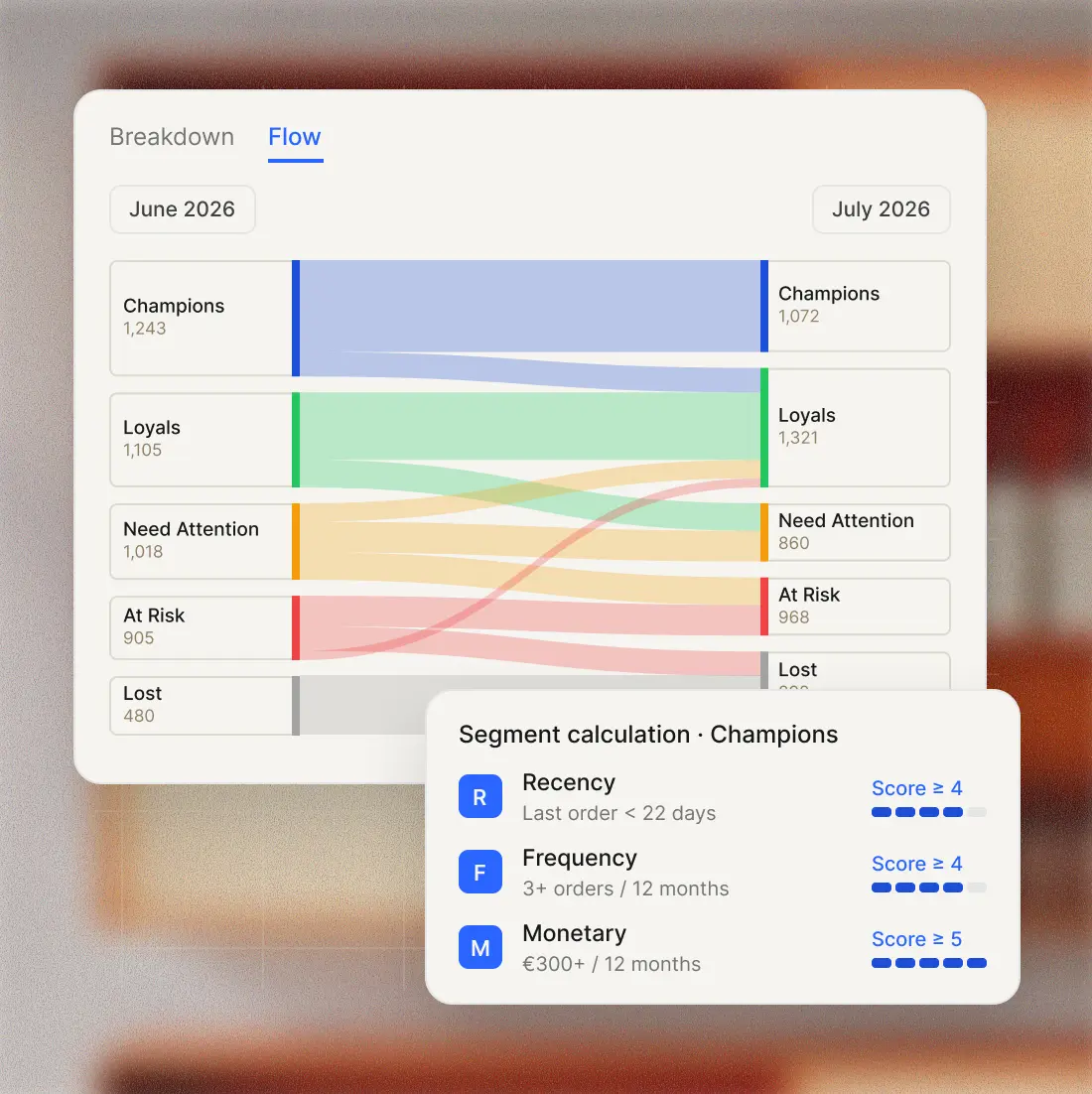

Your best customers: they buy often, recently, and spend the most.

Regulars with a good spend level. They come back on their own - help them trade up.

They have the profile to become loyal but aren't there yet. A little engagement tips them over.

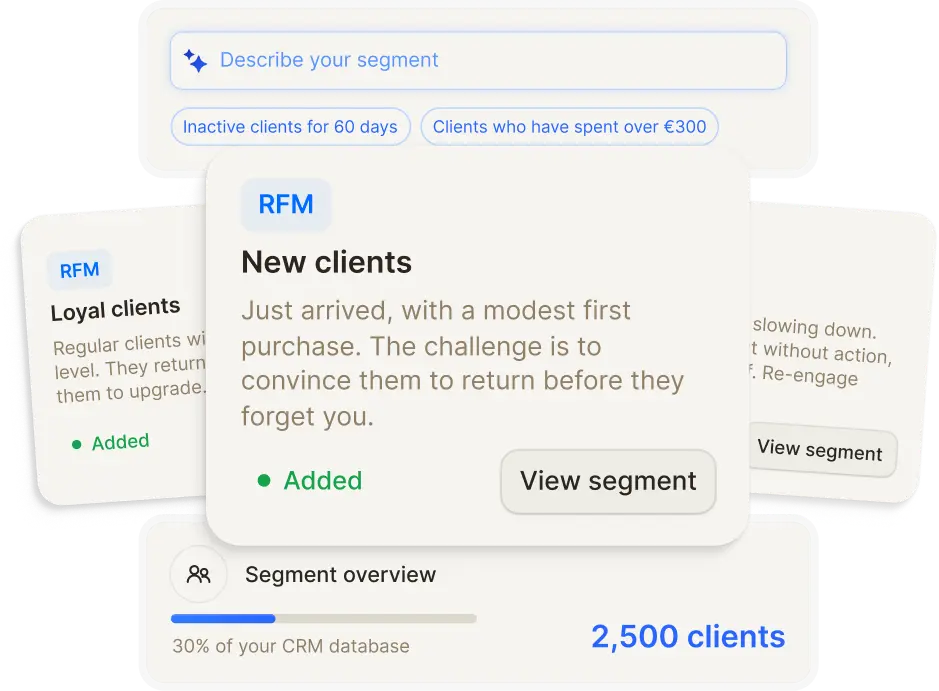
Just arrived, modest first purchase. The challenge is a second order before they forget you.

Significant and recent first purchase. High potential, and the right moment to build the relationship.

Engagement is slowing. Not in danger yet, but they will drift without action.

They used to be active and are becoming rare. A targeted offer can still wake them up.

Former very good customers who have disappeared. Too valuable to let go without reacting.

No purchase in a long time. Without intervention they leave for good.

Inactive for a very long time. One last reactivation attempt before you stop spending on them.
The analysis of all ten is always visible. You activate the ones you actually want to use - and from that moment they're available as a target for missions, rewards and push, and as an automation trigger.
Available for Shopify brands with at least 3 months of order history, 50 purchasing customers and 50 paid orders. Below that, the groups would be noise - start with custom segments instead. PrestaShop coverage is partial, and we'll show you exactly what's missing before you decide.
They don't cover your business.
Lifecycle groups are universal. Your business isn't. Dynamic Segmentation builds any audience you can describe, on 80 loyalty events your CRM never sees - and there's no limit to how many you run.
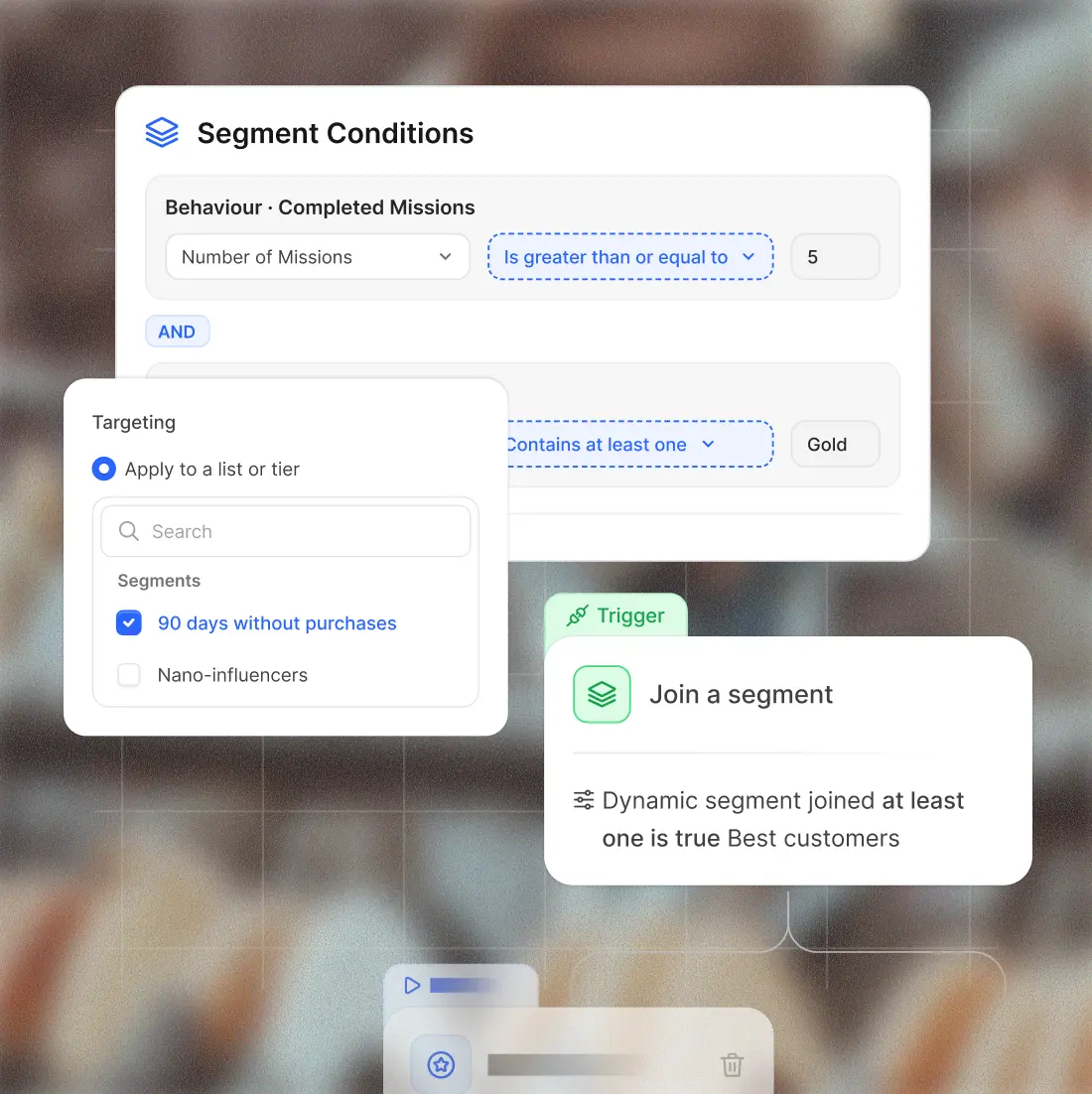


“We miss you” automation on entry, 100 points credited, CRM event

VIP-only mission, exclusive rewards, wallet push

Push on what their points are worth, nudge toward the next tier

Video review mission unlocks for them only, premium reward

Country-specific missions, localised push