Your stores see customers your program never meets. The purchase joins no account, feeds no segment, triggers no second visit. Online and in-store run as two audiences, built from the same customer. Every anonymous checkout is a customer you paid to bring in and can't bring back.

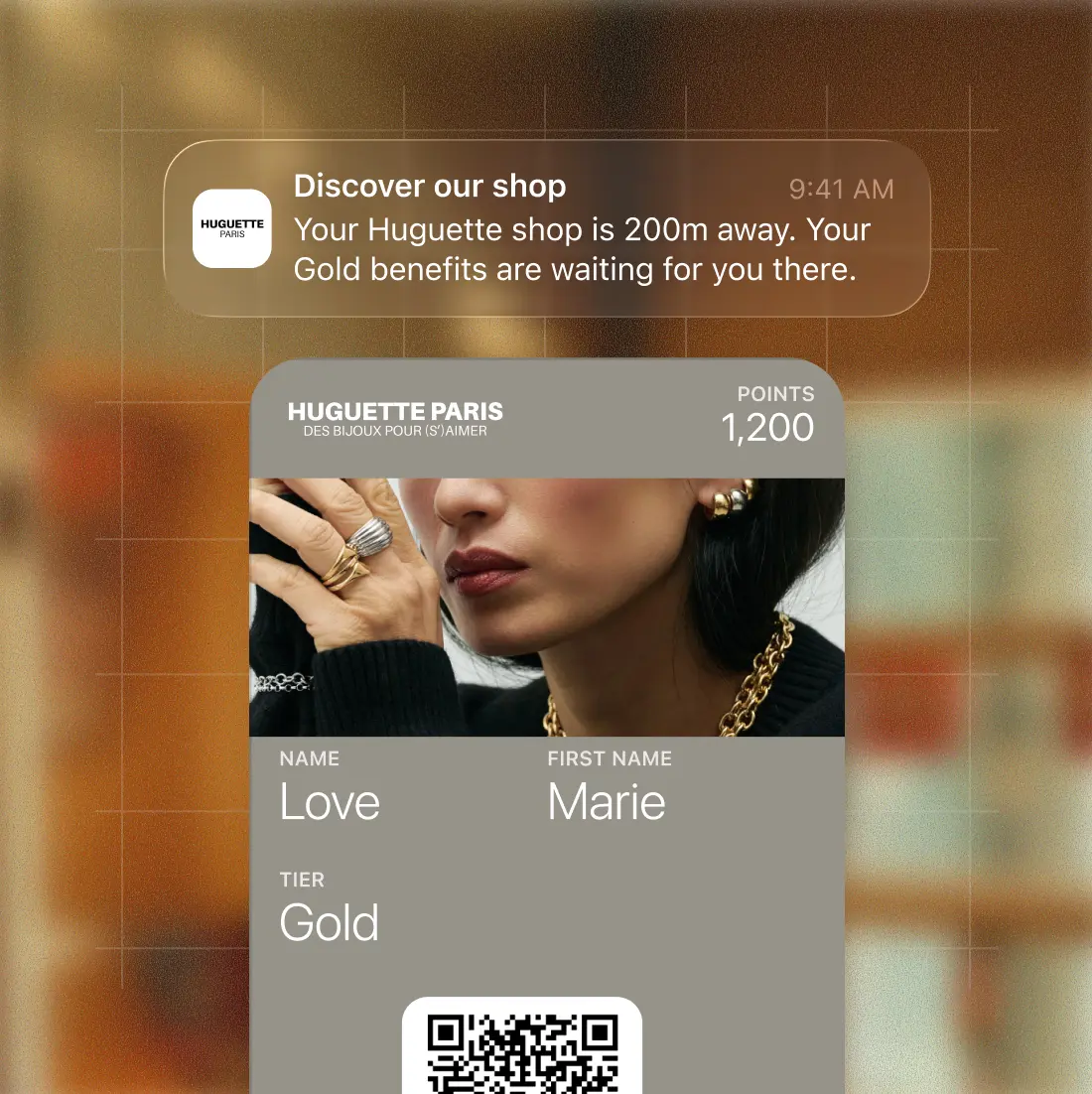
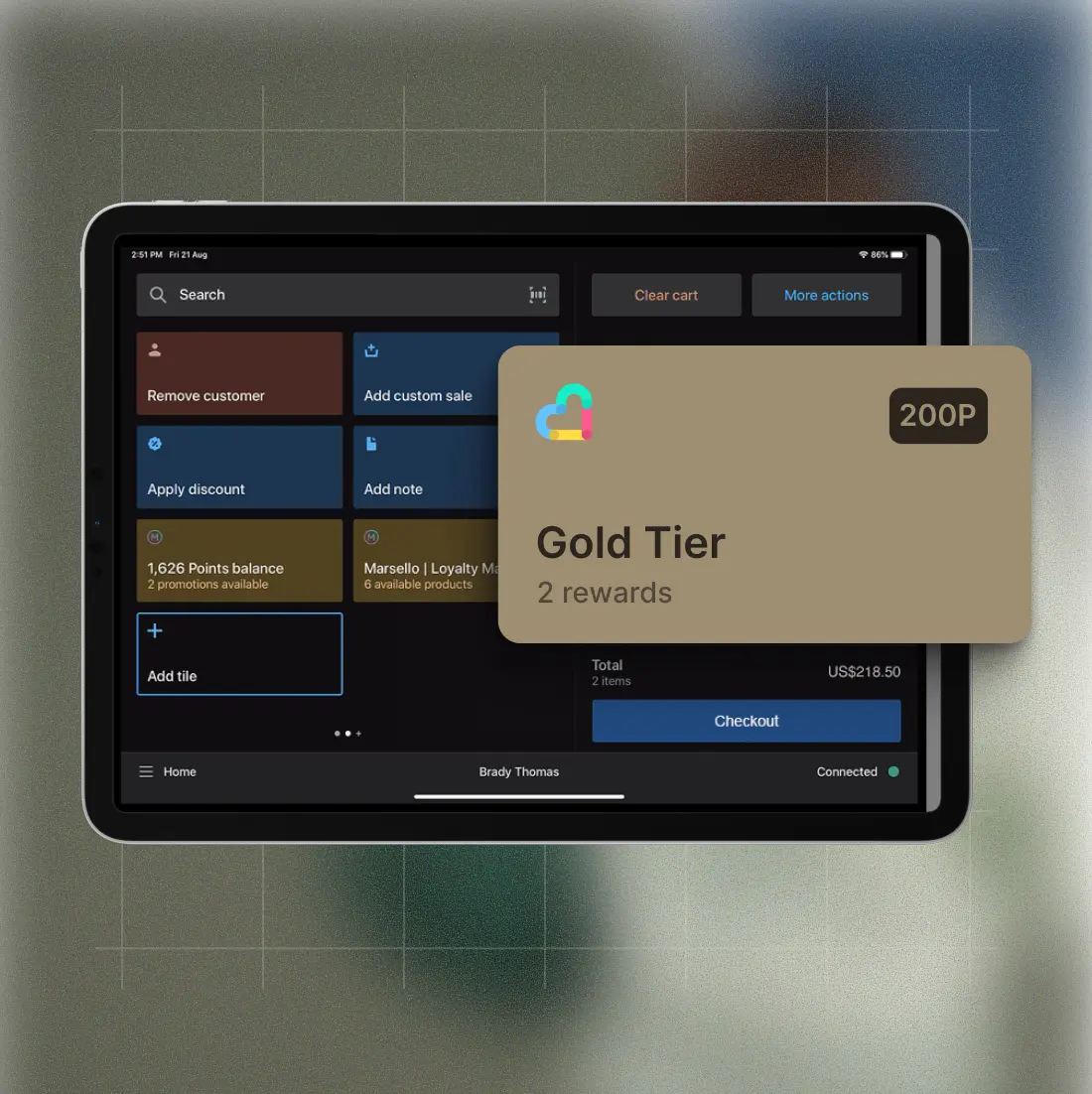
Customers earn and use the same points, tiers and rewards on your e-shop, in your stores and on mobile, with the data flowing back into your stack.


.webp)
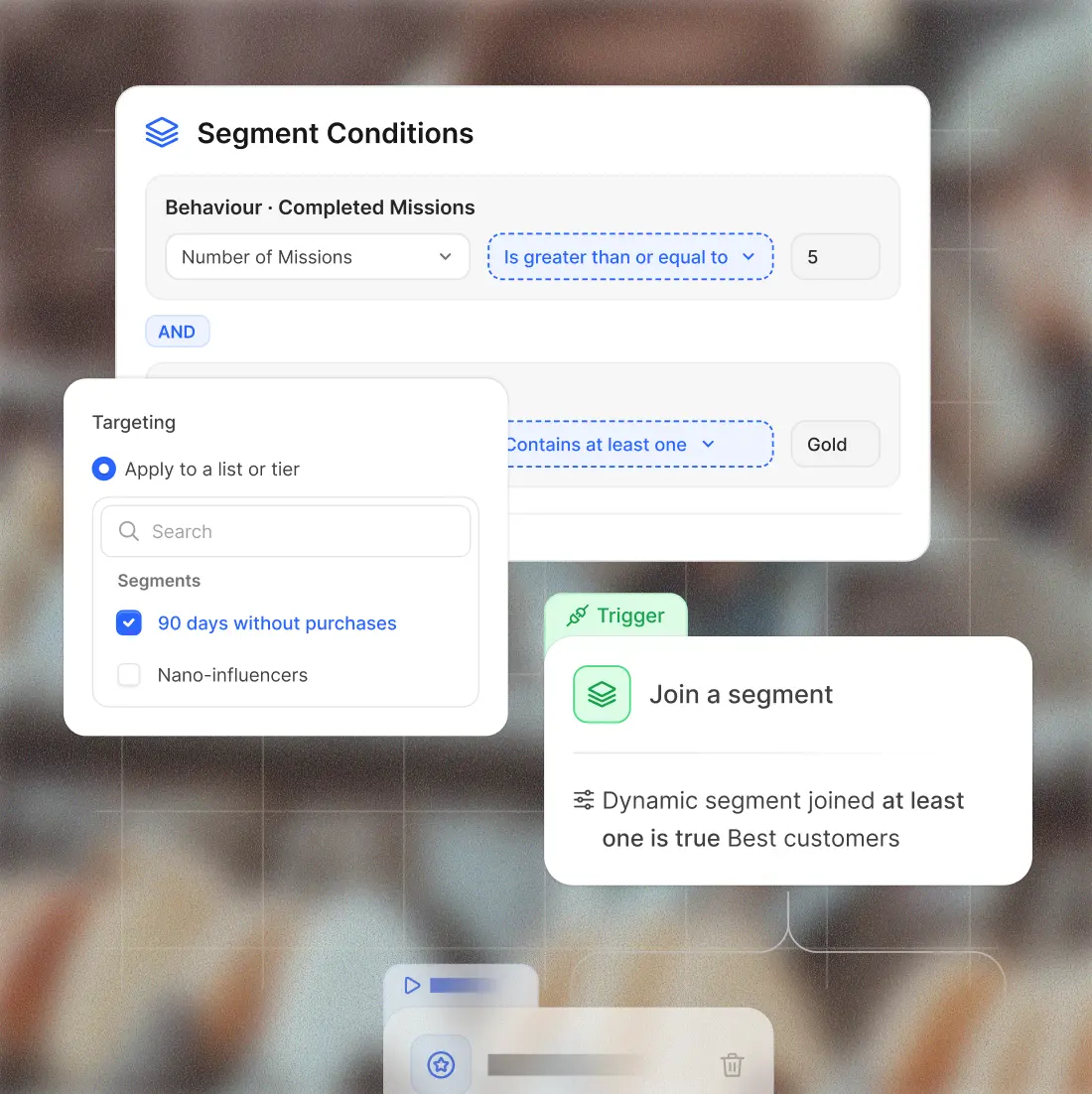
We don't replace your CRM, we feed it the first-party data an in-store purchase never produced.
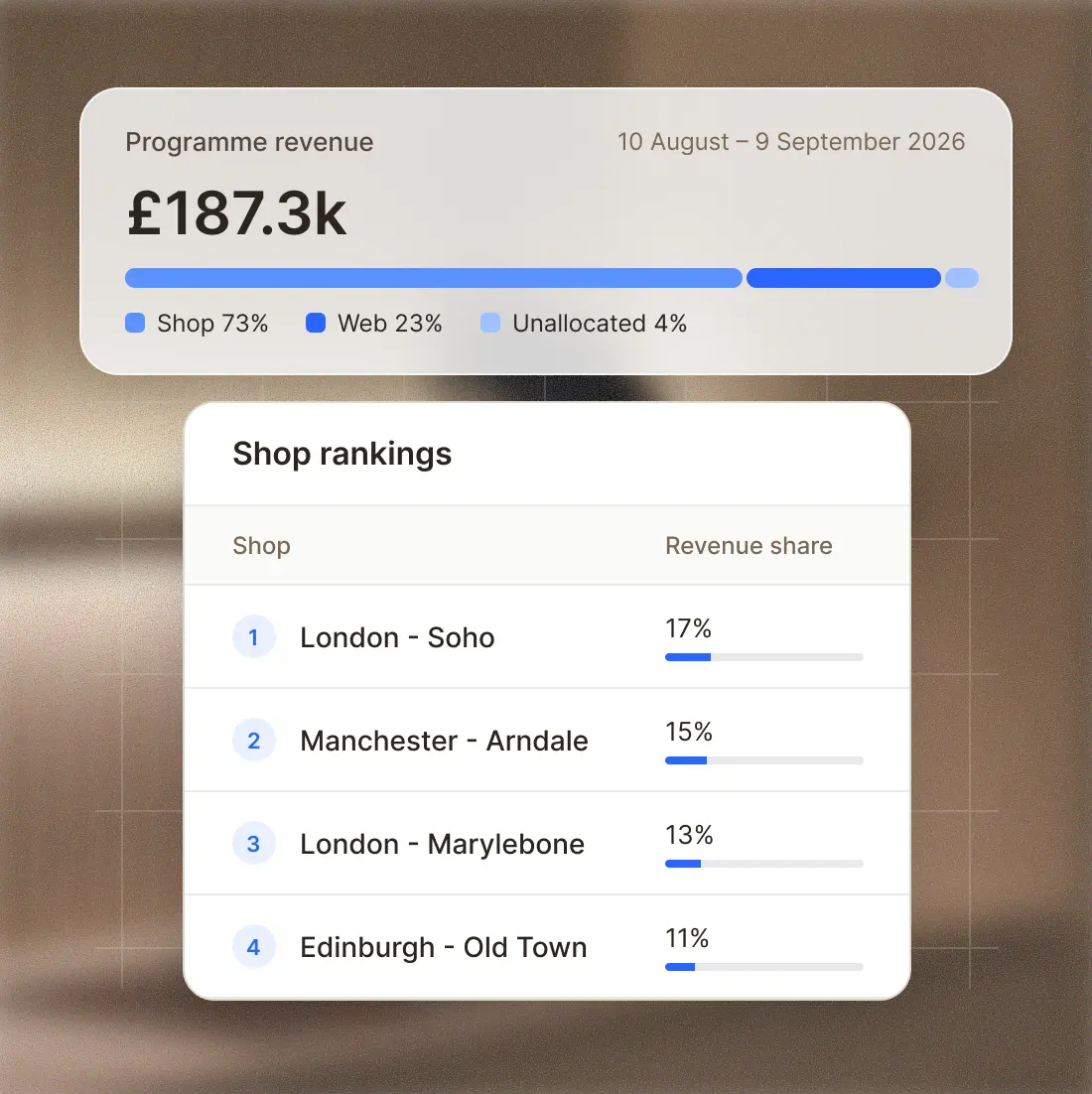
Your e-commerce has had analytics for years. Your stores finally get the same.

.webp)
PXP
“Loyoly enables us to centralise the operations, simplify store management and offer a meaningful programme.”

LA BELLE BOUCLE
"Not only does Loyoly offer a very attractive programme, but the team is also highly responsive and always on hand to support us on a day-to-day basis."
A dedicated CSM takes you from kick-off to go-live, then a ROI review at 6 months on your own targets.
.webp)
It usually is when the POS and the e-shop live in different systems. With Loyoly they share one platform: Shopify POS and the Apple and Google Wallet are native, so there's no custom build to schedule.
A dedicated CSM runs the setup with you, your store teams are trained before launch, and the program goes live in days. You can start online and switch stores on when you're ready, same program.
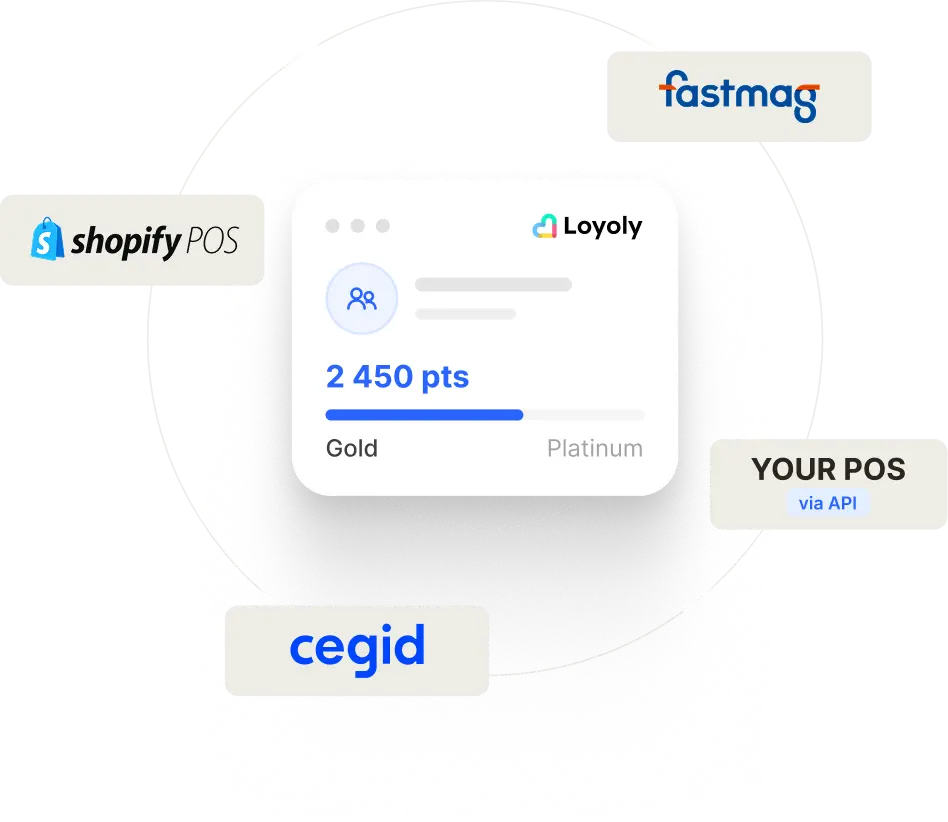
Shopify POS, Fastmag and Cegid connect natively, and any other till connects through our API and 25+ integrations. Whatever the setup, we map earn and redeem in both directions, so a point earned in store and a point earned online sit on the same balance.
Tell us which POS you run and we'll show you exactly how it connects before you commit.
Keep it. Loyoly supplies your CRM rather than competing with it. Your CRM sees opens, clicks and orders, but not what happens inside your program or at the till.
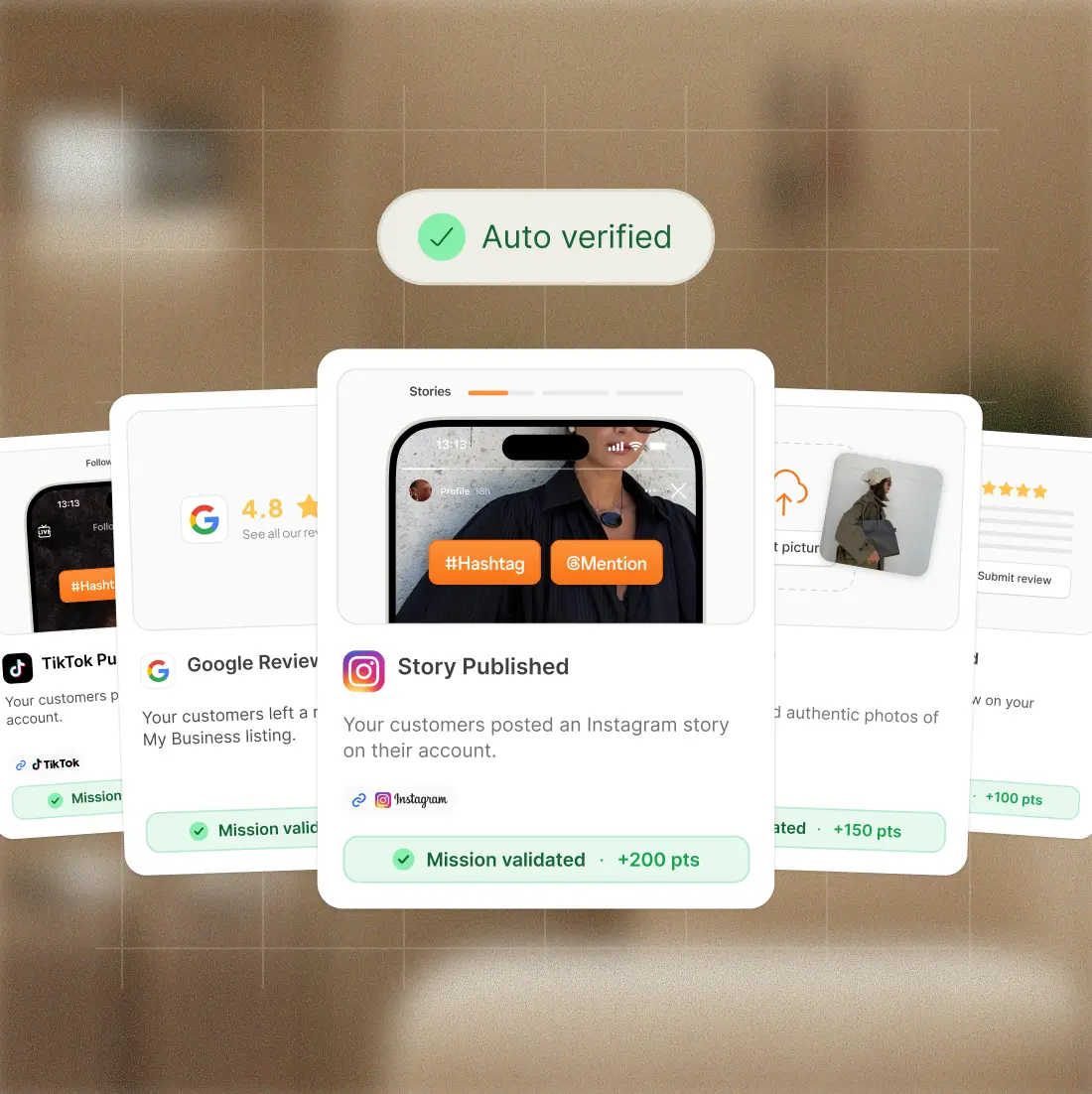
Loyoly captures that (missions, points, VIP tier, in-store purchases, opt-ins and declarative data) and pushes it back, so your segments get sharper instead of duplicated.
Store Analytics: prove in-store ROI, compare every store, and export the ranking for your retail teams, across two back-office pages, Trends and Ranking.
Adoption is the real omnichannel risk, and it plays out at the counter. So there's nothing for the customer to carry or install: the associate identifies them in seconds, their profile and rewards show up at the POS, and checkout stays fast.
Your teams are trained before go-live, and recognition takes a single step in the flow they already use.
That's exactly what the unified profile prevents. E-shop, stores and Wallet all write to one consented customer record, and that record syncs to your CRM and stays visible to support. The first-party data an in-store purchase used to lose, who bought, what, and when, now flows into the tools you already run.