.png)


You're running a Shopify store, you want to launch a loyalty program, and three names keep coming up: Smile.io, Rivo, and Loyoly. All three promise points, tiers, referrals. So what's actually different? Quite a lot, it turns out.
This comparison breaks down each platform's real strengths, real weaknesses, and ideal use case, so you can make a decision based on your actual business, not on marketing pages.
What these three platforms actually do
Before comparing features, it's worth being honest about what each tool is trying to solve.
Loyoly: post-purchase engagement beyond points
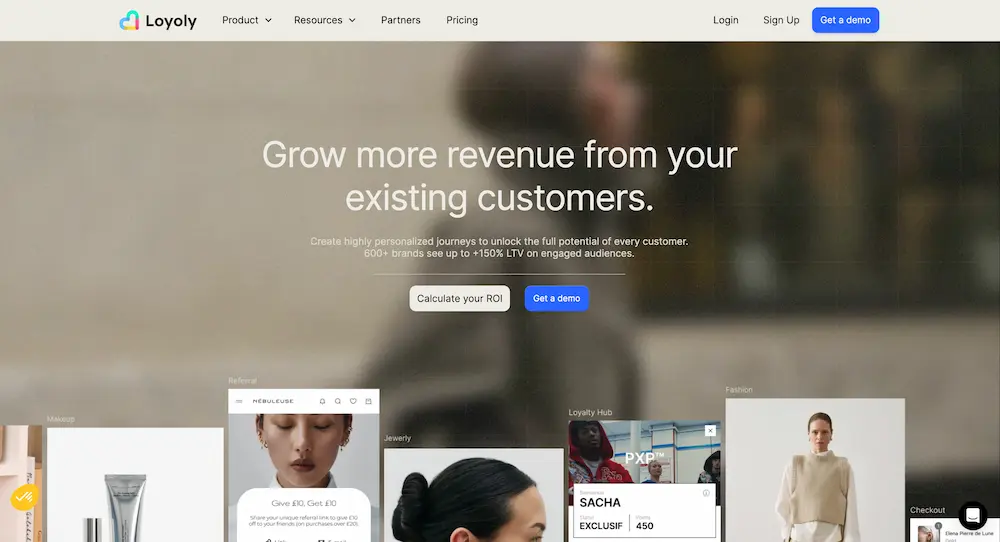
Loyoly's positioning is deliberately broader. It's not just a loyalty program tool: it's a post-purchase engagement platform covering loyalty, referral, UGC, reviews, social amplification, wallet passes, and push notifications, all connected by a native automation engine.
The platform serves 600+ ecommerce and retail brands, primarily in Europe, spanning fashion, beauty, food, health, and home decoration. The headline stat from their Loyalty Benchmark (Loyoly, 2025): brands using the platform see an average LTV increase of 150% among their engaged customer cohort.
The trade-off? It's mid-to-upper market pricing (entry at $99), available only on Shopify and PrestaShop, and the API is still rolling out (planned Q2 2026). Not the right fit for a Day 1 merchant on a tight budget.
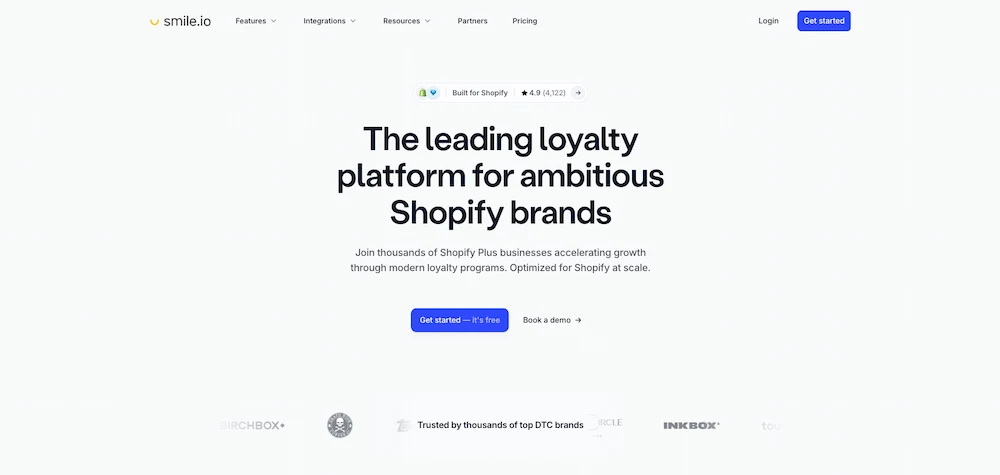
Smile.io: the plug-and-play default
Smile.io built its reputation on simplicity. You install it on Shopify, configure points and tiers in a no-code interface, and you're live in minutes. That's genuinely useful for a merchant launching their first customer loyalty program who doesn't want to spend weeks on setup.
The trade-off is depth. Smile.io covers roughly 10 engagement actions: purchases, sign-ups, birthdays, social follows, a review or two. There's no native automation engine, no UGC collection, no wallet pass, no omnichannel earning in-store. It's a solid MVP, but it stays an MVP.
The other issue is pricing. The entry plan is accessible, but as your order volume and customer base grow, costs escalate fast. Merchants at scale regularly report the jump from SMB to mid-market plans is painful.
Rivo: developer-first, design-forward
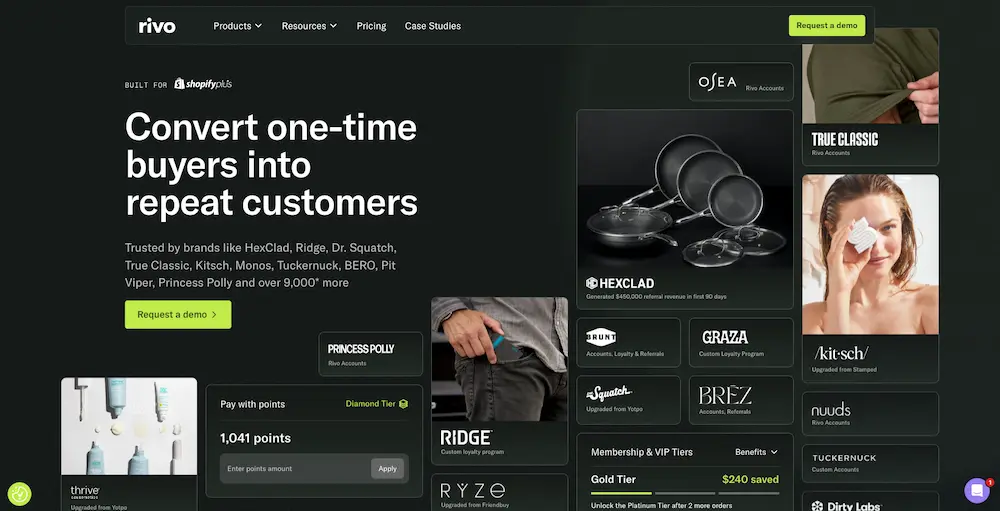
Rivo positions itself as the modern, native-Shopify alternative. It carries the "Built for Shopify" badge, ships product updates weekly, and genuinely invests in its API and developer toolkit. If you have an in-house developer and care deeply about UI customisation, Rivo is a real option.
The weaknesses are real though. Rivo is overwhelmingly US-focused: European brands report thin support and limited localisation. There's no omnichannel capability: no wallet passes, no in-store earning, no push notifications. And while the platform allows custom CSS, the more advanced design work requires the Developer Toolkit, which has a steep learning curve.
Pricing is entirely custom on all plans above the entry tier, which makes benchmarking difficult and budget forecasting awkward.
Feature-by-feature comparison: Smile.io vs Rivo vs Loyoly
Let's get concrete. Here's how the three platforms stack up on the dimensions that actually drive retention performance.
Engagement mechanics
Smile.io offers around 10 standard actions: purchases, account creation, birthdays, social follows, and a handful of review integrations. There's no automatic verification of actions, and social mechanics are limited to sharing and following: no UGC, no story posts, no TikTok.
Rivo's action count isn't publicly specified, but sits in a similar range. Social mechanics are limited to follows. No UGC generation, no automatic verification.
Loyoly supports 40+ engagement mechanics, including auto-verified social actions (Instagram stories, Reels, TikToks, reshares), multi-platform review generation, UGC collection, and custom webhooks for unlimited additional actions. This is a material difference: UGC is the only marketing asset that compounds over time, and most platforms simply don't collect it natively.
.webp)
Automation engine
Neither Smile.io nor Rivo has a native automation engine. You can set up basic point rules, but there's no conditional logic, no triggered journeys, no behavioural segmentation built into the loyalty layer itself.
Loyoly is the only platform of the three with a native automation engine: triggered flows based on customer behaviour, conditional logic, and personalised reward sequences. This matters enormously if you want loyalty to do more than reward purchases: reactivate dormant customers, push specific segments toward higher tiers, or trigger UGC requests at the right moment.
Omnichannel and wallet
Smile.io has no wallet, no in-store earning, and POS support limited to Shopify POS. Rivo is the same: no wallet, no in-store, Shopify POS only.
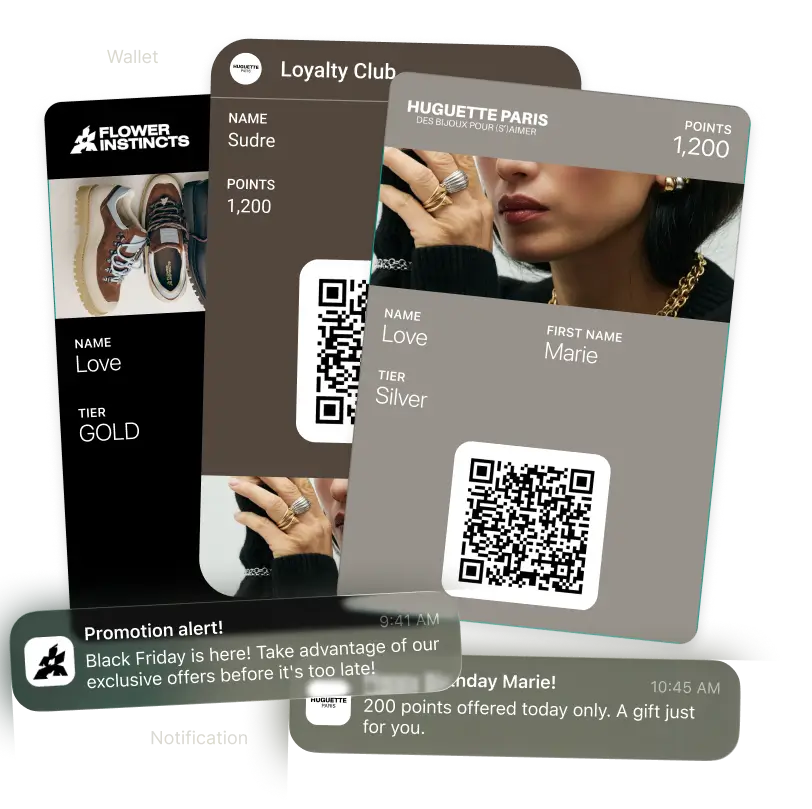
Loyoly offers a proprietary Apple and Google Wallet, developed in-house (not via a third-party partner), with dynamic updates, geolocated push notifications, and QR code redemption in-store. It also integrates with Shopify POS, Cegid, and Fastmag, which makes it relevant for brands with physical retail. According to Loyoly's Industry Report (2025), 30% of consumers say earning and redeeming points both online and in-store is a key driver of loyalty program participation: omnichannel isn't optional anymore.
On-site experience
All three platforms support a floating widget and a customer account module. Rivo and Loyoly both offer full custom CSS. Smile.io's branding customisation is more limited in depth: you control colours and logos, but the structure of the widget is fixed.
Loyoly goes furthest on on-site touchpoints: product page extension (showing points earnable per product), checkout extension (real-time reward redemption), and referral extension on the thank-you page. These extensions create loyalty visibility at exactly the moments that drive conversion.

Integrations
Smile.io connects to 30+ tools. Rivo to 50+. Loyoly to 20+ currently, with a full API in progress for Q2 2026. The integration depth with Klaviyo, Gorgias, Recharge, and Trustpilot is solid on Loyoly, which covers the core retention stack most brands run.
Support
Smile.io offers a dedicated account manager but no strategic sessions, no MBR/QBR cadence, and no bespoke development. Rivo is the same. Loyoly provides a dedicated account manager, strategic advisory sessions, MBR/QBR reviews, and custom development options: more of a partnership model than a vendor relationship. Their average support response time is under 2 minutes.
Pricing comparison: what you actually pay
Pricing transparency varies a lot across these three tools, which makes direct comparison tricky. Here's what we know.
Loyoly pricing
Loyoly's entry plan starts at $99/month, with SMB plans around $523/month and mid-market around $823/month. Enterprise is custom. The pricing reflects a platform that covers significantly more ground: you're not just paying for points, you're paying for UGC, referral, wallet, automation, and strategic support in one product.
Smile.io pricing
Smile.io has a public pricing page. Entry plan sits around $79/month. SMB-level plans run around $199/month. Mid-market plans climb to approximately $999/month. Enterprise is custom. The scaling cost is the main complaint from established merchants: what starts cheap becomes expensive fast once order volumes kick in.
Rivo pricing
Rivo's entry plan starts at $499/month, with all higher tiers on custom pricing. This is a significant jump from the other two at entry level, which makes Rivo a harder sell for brands still validating their customer retention strategy. The fully custom pricing above entry makes budgeting difficult.
Which platform gives the best ROI?
ROI depends entirely on how you use the tool. But the Loyoly Benchmark (2025), which analysed 600+ ecommerce brands, shows that engaged customers (those who've used at least one reward) generate:
- +40% more orders (fashion), up to +61% (home & decoration)
- +12% higher AOV (fashion) up to +34% (home & decoration)
- +60% LTV (fashion), up to +117% (home & decoration)
The monthly ROI across sectors averages between 11.5x (beauty) and 23.2x (sports & fitness). That's the ceiling you're working toward, regardless of which platform you choose.
Who should choose which platform?
Honest answer: it depends on your stage, your stack, and your ambition for what loyalty should do for your brand.
Choose Loyoly if...
You're a mid-market ecommerce or retail brand, primarily European, and you want loyalty to drive real business outcomes beyond points accumulation. If you sell across online and physical channels, want to collect UGC and reviews natively, need an automation engine to personalise post-purchase journeys, and want a platform that grows with you as a strategic partner, Loyoly is the most complete option of the three.
It's worth noting: Loyoly works on both Shopify and PrestaShop, which is a meaningful differentiator for European brands that haven't migrated to Shopify.
Choose Smile.io if...
You're a Shopify merchant launching your very first loyalty program, you have a limited budget, and you want to be live in an afternoon. Smile.io is a legitimate starting point for brands that want to test loyalty before committing to a more sophisticated platform. Just be aware that you'll likely outgrow it as your brand scales: and migration has a cost.
Choose Rivo if...
You're a US-based DTC brand on Shopify or Shopify Plus, you have developer resources in-house, and customisation of the loyalty UI is a top priority. Rivo's API and developer toolkit make it a genuine option for technical teams who want to build something bespoke. Less suited for European brands or those needing omnichannel retail integration.
What the data says about loyalty program performance

Beyond platform features, it's worth grounding this comparison in what actually drives loyalty program performance. A few figures from Loyoly's Industry Report (2025), based on 1,016 French consumers:
23% of consumers say a rewarding loyalty program is a key reason they return for a second purchase: that's a +10 point jump compared to first-purchase drivers. Loyalty matters more after the transaction than before.
71% of active loyalty members say immediate discounts on purchases are the primary driver of engagement. Followed by ease of earning rewards (39%) and omnichannel earning, both online and in-store (30%). Features matter, but simplicity and accessibility matter more.
On referral: 61% of consumers say a personal financial benefit is the top motivator for recommending a brand to friends. Referral conversion rates across sectors sit between 30% and 41% on the Loyoly Benchmark, which makes referral one of the highest-converting acquisition channels available to ecommerce brands.
If you want to explore how referral marketing fits into your broader acquisition strategy, or how UGC can compound the value of your loyalty program, both are worth reading alongside this comparison.
The verdict: Loyoly vs Smile.io vs Rivo
No single platform is best for everyone. But here's the honest breakdown:
Smile.io is the easiest way to get a loyalty program live. It's built for merchants who want simplicity above all else. The ceiling is low and the costs scale poorly, but as a starting point it's legitimate.
Rivo is the developer-friendly option for US Shopify brands that want full UI control and a modern API. Its European coverage is limited, and the full-custom pricing above entry level makes budget planning hard.
Loyoly is the most complete post-purchase engagement platform of the three. It's the only one with a native automation engine, built-in UGC collection, a proprietary wallet, real omnichannel capability, and a support model that functions as a strategic partnership. If you want a loyalty program that drives measurable LTV growth, not just points accumulation, it's the strongest choice for mid-market brands.
To sum up: Loyoly, Smile.io, and Rivo all offer points, tiers, and referral, but they serve different stages and ambitions. Smile.io is ideal for early-stage merchants, Rivo for developer-led US brands, and Loyoly for mid-market brands that want loyalty to drive genuine engagement, UGC, and omnichannel retention.
Choosing your loyalty platform is one of the most consequential retention decisions you'll make, because switching costs are real and customer data doesn't transfer cleanly. If you're at the mid-market stage and want a platform that functions as a growth partner rather than a SaaS tool, Loyoly is worth a serious look. Their average support response time is under 2 minutes, and their team runs MBR/QBR sessions to help you extract maximum value from the platform over time.
FAQ
Is Loyoly better than Smile.io?
Loyoly offers a significantly more complete feature set than Smile.io: 40+ engagement mechanics vs. roughly 10, a native automation engine, built-in UGC, and a proprietary wallet. For mid-market brands serious about retention, Loyoly outperforms Smile.io on depth. Smile.io remains the better option for merchants launching their first program on a limited budget.
Is Rivo available in Europe?
Rivo is primarily US-focused. European brands report limited support and localisation. For European ecommerce brands, Loyoly, which serves 600+ brands primarily in Europe and integrates with European POS systems like Cegid and Fastmag, is a more suitable choice.
What is the difference between Smile.io and Rivo?
Smile.io is a plug-and-play loyalty tool designed for quick setup with minimal technical resources. Rivo is developer-first, offering a more open API and advanced UI customisation for technical teams. Both are Shopify-only. Rivo's entry pricing is significantly higher ($499/month vs. $79/month for Smile.io).
Does Loyoly work with PrestaShop?
Yes. Loyoly is available on both Shopify and PrestaShop, which makes it relevant for European brands that haven't migrated to Shopify. Smile.io and Rivo are both Shopify-only.
Which loyalty platform has the best ROI?
ROI depends on how aggressively you use the platform's features. Based on Loyoly's 2025 Benchmark (600+ brands analysed), engaged customers generate between 11.5x and 23.2x monthly ROI depending on the sector. Platforms with richer engagement mechanics: automation, UGC, referral, omnichannel, give more levers to drive that ROI.
Can I migrate from Smile.io or Rivo to Loyoly?
Yes. Migration is possible, though it requires careful management of customer points, reward IDs, and tier status. Loyoly's team handles migration support and recommends a brief programme pause during the transition to ensure data integrity. Clear customer communication before and after the migration is essential.




.webp)