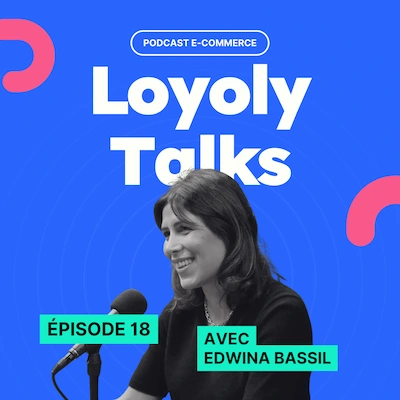
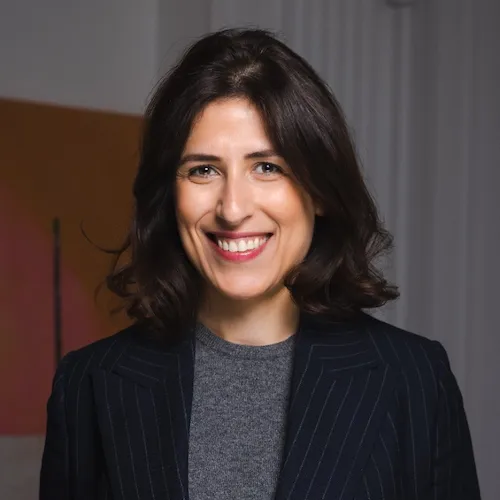
[00:00.0] Thank you, Edwina, for accepting the invitation. Thank you very much. Thank you, Joseph. I’m really pleased. Today we’re going to do an episode that’s quite different from the ones I usually do. We’re going to talk in particular about services, digital services companies, and also—given your role within European Digital Group—we’ll talk a little bit about M&A as well. [00:24.1] So I think this will interest both e-commerce players, whoever they may be, and retail more broadly too—whether they’re solution providers, partners, agencies, or the merchants themselves directly. So I’m looking forward to getting started, but before that, I’ll let you introduce yourself. [00:39.5] Yes, thank you very much. So, I’m Edwina. I’m Head of Acquisition and Integration activities within the EDG group. I joined the group at its creation, so I’m also part of the founding team, and I now have over 15 years’ experience in M&A. [00:56.8] To give a few headline metrics, I’ve led more than 70 acquisitions so far, including 30 within EDG. That means I’ve been able to support—or, let’s say, execute on behalf of the group—transactions involving companies of varying sizes, with entrepreneur-led profiles as well as corporates or investors. [01:21.0] So over the last 15 years I’ve worn all the hats, across quite different business models. That’s me in a nutshell. Today within EDG, I look after acquisitions and integration, as I said, and also anything related to the group’s transformation—its structuring and all the strategic topics we may face. [01:45.6] Which means there’s also a starting point where we acquire a company, integrate it, and make sure we help it transform and grow. Brilliant. And for those who might not yet know European Digital Group—or EDG, for insiders… [02:03.2] Of course. EDG is a group specialising in digital transformation—and now AI transformation. The group was created at the end of 2019 with the aim of consolidating the market for digital services, on the basis that we needed to bring in an expert for each lever of AI-driven digital transformation, serving large corporates, mid-sized companies and SMEs. [02:27.8] The original objective was to recognise that clients need increasingly sophisticated players to support them across all the levers of digital transformation. But at the same time, clients find it frustrating to have 10 to 15 different points of contact. [02:45.2] So our goal is to offer what the market calls an end-to-end proposition, so we can support them on IT topics, tech, solution integration—whether Microsoft or Salesforce—cloud, infrastructure, cyber security, of course AI and data and everything around it, whether that’s data for tech or marketing data. [03:12.4] And then the disciplines around marketing agencies—performance marketing or digital marketing—as well as everything around digital and offline content. And I’m forgetting a fairly cross-cutting stream, which is digital product, meaning e-commerce as well. [03:32.4] And I think you’ll know some of our companies—Axom, Ad’s up. On data, we have Equancy; on cyber, we have Metsys. So we also have leading companies in each of their markets that have joined the group. [03:48.6] And in total, we’re talking about how many companies? So we have around thirty acquired companies. We created ten. So those thirty are the ones we acquired. We launched ten companies from scratch. So today we have around forty companies, but they’re grouped into around ten major areas of expertise. [04:05.6] So the group’s philosophy is also that once we bring in a new area of expertise via a company, the goal is to consolidate that market by making further acquisitions—what we call build-ups. Which means we don’t have forty different expertises, but rather around ten major ones. [04:26.6] Within those, there are sub-expertises, which makes it relevant each time to have a company that addresses specific needs. On the other figures: today we have roughly 2,600 talents across the group. We’ve exceeded €300m in revenue. [04:42.9] So in five years, we reached €320m in revenue. We’re present in around a dozen countries, with a strong presence in France today, a strong presence in Spain, and the objective of expanding our other international geographies—and above all, becoming a true international reference player. [05:02.0] We serve around 2,000 clients—large accounts, mid-sized companies and SMEs. And I’d say around 40 to 50 entrepreneurs have joined us and become partners alongside us within the group. There we go. Great. [05:17.6] So before we get into the details, I suggest we start with a quick true-or-false. Quick question, short answer. First question: the biggest challenge for an agency today isn’t tech, but recruitment. That’s false. [05:35.3] With the arrival of AI—or at least the growing importance of AI—I think it’s increasingly tech. Most M&A in digital fails because of human issues, not financial ones. True. Over the next three years, we’ll see massive consolidation in digital services. True—and it’s already happening. Brands increasingly want a global support model, not just technical support. True, I agree. Branding is now as important as performance for digital services companies. [06:12.8] True and false. Today you can’t do without one or the other. Clients are looking for branding and performance at the same time. Because you can have great branding, but if there’s no performance, the branding doesn’t do much—it works both ways. [06:29.4] Absolutely. Agencies need to offer strategic advice beyond simple execution. That’s increasingly true, precisely with the rise in AI capabilities—and I think we’ll have the chance to talk about it. Today it’s important to move up the value chain, because we may face waves of automation, and execution is starting to become a commodity. [06:52.5] Which means agencies—at least service businesses—need to move upmarket into strategic consulting. Do brands really understand the value of a service provider? Unfortunately not always, so there’s more education needed. Certifications like Shopify Plus, Klaviyo Elite, etc. really make a difference to winning clients. True. Clients are mainly looking for a close relationship, not necessarily the very best technical expertise. True and false—I’d say both. You can be great mates with your provider, but if they’re not good, you’ve just gained a friend and lost a bit of money. [07:33.6] That’s it—it depends on each person’s priorities. Exactly. A good service company is first and foremost one that challenges its client, not one that just says yes. True. And last question, bonus: generative AI will replace content agencies within five years. [07:52.1] I’d say it will transform their work. We’ll still need creative agencies. The difference will be putting the true craft of the creative agency back at the heart of the client relationship: being proactive, being ahead of the curve—more on strategic advice and vision. [08:20.3] So we need to refocus the dial on the real value—the value proposition the agency should deliver to its client. So yes, I think there will be a shift—in the job itself, in the nature of support, and in the weight of the value proposition versus what exists today. [08:37.4] And speaking of change, you’ve seen quite a lot over recent years, with all the experience you’ve built through the various acquisitions and new company creations. In your view, what are the major shifts over recent years—on the brand side in terms of expectations, and therefore in digital roles and métiers? [08:58.9] Yes—I touched on it in the introduction. For a few years now, it’s been a market reality: digital and digital services roles have become very sophisticated and very specialised. Fifteen years ago that was less true—fifty years ago, even less so. [09:18.4] So client expectations are becoming increasingly demanding and advanced. That makes true specialists much more relevant than generalists. That’s why we see an ecosystem of new companies emerging, alongside more established players—but as pure-plays in each discipline. [09:40.8] And today the client expects real expertise—and for those companies to be slightly ahead of the curve compared to what they already know, or what a generalist can bring them. So what we see is clients increasingly looking for players who can deliver an end-to-end approach—a genuinely global offer—but still carried by experts, always by experts. [10:08.8] And when we say that, it doesn’t mean becoming a generalist. You need a minimum of 200 to 300 consultants in each discipline to have that edge, that market firepower, and to address complex needs that combine several disciplines. [10:30.3] Today you can’t talk about branding without technology, creativity without data, or AI without data, etc. So roles are highly expert, but also highly connected. Which means that instead of working with ten providers—each on their own building block, and when something goes wrong it’s always “the others’ fault”— [10:57.7] the client is now much more comfortable working with a player capable of supporting them across multiple expertises, but in a concentrated or orchestrated way so the overall solution is coherent and works. [11:15.1] That’s the observation we made five years ago, and it’s why we created EDG in the first place—because the world of marketing and communications and the world of IT and data can no longer live separately. We need to make those two worlds talk, so we can deliver highly specialised solutions by bringing together experts—each delivering their piece of the puzzle. [11:44.3] Do you think—when you mentioned Spain earlier—that the brands’ desire for both specialist expertise and orchestration across levers is correlated with the maturity of the market? [12:02.2] I’m thinking of Spain because perhaps we’d say it’s a slightly less mature market. Existing agencies might be more “360”, and from what you’re saying it’s moving towards more specialisation while keeping orchestration capacity. That’s absolutely true. The more mature the market, the higher client expectations—and the greater the need for an expert in each discipline, and therefore orchestration between those different companies working together. [12:28.2] Now, we’ve positioned ourselves well in Spain, and we can see that the Spanish market is becoming more mature and extremely dynamic. We’re also seeing real specialists emerge in each discipline. [12:44.5] And today the Spanish market is highly attractive—on a par with the French market—but with stronger growth momentum, and also the advantage of very strong resources with day rates—or at least prices—that are competitive compared to the French market. [13:04.0] Which means the holy grail would be to serve international clients from France, while having delivery capability at competitive prices—which is also what we’re trying to do. This international angle is really interesting. [13:20.8] Let’s come back to it in a moment. Just before that, you said earlier that your role is not only acquisition, but also integrating the various service companies within EDG. How do you integrate today while preserving each company’s DNA? [13:41.9] That’s been our guiding thread since the group was created. We have a little motto: we aim to integrate without disintegrating. What does that mean? It means we integrate companies while preserving their DNA—their values, their management, everything that made them successful. [14:04.7] Without breaking these gems. Our objective is rather, by joining the group, to accelerate them and provide resources so they can speed up organically—developing new offers, entering new geographies, doing build-ups (acquisitions in their own market), and also structuring so they can strengthen their organisation in anticipation of future growth. [14:36.5] So how do we do that? Concretely, we’ve defined our own integration process. In reality, it starts even before the acquisition, to ensure that our future collaboration vision—what we call a Target Operating Model—is shared. [14:56.4] Because if we’re not aligned on how we’ll work together in the future, then the day after the acquisition we risk a clash. So we try to begin integration before the acquisition: defining shared governance and the target operating model. [15:17.3] We share our processes, our reporting, our tools—because we’ve put common processes and tools in place—but while also telling them: here are the elements or functions that will remain within the company and should remain within the company, because that’s what makes its DNA. [15:36.5] In particular, the two most important elements for us are sales and everything HR-related—people. Because a service company primarily sells and recruits. And that’s what makes the strength of our companies and their expertise. [15:55.0] And another crucial point is that we keep our companies’ brands. That allows management, employees, and clients to keep a real sense of belonging—or at least a guarantee of continuity and reliability. [16:17.7] So we asked ourselves: what elements ensure that post-acquisition, we don’t have churn—no consultants leaving, no clients leaving because of the acquisition. And today we’ve found that sweet spot, which means post-acquisition it’s quite smooth, both internally and externally. [16:39.3] And we focus on accelerating them: commercial acceleration, greater visibility, more marketing, structuring teams in functions that are still a bit fragile, common tools to improve synergies. [16:56.7] For example, we have a Group Salesforce CRM, Slack. We’re working on cost synergies too—shared licences, because everyone’s on Microsoft or Google. We’re also working with them on a shared HRIS, shared cyber security, which means they get very strong support functions. [17:22.4] So we take off their plates things that, frankly, aren’t very thrilling for entrepreneurs—not the core of their business. Exactly. So it’s more admin things, or things they do when they find the time. [17:39.6] And we leave them in control of the operational side—sales, development, vision—where we support them. OK—really interesting, and I’ve got quite a few follow-up questions on that. But just before that, let’s come back to international, which is a fascinating topic. [17:57.8] We started talking about your development in Spain—maybe still on that theme, and market dynamics in Europe more broadly. Is that dynamic in Europe, in Spain, a dynamic that’s common across Southern Europe in general? Are there different behaviours in other countries like the Nordics, DACH? [18:17.2] Yes, yes. It’s true there are quite different dynamics across Europe. Spain and Italy are very dynamic markets today. Dynamic because, first, they had lower maturity than France, but they’re catching up at a very interesting pace. [18:37.4] So there are some excellent players and real specialists. There’s a fairly dynamic ecosystem of entrepreneurs, especially in digital. So those are markets we’re extremely interested in. But there are also well-established markets that are structuring for our international development: the DACH region and the UK—which are a bit more complex to enter for cultural, historical reasons, etc. [19:12.4] So they’re geographies we’ll enter—at least I hope—mainly via acquisitions of companies of a certain size, so we can quickly reach meaningful scale in those markets and continue our development. [19:29.8] At EDG, we’re currently in around a dozen countries. The other countries are much smaller today than our footprint in Spain. We have some presence in Europe, the United States and Asia. And what’s interesting about international expansion—whether ours or any company’s—is: why go international? [19:56.7] For us it’s for several reasons. Today we’ve proven our ability to support a client across multiple expertises. We have clients we serve using four, five, six of our companies. So we’ve delivered the value proposition we wanted from the start: “your problem X requires data, AI, cyber and cloud—well, I have the experts, they’ll work together and deliver it.” [20:25.5] Those clients are often of a certain size—CAC 40 clients, or strong mid-sized groups—who also have international ambition. So for us, it’s been the best way to support them internationally. [20:44.0] It’s also the safest way. When we deploy resources locally, we know there’s business to support it. And there have also been other opportunities that were more acquisition-led, which we explored and that worked out. [21:03.1] That’s what I can say. We could talk about international for hours, but I don’t know if we have hours in front of us. In any case, that’s how we see things. Very interesting. And perhaps, for the service companies listening, what are the biggest mistakes or pitfalls you most often see when it comes to going international? [21:24.7] Wanting to go too fast without having built a solid base in the home market—and without having done the work on why you’re going and how you’re going. [21:43.0] “How I’m going” might be: I’m following a client, I’m sending someone from my team who wants to live elsewhere—but what resources am I giving them? It means having done a deep local market analysis. [21:59.2] Is it hiring locally? Is it buying a company? What financing do I have available today—because there are lots of options, including Bpifrance, etc. In other words, going in blind. And honestly, that’s one of the worst mistakes. [22:16.0] It seems obvious, but people still do it. You need to make sure you understand the local dynamics—either by doing the work internally or by being supported by advisers who do it very well—and make sure you incorporate local culture into how you operate. [22:39.8] Even if we think, for example, Spain is culturally close, etc.—yes, but locally there are different ways of doing things. You need the codes, and you need to speak the language at least a little. In each sector—for example, Shopify—you need to understand the market dynamics, the key players, how they deliver, their pricing, what clients are looking for. [23:04.5] So do that analysis before going in, and see how you can be supported in terms of financing so that if there’s a setback, it isn’t too hard for the company to absorb. Clearly. And to make it more concrete: you said you should first have a solid base in the home country—what’s the benchmark there? [23:29.9] I think in terms of solidity. The solidity of the company. If you’ve just launched, or it’s only been a couple of years and you’re still finding your feet, it’s very risky to go abroad. [23:50.6] For me, it’s borderline spreading yourself too thin. When I say “solid base”, I mean a profitable, growing business; established clients; a strong team; good organisation; good governance. Then international expansion becomes a form of geographic diversification that’s a continuation of what you’ve already built locally. [24:13.6] So if you don’t yet have a business that runs well, is profitable, and can finance international growth, it may be premature. In any case, it’s risky. OK—so in go-to-market terms, your recommendation would be to go with existing local clients first, to leverage that relationship— [24:41.4] and then potentially via acquisition, but only with the means to do it and a clear understanding of how each geography works. That’s really important, and I think we underestimate it. Each geography has its own codes—even simple things… [25:08.3] it sounds obvious, but there are countries where you’ll close the deal over a meal; others where you won’t. There are countries where everyone says yes, but in the end it’s no. [25:24.6] You need to understand; you need to be supported—at the very least by a local, or by people who may be French but live in the geography in question—so you don’t make the ten mistakes you could have avoided. Because in reality, you don’t always need to reinvent everything. [25:46.1] There are things you can understand quite quickly and incorporate into your international expansion without falling into traps—if someone already has experience with the topic. Absolutely. Really interesting on international. [26:03.1] Now, one of the other challenges—you mentioned it in the introduction—is sales and recruitment. On recruitment specifically, what skills are the rarest or hardest to find right now in service roles? [26:20.9] Yes—over recent years, and there are still new developments, so it depends when the podcast goes out—it could be… Anyway, jokes aside. Obviously, data and AI roles are highly sought after, and I’ll go into a bit more detail on data. [26:47.1] And for us as well, everything around cyber security expertise. But I’d like to add a bit more colour on AI roles. What’s difficult, because everything is moving so fast and you need some perspective, is hybrid profiles. [27:10.4] Those are very much in demand. By hybrid, I mean profiles that can speak business, technology, data, creativity, and the human side. Because today, AI—as I see it, and as the trend suggests—will be a kind of extension of human knowledge. [27:35.3] So whereas at one point we were looking for more and more developers, AI is starting to make developers’ work easier. Which means those profiles need to become much more business- and sales-oriented, perhaps more creative, or more data-focused, or focused on something else. [27:53.5] But in any case, hybrid profiles will emerge: people so passionate about multiple things that they stand out. And when we talk about AI today, there are the pure AI product roles, but also AI applied to specific métiers. [28:16.0] Because we’re no longer in theory—we’re much more in practice. And we need to find those profiles, which are still quite rare today. And of course we can’t forget data roles, because when we say AI, behind it, it’s data. [28:32.8] So I’d highlight those two or three profiles that I think are already scarce—or will become even more so. And once you’ve recruited talent, do you have strategies in place to retain them afterwards? [28:53.5] Yes—that’s a very good question. There’s been a strong focus recently on talent shortages. We’ve made it a priority within the group, but we’ve also worked a lot on how to retain talent. [29:14.0] Because losing a talented person is costly: there’s the notice period, then finding someone else, the time for them to join, the time to train them, etc. In practice, you can lose nine months of productivity—which is a lot out of twelve. [29:30.2] So to attract the right talent and keep them, there are some fairly simple things: having a strong reputation in the market, great clients, strong references, great projects. [29:47.6] Which means their day-to-day is exciting: working on major projects with interesting clients, etc. That’s great, but it’s not enough, because lots of groups can offer that. [30:05.5] You also need to support them through continuous training, because the world is moving so fast. So you need to upskill them constantly. That’s part of what they gain within groups that provide it. [30:23.2] Not all groups continuously upskill their people. And then, of course, there’s the incentive package—whether salary-based or equity. For top profiles, we try to offer an equity component as part of the package. [30:51.4] So in addition to everything we bring in terms of business, expertise, upskilling and interesting work, there’s also a sense of belonging—or the desire to perform even more—because equity can create a meaningful additional incentive beyond standard remuneration. [31:17.6] And then the last thing we put in place at group level is what we call career paths—within each company. [31:33.4] For example, there are tracks to become a partner within each of our structures. Each company built its own career path because the métiers are different. But we’ve also put in place—and it’s working quite well—internal mobility: we already have examples of talents switching from one subsidiary to another. [31:57.4] Because today the expertises are so broad, and some talents want to explore everything. So instead of leaving the group—and losing that talent, especially when they’re strong—we offer other opportunities within the group. [32:15.7] Which means we retain them, we offer them something new, and it meets their personal development and career needs. So that combination means that even if someone wants to leave, we can bring them back through another structure and try to meet their needs. [32:35.2] Very interesting. OK—now if we pull the thread a bit, especially on M&A. You mentioned earlier that as markets mature, we’re seeing consolidation in the sector. [32:54.4] In your view, is there anything beyond market maturity that explains that consolidation? Yes, yes. Obviously there’s market maturity—that’s clear. But the real question is: why do companies acquire other companies? [33:16.2] There are large groups—for example EDG in how we’ve been built—where the idea is to bring in experts along the value chain we serve. For us, that’s digital services. For other groups, it’s something else. But in any case, there’s a desire to integrate all the expertises along the value chain. [33:36.7] You can of course develop them internally, but when an acquisition is successful, it allows you to move faster. That’s the first point. The second is the emergence of new technologies—innovation in digital services—which means a large group or established company may want to integrate those technologies, especially companies that are gaining momentum in their field. [34:07.9] That’s much faster than developing it internally, and—let’s say—there’s less risk of getting it wrong. And of course that ties in with today’s topics around data and AI. Those are areas that will accelerate consolidation even further. [34:26.8] They’ll be among the areas where acquirers have appetite and want to position themselves. A third point—especially when we’re talking about very entrepreneurial companies—is that what might attract a large group is the talent and company culture. [34:51.2] Because when you acquire a company, you’re primarily acquiring expertises, clients, a book of business. But when we say expertises, in reality those are people—trained talents, with certifications, references, and recognition in the market. [35:14.3] And there’s also a culture. We see that when integration works—and of course there can be failures, but when it works well—it gives the acquiring group a new lease of life, because it brings a new way of working. [35:30.9] Often these are more agile, more entrepreneurial structures, with a more creative DNA, which adds freshness to larger groups. And it creates more… how should I put it? [35:52.0] It injects an entrepreneurial spirit into larger organisations that are often more established and structured. And finally, the last point I’d highlight: acquisitions can also be about seeking more recurring business models. Particularly in more challenging economic periods, you want to be more resilient—so business models with long-term contracts over several years, giving visibility on revenues, or models with technology or platforms that scale without needing constant reinvestment. [36:48.1] So there’s that complementary dimension—beyond pure expertise—of finding business models that strengthen what you already have and make the overall activity more robust. I have a quick follow-up question. [37:04.0] You mentioned resilience. Today, given the macro and micro context, that’s obviously at the heart of things—more than speed and growth, as it may have been when capital was cheap. [37:22.4] What’s your view on how service companies’ business models might evolve today? How can they create more recurrence? Yes. As I said, you create recurrence in different ways. [37:38.6] One is being able to sign multi-year contracts with clients—long-term contracts, over one year—which provides visibility. Another is being positioned on must-have expertise rather than nice-to-have. [37:59.8] When I say must-have expertises—for example, delivering cyber security services like a SOC or managed cyber services—the client won’t switch those off overnight just because there’s a bit of economic turbulence. [38:21.4] The same is true for infrastructure, cloud, or major data programmes. They might reduce scope a bit, but they won’t turn off services that are fundamental. [38:37.9] And it’s also true today for marketing and communications: you need to be effective on Google, on LLM-era search, on social networks, to be able to sell. If you cut all marketing investment or content creation, the business risks disappearing from digital channels—which are now the main growth driver for young, dynamic companies. [39:08.6] So you’re better off maintaining your investment—maybe reducing it, or doing it differently and better—rather than cutting it. So service companies need to create real value for clients: a service that truly matters, where cutting it creates risk—loss of business, weaker operations, loss of data, etc. [39:35.7] And then there are business models that are inherently resilient. I mentioned managed services. There are also subscription models for platforms or software—those kinds of models that complement must-have services. [40:00.0] Which means the client won’t typically arbitrate those services away. Very clear. OK—so when you look at a company, what’s your framework to benchmark it, across all the different criteria? [40:23.7] Yes, that’s a very good question, because people can stop at very quantitative criteria. We’ve built our own framework with both quantitative and qualitative criteria. By way of preface: we’re specialists in digital services—service businesses. [40:49.1] Since the group was created, we’ve reviewed over 1,000 companies in these fields. That gives us a strong benchmark on the KPIs we look at—financial, operational, etc. [41:05.4] And it allows us to quickly see whether a business is outperforming, underperforming, or has improvement levers. On the quantitative side: the basics—revenue, revenue growth, profitability in terms of gross margin and EBITDA. [41:26.4] We look at ratios like client concentration, customer churn, whether there’s recurrence and resilience. We look at consultant churn too, to see if they can hire and retain people and keep clients. [41:45.1] We also look at other operational ratios—for example in consulting businesses: utilisation rate, day rates, bench time, etc. And in marketing agency métiers, we’ll look at—maybe not everyone follows the term—but MRR per consultant, or gross margin per consultant: those kinds of metrics to assess financial and operational performance. [42:18.3] So of course, for each métier—data, IT, agencies—we have our own set of KPIs. And more generally, we look very factually at P&L ratios. [42:38.8] For example, gross and net margin on revenue, but also the weight of overhead costs on revenue—rent, top management compensation, and things like that—which can sometimes reveal margin improvement potential if you can work on those levers. [43:04.1] By pooling, for example. By pooling, by negotiating better on some elements. Offices, for instance—we might be able to host certain companies. On licences, we can see if group licences are more advantageous, and so on. [43:23.8] Then on the qualitative criteria, we look at the company’s positioning in its market. That includes positioning versus competitors, but also how the company is perceived by its clients. [43:45.6] So we run what we call strategic audits by strategy consulting firms as part of due diligence, to understand client feedback across multiple dimensions: service quality, expertise level, creativity, price, responsiveness, and so on. [44:09.3] So there’s a whole set of criteria analysed to ensure that not only does the company look good in Excel, but it also has a real positioning and satisfied clients. [44:25.8] That’s crucial to ensure we’re buying a strong market player. Depending on the métier, we also analyse portfolio dynamics and employee/consultant dynamics: training, organisation, whether it’s scalable or not. [44:49.5] And lastly, we also look at reputation and business ethics. There are areas where we know there can be grey zones—or even darker zones—in how things are done. [45:05.8] So we’re very strict about that. Which métier, for example? Programmatic, for example. So we’re very strict about it. And it also shows that we prefer quality over quantity— [45:27.4] in revenue and EBITDA. But we also check company culture—an extremely important point. Culture, the leader’s values, whether they share ours, their vision, their ambition. [45:45.0] For example, you can have great businesses, but the leader’s ambition doesn’t match ours. We have high ambition. If a leader wants to continue running their company conservatively, without investing too much in growth, etc.—there’s nothing wrong with that. All scenarios are valid. [46:07.3] But it doesn’t align with our ambition. So if we validate that from the outset, we avoid post-acquisition friction and, above all, misaligned interests—which can turn an acquisition into value destruction rather than value creation. [46:26.5] So we validate all those qualitative elements—ethics, cultural fit. There are also firms that run cultural fit audits. That’s crucial, especially in a real merger context, to make sure it’ll work. [46:48.7] Because at the start, before the deal, you’re still in a phase of mutual courtship. Of course that’s part of it, but you need to keep your radar on to make sure that on the points we believe are key to success—good integration, a good merger with another group company—we tick those boxes before going further. [47:17.0] So beyond the quantitative side, what you’re describing on the qualitative side is also a way of assessing the defensibility of the model, in a way. Yes, exactly. There’s that quality angle—because you can have a company that looks fantastic on Excel, but when you check its market reputation, it doesn’t match… [47:48.1] Are there many? Not many—but there have been a few. And fortunately not, because I think most people do their work extremely well. But there have been some cases, and for example we preferred not to pursue because it didn’t align with our values and our DNA. It will suit others—and honestly, there’s room for everyone. [48:04.6] But we prefer to ensure that what we’ve built our structure on—that everything converges towards our vision, ambition and values. [48:23.8] Otherwise, in truth, it’s a bit of a waste for both sides. We’d rather be clear from the outset than create an integration that won’t work for either party and will be disappointing for both. Interesting. And perhaps to give a sense of volumes: out of, say, a deal flow of 100, what’s the breakdown? [48:48.0] Yes. So out of a deal flow of 100, often half of the opportunities don’t meet our criteria. [49:11.3] In terms of expertise, size, positioning—there are criteria that make it relatively easy to do a go/no-go. Of the remaining 50 we look at more seriously, we’ll issue—let’s say—an LOI, a letter of intent, on about ten. Sometimes a bit fewer. [49:31.4] So our selection criteria, as I said, are quite demanding. And we’ll issue between five and ten LOIs at most. Because when we issue an LOI, we do it with a genuine intention to go all the way. [49:54.2] We won’t issue one if we’re hesitating or “just to see”. It’s a waste of time for the seller and the buyer. And it also makes the LOI more credible when we issue it: when we put something in writing, it really is to go through to the end, and we want to keep that reputation so our offer is taken seriously and we’re not seen as dropping out midway. [50:15.8] That’s very important for us. And then, to use a simple example: if we issued 10 LOIs, often 8 will close. Right—so 8 closings. And the other two are either because we weren’t the best bidder in a competitive process— [50:39.1] or we’ve had cases where, during due diligence, as we start thinking about the target vision, governance, the “after”, we realise there’s a misalignment. [50:55.5] And then discussions lead to a mutual conclusion: perhaps it’s not the best scenario for either of us. Clear. OK. And from the seller’s perspective, what are the advantages of joining a group like EDG? [51:15.4] So our value proposition—our pitch—is that we support our companies on four levers. The first lever is organic acceleration—commercial acceleration. [51:33.9] By joining the group, we now have around 2,000 clients, so they can broaden their potential client base via cross-sell into other companies’ clients. [51:51.7] So we have a shared CRM. Obviously, there are governance rules—we can’t do anything and everything—but there’s the ability to quickly knock on doors that were previously inaccessible. And by “inaccessible”, I also mean scale-related barriers: if I’m a €10–20m business, [52:12.4] to sell to large accounts you sometimes need vendor registrations, a minimum size, you’re less visible, it’s harder to reach decision-makers, etc. [52:28.6] So it opens doors much more easily. That’s the first stream: organic. The second point is that we’ve built a group-level sales team at EDG headquarters, [52:48.0] whose job is to identify large tenders—multi-million-euro RFPs. And when we talk about millions, it’s often clients who need multiple expertises. [53:11.3] So an independent specialist on one expertise can’t respond to an RFP with five lots—first because they don’t have the expertises, and second because of scale. By joining EDG, EDG can respond because we have the five lots and we have the scale to compete with major market players. [53:31.2] So that’s also a way for them to win incremental revenue on top of what they can already generate with their own sales force. OK—so that’s the first stream. [53:49.0] The second stream, as I said earlier, is structuring teams. We often see that fast-growing companies have under-invested in certain support functions, and when they hit a certain level of growth, they need to reinforce fundamentals. We help them attract the best talent to strengthen those functions. [54:15.3] They can be finance, sales, operations, or others. The fourth point is developing offers or geographies. We’ve helped quite a few companies position themselves on new offers or sub-expertises, because market trends mean clients expect specialists in each of these areas. [54:44.0] So we help them invest, find the right people to do a form of intrapreneurship and develop those new activities internally—or expand internationally, open new countries, etc. [54:59.2] And the last point we’re also proud of is supporting them to do their own acquisitions. We talked about it in the intro. The goal is not only for EDG to cover the full value chain, but for each company to cover its own value chain—because these métiers have more and more branches. [55:21.3] So at headquarters, we have a dedicated M&A and integration team that can help them identify targets—or they may identify them themselves, because they know their market very well—but above all to run the assessment with them, execute the process, due diligence, negotiations, all the way through financing and closing. [55:49.5] Which means that an entrepreneur on their own—whose entire wealth is in their business—can find the idea of an acquisition almost unimaginable at their stage. [56:07.0] And being supported by people who do this all day long, with more resources and a method for integrating companies, means that today 85–90% of our companies have completed acquisitions successfully—and that matters too. [56:26.7] And that of course encourages the others to continue, in France or internationally. So those are the four levers we work on. And today we have plenty of examples: companies that joined us when they were, say, 50 people are now 300. [56:44.3] They came in with, say, €2m of EBITDA and are now at €15m of EBITDA, because we combine organic growth, external growth, structuring. That’s our little “secret sauce”, and it works well. [57:02.7] And we’re also proud to say that all the entrepreneurs who’ve joined us are still shareholders in the group and are highly invested in developing both their own company and the group. Because everyone plays collectively, while continuing to run the business they’re best at. [57:26.5] Very interesting. So if we try to project forward a bit: what’s your vision of the digital services market today, and how do you see it evolving in the coming years—five, ten years perhaps? And therefore, what place does EDG want to take in that new landscape? [57:46.6] We’ve discussed it throughout, but it’s true that the market is becoming more sophisticated, more specialised, and faster-moving—especially with the rise of AI. That means you have to be extremely agile, extremely vigilant, constantly training on new métiers, [58:16.3] and be willing to accept that roles will transform. To focus on AI—because AI will drive the dynamics of the coming years—there’s been a lot of fascination around AI in recent months. [58:37.0] Now we’re entering a phase of real application—implementing AI with real use cases—which is also raising big questions about certain agency or consultancy business models. [58:56.9] Which pushes companies to improve their own processes, automate, reconsider the true value proposition they deliver to clients, and reinvent themselves—while keeping their DNA and the reason they were created in the first place. [59:23.0] And if companies don’t do that work now, we risk it being too late in one or two years. Today you can no longer treat AI as a gadget or a nice-to-have. [59:43.0] AI has become a genuine strategic tool and a real performance lever. Of course, we’re still in an exploratory phase, because we’re already more advanced than we were a year ago, and in a year or two we’ll be even further along. [59:58.7] But what I mean is that in five to ten years, there will likely be a transformation in how we operate our métiers. Those métiers will still exist—but in a more powerful way, perhaps more creative, more intense. [60:21.7] And I think we’re at a pivotal moment to reconcile worlds: data and IT, creativity, the human element, with AI—because AI will address needs, accelerate processes, automate. [60:47.6] And it touches far more than just an IT stream. So you have to be very agile. You have to know where to invest, because you can quickly spread yourself too thin—wanting to test everything and invest everywhere. [61:08.7] That’s why at EDG, for example, we’ve created—currently in progress—an AI centre of excellence to upskill all employees, build internal tools, improve our offers and processes, and be as ready as possible for the next five to ten years—while staying highly agile, because no one knows what things will look like in six or twelve months. [61:33.9] And I think that in five or ten years, the winners will be those who’ve been the most adaptable—those who’ve accepted revisiting how they operate, without betraying their values, their fundamentals, and the reason they were created in the first place. [61:58.9] On that wonderful Darwinian conclusion, I propose the final word. Thank you very much. Thank you. Thank you.

.png)







.webp)
.webp)

