Blog
Loyalty

The Best LoyaltyLion Alternatives to Level Up Your Loyalty Program in 2026

The Best LoyaltyLion Alternatives to Level Up Your Loyalty Program in 2026

Last update:

March 13, 2026

13

minutes read

Written by:

Enora Guenot

Summarize with:
LoyaltyLion showing its limits? Compare the 7 best alternatives for ecommerce brands in 2026: Loyoly, Yotpo, Smile.io, Rivo, Okendo, Stamped and Upzelo.
Table of Contents

The newsletter that brings your customers back

Read by 2K+ ecommerce brands!

★ ★ ★ ★ ★

Thank you! Your submission has been received!
Oops! Something went wrong while submitting the form.
Thank you! Your submission has been received!
Oops! Something went wrong while submitting the form.

LoyaltyLion has been a solid player in the loyalty space for years. But in 2026, the game has changed. Brands need more than points and tiers. They need platforms that drive UGC, automate engagement, scale pricing transparently, and connect online and offline touchpoints. If you're reading this, chances are you're already feeling the limits.

This guide breaks down the best LoyaltyLion alternatives for ecommerce brands. We'll cover what each platform does well, where it falls short, and which type of store it fits best. No fluff, no filler. Just a clear comparison to help you make the right call.

✅ Key takeaways:

  • LoyaltyLion lacks UGC mechanics, omnichannel depth, and transparent pricing at scale.
  • Loyoly leads with 40+ engagement mechanics, built-in UGC, and a native wallet.
  • Yotpo bundles loyalty with reviews but locks support behind top-tier plans.
  • Smile.io is great for beginners but limited for scaling brands.
  • Rivo is Shopify-native and developer-friendly, but US-focused only.
  • Your choice depends on your growth stage, tech stack, and retention goals.


Why Look for a LoyaltyLion Alternative?

LoyaltyLion is a well-established loyalty platform with decent analytics and a strong presence across Shopify, Magento, and BigCommerce. It does the basics well. But "the basics" is exactly the problem for brands that want to scale retention.

Here are the three areas where merchants most often hit a ceiling.


Pricing that escalates fast

LoyaltyLion's Classic plan starts at $199/month, but that only covers 1,000 orders. Need custom earn rules? Add $1,000/month. API access? Another $1,000. For many brands, the cost-to-value ratio stops making sense once you pass 1,000 monthly orders.

Compare that to platforms like Loyoly (starting at $99) or Smile.io ($79), and the gap becomes hard to justify, especially if you're not using every advanced feature LoyaltyLion locks behind its enterprise tiers.


Limited social and UGC mechanics

In 2026, loyalty isn't just about purchases and referrals. Brands want to reward customers for posting on Instagram, creating TikTok content, leaving reviews on multiple platforms, and generating user-generated content that fuels their ad strategy.

LoyaltyLion's social missions are limited to basic follows and shares. There's no automated UGC verification, no content rights management, and no way to turn your loyalty program into a content engine. That's a significant gap.


Omnichannel gaps

If you sell both online and in-store, you need a platform that handles earning and redemption across channels seamlessly. LoyaltyLion doesn't offer native wallet passes (it relies on a third-party integration with JeriCommerce), has no push notifications, and no QR-based redemption in store.

For brands building an omnichannel loyalty program, this matters. A lot.


What to Look for in a LoyaltyLion Alternative

Before jumping into the comparison, let's set the criteria. Not every platform will be right for every brand. But here are the features that separate a good loyalty program software from a great one.


Engagement mechanics beyond transactions

Points-per-purchase is table stakes. The best platforms let you reward customers for social interactions, reviews, UGC creation, newsletter signups, surveys, and more. According to the Loyoly Industry Report (2025), 27% of consumers are willing to interact with brands on social media in exchange for rewards, and 59% would leave a positive review if incentivized. Your platform should make this easy to set up and verify automatically.


Seamless Shopify integration

If you're on Shopify or Shopify Plus, checkout extensions are non-negotiable. Customers should see points they'll earn on product pages, redeem rewards at checkout, and manage their loyalty account without leaving your store. Not every platform offers this depth of integration.


Transparent, scalable pricing

Your loyalty platform shouldn't punish you for growing. Look for pricing that scales predictably, without hidden fees for features that should be standard (like API access or custom earn rules).


Dedicated support and strategic guidance

A loyalty program isn't a "set it and forget it" tool. The best platforms pair you with a dedicated account manager who runs strategy sessions, monthly business reviews, and helps you optimize over time. That level of support shouldn't be reserved for enterprise plans only.


The 7 Best LoyaltyLion Alternatives in 2026

Let's get into the specifics. Each platform below is evaluated on features, pricing, ideal use case, and where it falls short. Loyoly leads the list because, frankly, it addresses the most common pain points merchants face when leaving LoyaltyLion.


1. Loyoly

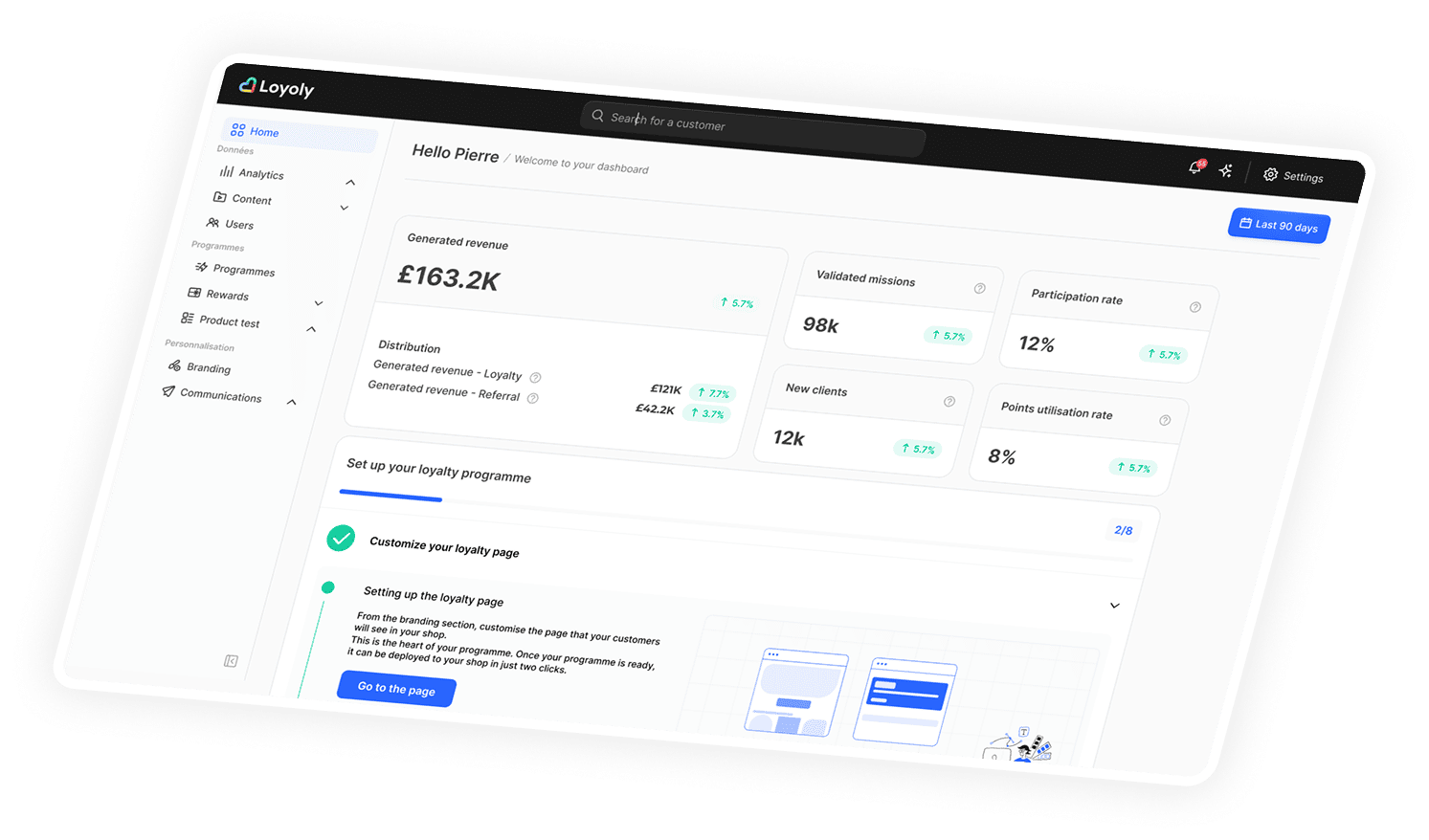
Loyoly, the best LoyaltyLion alternative
Loyoly homepage

Best for: Mid-market ecommerce brands that want engagement-driven loyalty with built-in UGC and omnichannel capabilities.

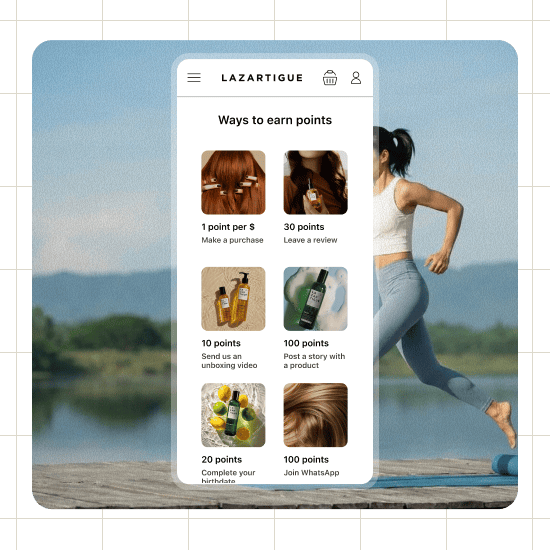
Loyoly is a post-purchase engagement platform that goes well beyond traditional loyalty. With 40+ engagement mechanics, it lets you reward customers for purchases, referrals, social media interactions, UGC creation, reviews, opt-ins, surveys, and more. Every action is auto-verified, so you don't waste time on manual validation.

What really sets Loyoly apart is its approach to UGC. Customers can earn points by posting content on Instagram or TikTok, and the platform automatically secures content rights for your brand. That means you can repurpose this content across ads and product pages without chasing permissions.

On the omnichannel side, Loyoly offers a native Apple and Google Wallet (built in-house, not a third-party bolt-on), geo-targeted push notifications, and QR-based redemption in physical stores. The Shopify Plus integration includes checkout extensions for point display and reward redemption directly in the checkout flow.

Support is a standout feature too: average response time under 2 minutes, a dedicated account manager, strategic sessions, and quarterly business reviews are available on all paid plans.

Pricing: Starts at $99/month. SMB plans around $523/month. Mid-market around $823/month. Enterprise on request.

Limitations: No free plan. Available on Shopify and PrestaShop only (no Magento or BigCommerce). API in development (expected Q2 2026).

According to the Loyoly Benchmark (2025), brands using engagement mechanics on Loyoly see an average LTV increase of +60% in fashion, +67% in health and supplements, and +117% in home and decoration, compared to non-engaged customers. The average monthly ROI across sectors ranges from 11.5x to 23.2x.


Pssst... You might find this interesting!

Loyalty programs are strategic for your brand and we can probably help. Discover our platform!

2. Yotpo

LoyaltyLion alternative, yotpo
Yotpo homepage

Best for: Established ecommerce brands that want loyalty and reviews under one roof.

Yotpo combines loyalty, referrals, reviews, SMS, and email marketing into a unified retention platform. The strength here is the ecosystem: if you're already using Yotpo for reviews, adding loyalty creates a seamless data loop between customer feedback and reward triggers.

The platform offers points, VIP tiers, referrals, and memberships. Customization options are strong, and the integration library exceeds 100 tools. AI-powered campaign optimization is a newer addition that helps target the right customers with the right offers.

Pricing: Starts at $79/month. SMB around $599/month. Mid-market around $899/month.

Limitations: Dedicated support is reserved for top-tier plans only. Onboarding can feel heavy due to platform complexity. Social missions are limited to follows. No automated UGC verification or content rights management. No native omnichannel (wallet via third-party Novel integration, no push notifications). If UGC-driven engagement is a priority, Yotpo won't match what Loyoly offers.


3. Smile.io

LoyaltyLion alternative, smile.io
Smile.io homepage

Best for: Small to mid-sized Shopify stores launching their first loyalty program.


Smile.io is arguably the most popular loyalty app on Shopify, and for good reason. It's simple, fast to set up, and has a genuinely usable free plan. You get points for purchases, referrals, account creation, social follows, and birthdays. The Standard plan at $79/month adds VIP tiers, points expiry, and bonus campaigns.

For a first loyalty program, it's hard to beat the simplicity. The widget-based approach means no developer needed, and more than 100,000 businesses have used the platform.


Pricing:
Free plan available. Standard at $79/month. Growth at $199/month. Plus at $999/month.


Limitations:
The UI is limited to a pop-up widget with no dedicated loyalty page. Social and UGC missions are minimal. No automation engine. No omnichannel features (no wallet, no push, no QR). Pricing escalates sharply at scale. For brands looking to move beyond the basics, Smile.io quickly becomes a stepping stone rather than a long-term solution. We actually wrote a full comparison of Smile.io alternatives if you want to go deeper.


4. Rivo

LoyaltyLion alternative, rivo
Rivo homepage

Best for: Shopify-native DTC brands that need developer-friendly customization.


Rivo is built exclusively for Shopify and it shows. The platform offers 8+ checkout extensions, weekly product updates, and a developer toolkit that lets technical teams build deeply customized loyalty experiences using Shopify metafields and APIs.

A unique feature is native paid memberships, something no other loyalty platform currently offers natively. If subscription-adjacent revenue models interest you, Rivo is worth a close look.


Pricing:
Starts at $49/month (Basic). Custom pricing on higher tiers. Brands typically save 30-40% compared to LoyaltyLion according to Rivo's own data.


Limitations:
US market focus with very limited European presence. Shopify only, no other platforms. No UGC missions, no automated verification. Custom CSS is required for a polished design. Support quality can be inconsistent at scale. The advanced Developer Toolkit has a steep learning curve.


5. Okendo

LoyaltyLion alternative, okendo
Okendo homepage

Best for: Brands that want reviews, loyalty, and referrals in a single platform at a competitive price.


Okendo positions itself as a unified "customer marketing" platform. Its core strength is combining product reviews with loyalty and referral programs in one tool. If your strategy revolves around collecting and displaying customer feedback alongside a points program, Okendo keeps everything tidy.

The review widget is well-regarded, and the platform supports 15-20 engagement actions including purchases, signups, birthdays, reviews, and social follows.


Pricing:
Starts at $175/month. SMB around $417/month. Mid-market around $933/month.


Limitations:
Pricing escalates quickly (Klaviyo integration alone costs $299/month extra). Customization options are limited compared to Loyoly or Yotpo. The dashboard UX feels dated. No social mission verification. No omnichannel capabilities.


6. Stamped

LoyaltyLion alternative, stamped
Stamped homepage

Best for: Brands seeking an all-in-one reviews + loyalty + lifecycle automation tool.


Stamped bundles reviews, loyalty, and lifecycle marketing automation in a single platform. It's a solid option for brands that don't want to manage multiple tools for collecting reviews and running a referral program.

The loyalty module includes points, VIP tiers, and referrals with decent customization. The lifecycle automation side adds email flows triggered by loyalty events.


Pricing:
Competitive pricing with bundled plans. Contact for specific rates.


Limitations:
The loyalty features are less deep than dedicated platforms. Social and UGC missions are basic. No omnichannel features. The platform tries to do many things, which means no single feature reaches the depth of a specialist tool like Loyoly for engagement or Yotpo for reviews.


7. Upzelo

LoyaltyLion alternative, upzelo
Upzelo homepage

Best for: SMB brands looking for an affordable loyalty solution with mobile wallet capabilities.


Upzelo is a smaller player but worth mentioning for one specific reason: alongside Loyoly, it's one of the only platforms offering a native Apple and Google Wallet with geo-targeted push notifications and QR-based in-store redemption. If mobile-first omnichannel is your priority and your budget is tight, Upzelo deserves a look.

The platform also features a unique cancel flow tool designed to reduce subscription churn, which makes it interesting for brands with a subscription component.


Pricing:
Starts at $199/month. SMB around $299/month. Mid-market around $349/month. Enterprise around $799/month. Transparent and accessible pricing overall.


Limitations:
Loyalty features are basic (points, VIP, referral only). It's primarily a subscription and anti-churn tool, not a full-fledged loyalty platform. No multi-language support. Limited customization. If you need depth in engagement mechanics, Upzelo won't cut it.


How to Choose the Right LoyaltyLion Alternative

There's no universal "best" platform. The right choice depends on your growth stage, your tech stack, and what you're actually trying to achieve with loyalty. Here's a quick decision framework.


If you're just getting started

Smile.io is the easiest entry point. The free plan is functional, setup takes minutes, and you can always migrate later. Just know that you'll likely outgrow it within 12-18 months if your brand is scaling.


If UGC and social engagement are your priority

Loyoly is the only platform with 40+ auto-verified engagement mechanics, including Instagram and TikTok UGC creation with automatic content rights.

No other LoyaltyLion alternative matches this depth. Brands using these mechanics see their customer lifetime value increase by 60% or more, according to Loyoly's benchmark data.


If you want reviews and loyalty bundled

Yotpo or Okendo are your best bets. Yotpo offers the deeper loyalty module, while Okendo is more competitively priced.

Both integrate reviews directly with loyalty rewards, which creates a powerful feedback loop.


If you need developer-level customization

Rivo gives technical teams the most freedom. Open API, webhooks, Shopify metafield integration, and weekly feature releases make it a playground for developers.

Just make sure you're comfortable with a US-focused platform and limited European support.


If omnichannel is non-negotiable

Loyoly and Upzelo are the only two platforms with native wallet, push notifications, and QR redemption.

Loyoly wins on feature depth (40+ mechanics vs. 10) and support quality, but Upzelo wins on pricing if your needs are simpler.


To sum up: the best LoyaltyLion alternative depends on your priorities. For brands that want engagement-driven loyalty with UGC, omnichannel, and dedicated support, Loyoly is the strongest option. For simplicity, start with Smile.io. For reviews + loyalty, consider Yotpo or Okendo. For developer freedom, go with Rivo.


If you're seriously considering switching from LoyaltyLion, start by auditing what you're actually using versus what you're paying for. Most brands discover they're paying enterprise prices for features they never activated. A platform like Loyoly can deliver better results at a lower total cost, especially if your retention strategy involves more than just points and discounts. Book a demo, migrate your data, and you could be live in under a week.


FAQ


What is the best alternative to LoyaltyLion?

It depends on your needs. Loyoly is the best fit for brands that want engagement-driven loyalty with UGC, omnichannel wallet, and dedicated support.

Smile.io is ideal for beginners. Yotpo works well if you want loyalty and reviews bundled together.

How much does LoyaltyLion cost?

LoyaltyLion's Classic plan starts at $199/month for 1,000 orders. Add-ons like custom earn rules ($1,000/month) and API access ($1,000/month) increase costs significantly. Enterprise pricing is custom.

Can I migrate from LoyaltyLion to another platform?

Yes. Most alternatives including Loyoly, Smile.io, Yotpo, and Rivo offer migration support. You'll need to export customer data, points balances, and VIP tiers. Most migrations take 1-2 weeks with zero customer-facing disruption.

Which LoyaltyLion alternative is best for Shopify?

Loyoly, Smile.io, and Rivo are all excellent Shopify-native options. Loyoly offers the deepest Shopify Plus integration with checkout extensions for point display and reward redemption. Rivo focuses on developer customization. Smile.io prioritizes ease of setup.

Do LoyaltyLion alternatives support omnichannel loyalty?

Most alternatives focus on online only. Loyoly and Upzelo are the two platforms that offer native Apple and Google Wallet passes, push notifications, and QR-based in-store redemption. If your brand has physical retail locations, this is a key differentiator to consider.

Is Loyoly better than LoyaltyLion?

Loyoly offers more engagement mechanics (40+ vs. limited), built-in UGC with content rights, a native wallet (not third-party), faster support (under 2 minutes), and lower entry pricing ($99 vs. $199). For brands that want to go beyond transactional loyalty, Loyoly provides more value at every price tier.

Recommended for you👇