.png)


Three platforms. Three different definitions of what loyalty should be. And one question every ecommerce brand eventually asks: which one actually drives LTV, repeat purchase, and customer retention at scale?
Loyoly, Yotpo, and LoyaltyLion are serious tools, but they are not competing for the same customer. One is a post-purchase engagement platform with 40+ verified mechanics. Another is a full ecommerce retention suite built around reviews and SMS. The third is a transactional loyalty specialist with solid multi-platform support.
This comparison is direct, data-backed, and built for one goal: helping you choose the platform that fits your stack, your strategy, and your growth stage in 2026.
What each platform is actually built for
Feature tables can look deceptively similar. The real difference between Loyoly, Yotpo, and LoyaltyLion lies in their core philosophy, and understanding that philosophy is the fastest way to identify which platform fits your strategy.
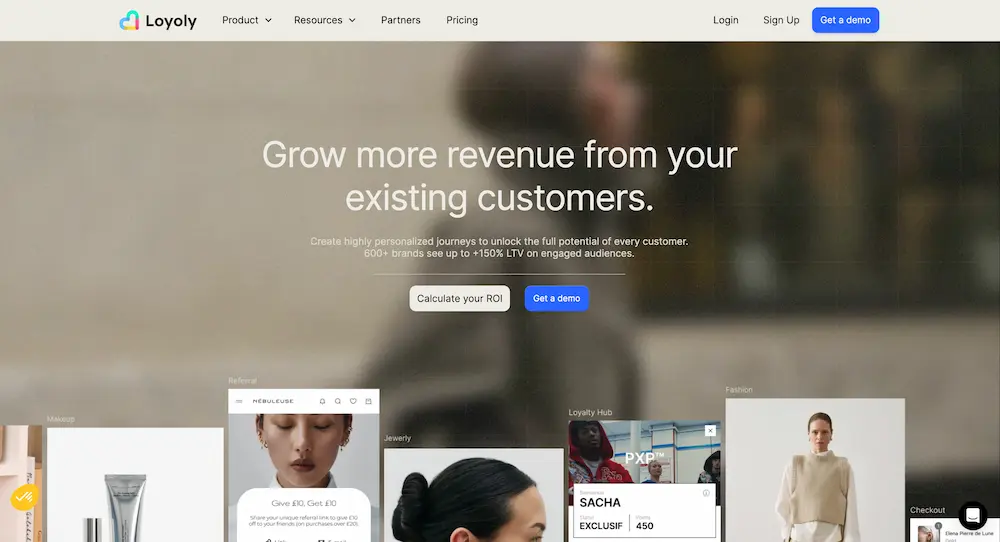
Loyoly: the post-purchase engagement platform
Loyoly is a post-purchase engagement platform that orchestrates personalized customer journeys through 40+ verified mechanics: purchases, reviews, social posts, stories, reels, TikTok content, surveys, referrals, newsletter signups, and custom webhooks for unlimited custom actions. Points and tiers are the entry point, not the endpoint.
The platform's core differentiator is a native automation engine. Triggered journeys, conditional logic, and behavioral segmentation are built directly into the loyalty layer, with no external Zapier or CRM configuration required to activate personalized flows. Over 600 ecommerce and retail brands use Loyoly, including Maison Berger, Venum, Volcom, and Nebuleuse Bijoux.
Yotpo: the ecommerce retention suite
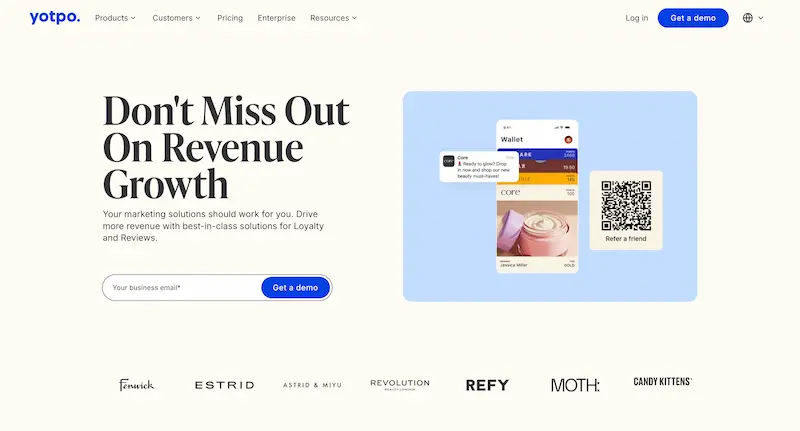
Yotpo started as a reviews platform and expanded into a full retention marketing suite combining loyalty, referrals, reviews, SMS, and email marketing. The core strength is ecosystem cohesion: when loyalty events feed into SMS triggers and review milestones unlock reward points, the data loop becomes genuinely powerful.
Yotpo powers 25,000+ brands including Pandora and Princess Polly. It is built for mid-to-large brands that want a consolidated retention stack. The trade-off is complexity: onboarding is heavy, and dedicated strategic support is reserved for top-tier plans.
LoyaltyLion: the transactional loyalty specialist
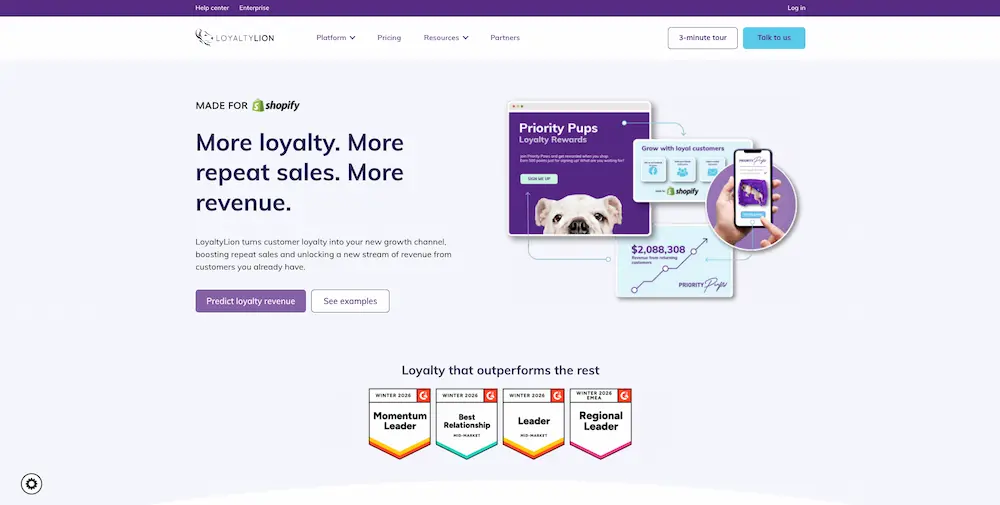
LoyaltyLion has been in the market for over a decade with a focused product: solid transactional loyalty programs built around points, tiers, and referrals. Its clearest advantage is multi-platform support. Unlike most loyalty tools, LoyaltyLion also supports Magento, BigCommerce, and custom stacks via its Headless API.
It is a reliable choice for brands that need a dependable earn-and-burn program with good analytics. Where it shows its limits in 2026 is engagement depth: no UGC mechanics, no native wallet, no push notifications, and no automation engine.
Features comparison: where the real gaps appear
Comparing features line by line is useful only if you focus on the dimensions that actually drive business results: mechanics depth, omnichannel capability, and automation.
Engagement mechanics and UGC generation
Loyoly offers 40+ automatically verified engagement actions: reviews, Instagram posts, stories, reels, TikTok content, UGC submissions, social follows, surveys, and custom webhooks for unlimited custom actions. Automatic verification matters: points are credited only when the action is genuinely completed, eliminating gaming and ensuring data quality.
According to the Loyoly Industry Report (2025), 59% of consumers are willing to leave a positive review in exchange for rewards, and 27% are ready to interact with brands on social media for incentives. A platform that can systematically trigger, verify, and reward those actions turns consumer intent into measurable brand equity and user-generated content.
Yotpo covers roughly 20+ earning actions. Social mechanics are limited to follows. Reviews generate marketing assets, but there is no social amplification engine built around UGC creation. LoyaltyLion's action catalog is comparable to Yotpo's in scope, without automatic verification. Both platforms stay at the transactional level when it comes to engagement mechanics.
Omnichannel: wallet, push, and in-store redemption
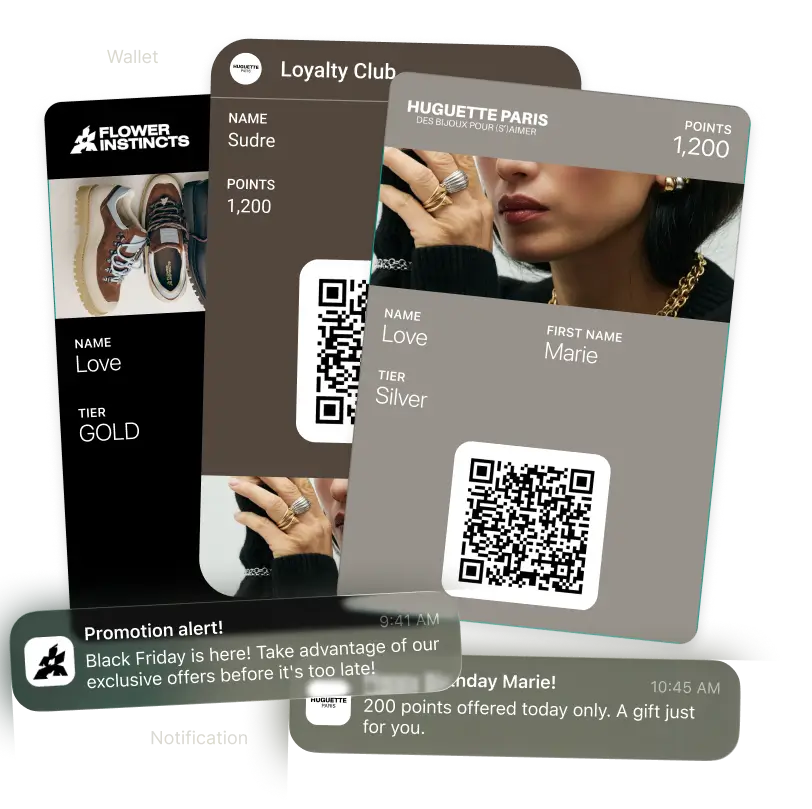
This is where the gap becomes structural. Loyoly is the only platform in this comparison with a fully native Apple and Google Wallet, built in-house with dynamic real-time updates and geo-based push notifications that drive in-store visits and reward redemptions at the right moment.
Yotpo offers wallet integration via a partnership with Novel. LoyaltyLion does the same through JeriCommerce. Both solutions function, but neither is native, neither supports push notifications, and neither enables QR code redemption in-store without additional development.
On physical retail integrations, Loyoly connects natively with Shopify POS, Cegid, and Fastmag. Yotpo supports Shopify POS only, with custom builds via API. LoyaltyLion covers Shopify POS, ConnectPOS, and Cin7. For brands building a true omnichannel loyalty program, Loyoly's native stack is the most complete option.
Automation engine: the quiet differentiator
Loyoly's native automation engine runs triggered journeys and conditional logic directly within the loyalty layer. A customer who completes 3 missions enters a dedicated VIP nurturing flow. A churning segment at risk gets a reactivation push through their wallet. These scenarios run automatically, without external tooling.
Neither Yotpo nor LoyaltyLion has an equivalent. Both rely on external CRM tools like Klaviyo or Braze to achieve similar results, adding integration overhead, data latency, and incremental monthly cost. For brands building a loyalty program designed to drive sustainable repeat purchase, native automation creates compounding value that third-party integrations cannot replicate cleanly.
Pricing comparison: what you really pay as you scale
Loyalty platform pricing can be hard to compare at face value. Here is a clear breakdown of what each platform costs at comparable stages.
Entry-level and SMB tiers
Yotpo Loyalty starts at $79/month. Loyoly starts at $99/month. LoyaltyLion enters at $199/month.
At entry level, Loyoly already includes the full 40+ mechanics library, the automation engine, and the native wallet stack. Yotpo's $79 plan is functional but limits customization and reserves advanced segmentation and dedicated support for higher tiers. LoyaltyLion's entry tier covers the basic earn-and-burn features.
Mid-market scaling
At the SMB-to-mid-market tier, Yotpo reaches approximately $599 to $899/month. Loyoly sits around $523 to $823/month. LoyaltyLion's SMB plan starts around $399/month, with mid-market moving to custom pricing.
The real question is how much of the platform you actually unlock at each tier. Loyoly's pricing exposes the full feature set earlier in the journey. Yotpo gates advanced customization, strategic support, and campaign scheduling behind its premium plans.
Support: where the real difference is felt
Loyoly includes dedicated account management, strategic sessions, MBR and QBR reviews, and custom development requests as standard. Average support response time is under 2 minutes.
Yotpo offers account managers and business reviews at higher tiers, but no strategic advisory sessions and no custom development options. LoyaltyLion provides account managers at mid-market plans, but support quality for non-enterprise clients is flagged as inconsistent in independent G2 and Capterra reviews.
Choosing the right platform for your brand type
No single platform is universally superior. The right choice depends on your platform, your growth stage, and how sophisticated your retention strategy already is.
Choose Loyoly if LTV growth and UGC are your priorities
Loyoly is purpose-built for Shopify and PrestaShop brands in the mid-market to enterprise range that want a loyalty program to do more than reward purchases. The engagement mechanics compound over time: customers who complete 3 or more actions show dramatically higher purchase frequency, AOV, and brand advocacy versus one-time transactors.
The Loyoly Benchmark (2026) confirms this across sectors. Engaged customers show a LTV increase of +60% in fashion, +67% in health and supplements, and +117% in home and decoration, measured on a 90-day window. Monthly ROI across sectors ranges from 11.5x to 23.2x. The mechanics that drive this are not complicated. They are systematic.
Exploring the role of UGC in ecommerce and how it integrates with post-purchase engagement gives a clearer picture of why mechanic depth matters so much at scale.
Pssst... You might find this interesting!
Loyalty programs are strategic for your brand and we can probably help. Discover our platform!
Choose Yotpo if you are consolidating your retention stack
If you are already using Yotpo for reviews and SMS, adding Yotpo Loyalty creates genuine synergies. The unified data model between reviews, loyalty events, and SMS campaigns reduces vendor fragmentation and improves personalization quality. It is the right call for mid-to-large brands committed to the Yotpo ecosystem and willing to invest in premium plans.
Outside that context, the cost-to-value ratio at entry and mid-market tiers is harder to justify, particularly given the absence of a native wallet, push notifications, and a built-in automation engine.
Choose LoyaltyLion if you are operating outside Shopify
LoyaltyLion's multi-platform support remains its strongest argument. For brands on Magento, BigCommerce, or custom stacks, it is one of the few serious loyalty options that does not require rebuilding your ecommerce infrastructure. It is also a solid choice for brands that need a reliable earn-and-burn program with good analytics and no requirement for engagement mechanics beyond the transactional layer.
If you have hit the ceiling of what LoyaltyLion offers on engagement and personalization, the guide to LoyaltyLion alternatives walks through every viable option for making the move.
Final verdict: Loyoly vs Yotpo vs LoyaltyLion in 2026
When you compare these three platforms on the criteria that drive revenue, engagement depth, native omnichannel, automation, and pricing transparency, Loyoly consistently delivers the richest feature set per dollar spent.
Yotpo wins on ecosystem cohesion for brands already inside its suite. LoyaltyLion wins on platform flexibility for non-Shopify merchants. But for brands that want a loyalty program that goes beyond transactional points and produces compounding LTV growth, Loyoly is the most complete platform in this field.
The full comparison of the best loyalty software in 2026 consistently places engagement depth, omnichannel capability, and business ROI at the top of the priority list for ecommerce brands evaluating their options. Loyoly checks all three.
To sum up: Loyoly outperforms Yotpo and LoyaltyLion on engagement mechanics, native omnichannel, and built-in automation, delivering measurable LTV and ROI gains across every ecommerce sector.
If your current loyalty program rewards purchases and little else, the problem is not customer apathy. It is the number of reasons you give customers to engage outside of checkout. Loyoly's 40+ verified mechanics, native wallet, geo-push notifications, and built-in automation engine are designed to fix that gap precisely. The brands achieving +100% LTV uplift in home and decoration did not get there by optimizing a points table. They got there by building a program that earns attention weekly, rewards behavior systematically, and activates customers long after the first purchase.
FAQ
Is Loyoly better than Yotpo for loyalty programs?
For loyalty program performance specifically, Loyoly offers more engagement mechanics (40+ vs ~20), a native wallet with geo-push notifications, and a built-in automation engine that Yotpo does not provide. Yotpo has the edge if reviews and loyalty need to be tightly integrated within a unified marketing suite. On measured business impact, Loyoly programs show higher LTV gains across all ecommerce sectors covered in the Loyalty Benchmark (2026).
What is the main difference between LoyaltyLion and Yotpo?
LoyaltyLion is a loyalty specialist focused on points, tiers, and referrals, supporting multiple platforms including Magento and BigCommerce. Yotpo is a broader retention suite combining loyalty with reviews, SMS, and email marketing. The trade-off is depth vs breadth: LoyaltyLion goes deeper on loyalty-specific features, while Yotpo covers more retention channels for Shopify-centric brands already inside its ecosystem.
Does LoyaltyLion have a native digital wallet?
No. LoyaltyLion's wallet capability is delivered via a third-party integration with JeriCommerce. It is not native, and there are no push notifications or QR code redemption in-store. Loyoly is the only platform in this comparison with a fully native Apple and Google Wallet, built in-house, with dynamic real-time updates and geo-based push notifications.
Which loyalty platform delivers the best ROI for ecommerce?
According to the Loyoly Benchmark (2026), Loyoly-powered programs deliver a monthly ROI of 11.5x to 23.2x depending on sector, measuring additional revenue generated against total program cost. LTV increases among engaged customers versus non-engaged ones range from +28% in beauty and wellness to +117% in home and decoration, measured on a 90-day window across 600+ brands.
Can I migrate from Yotpo or LoyaltyLion to Loyoly?
Yes. Loyoly supports full loyalty program migrations: point balance transfers, tier assignments, reward code migration, and a brief offline window to ensure no customer loses their earned status. Loyoly's team handles the migration end to end, including a relaunch campaign to re-engage your community. Migration is also an opportunity to upgrade your referral program mechanics at the same time.
Does Loyoly integrate with Klaviyo and other CRMs?
Yes. Loyoly integrates natively with Klaviyo, Braze, Insider, Gorgias, Recharge, and a growing list of CRM and marketing automation platforms. Loyalty events, engagement actions, VIP tier updates, and wallet interactions sync automatically into your existing stack. The native automation engine in Loyoly runs alongside your CRM, not instead of it, giving you both platform-native personalization and the full power of your existing toolset.