
.png)


Timing is everything in ecommerce!
Key moments like Black Friday, Cyber Monday, Christmas and New Year are obvious highlights in any ecommerce holiday calendar.
They represent peak season for many brands and strongly influence shopper behaviour.
But what about the less predictable, yet equally effective, opportunities?
World Compliment Day, Know Your Customers Day, Buy Nothing Day, National Pet Day, or International Coffee Day are great examples of moments that can inspire creative ecommerce campaigns and fresh marketing ideas.
Especially when 39% of customers say they are willing to receive communications from their favourite brand at least once a week
(source: Industry Report 2025 – Loyoly).
Each day, month or holiday (whether in January, February, March, April, June, July, August, September, October or November) can become a valuable touchpoint.
These moments can be activated through email, on-site experiences or social media posts, helping brands stay relevant throughout the year.
With so many key moments in an ecommerce season, relying on a structured ecommerce calendar helps avoid the classic:
“Oops… was that today?”
Why is a well-structured ecommerce calendar essential in 2026?
A well-planned ecommerce calendar is essential to organise campaigns, align teams and maximise revenue throughout the year.
In an increasingly competitive ecommerce landscape, identifying key dates in advance allows brands to optimise every campaign and tailor messaging to their target audience.
In 2026, customer expectations continue to evolve.
High-demand moments are no longer limited to winter sales or Black Friday.
World and international awareness days (such as International Women’s Day in March, World Environment Day in June, International Friendship Day in July, or Black History Month in October) are becoming essential pillars of any ecommerce marketing calendar.
These moments allow brands to celebrate values, connect emotionally with shoppers and bring meaning to their campaigns.
Maximise every ecommerce opportunity
A structured ecommerce calendar helps brands anticipate demand and activate relevant campaigns throughout every month of the year.
Whether it’s February, April, June or October, these moments are ideal to:
- highlight seasonal products,
- launch limited offers,
- test new creative ideas,
- and refine product recommendations based on shopper behaviour.
Anticipate instead of reacting
Planning ecommerce campaigns in advance helps avoid last-minute stress and reduces the risk of technical issues, from checkout errors to the dreaded
“wrong submitting form”, “went wrong submitting” or “oops, something went wrong” messages.
It also allows teams to better coordinate marketing, logistics and social media, ensuring smoother execution during key ecommerce dates.
Starting with a structured calendar template makes this easier, giving teams a ready-made framework to map out campaigns without building from scratch.
Personalise communication for your customers
A strong ecommerce calendar enables better segmentation based on customer behaviour, seasonality and key moments.
The result is more relevant messaging, higher engagement and better conversion rates across email, onsite experiences and social media posts, while speaking to the right audience at the right time.
Avoid saturation during classic peak periods
November remains highly competitive, with Black Friday, Cyber Monday and Small Business Saturday happening within days.
Balancing these moments with alternative key dates (such as National Pet Day in April, International Coffee Day in October, Know Your Customers Day in January, or World Environment Day in June) helps brands stay visible, creative and relevant across the entire ecommerce season.

Must-have ecommerce dates in 2026
An ecommerce calendar is more than a list of days.
It’s a strategic commerce calendar designed to organise promotions, align marketing efforts and build long-term customer loyalty.
Some dates are universal : like Black Friday, Cyber Monday or New Year.
Others, such as Mother’s Day, International Women’s Day, World Environment Day, or International Friendship Day, are just as powerful when aligned with the right message, products and target audience.
Let’s explore the ecommerce key dates you shouldn’t miss in 2026 🚀
👉 Want direct access to the full french ecommerce calendar, plus bonus campaign ideas and customer inspiration? Download it here
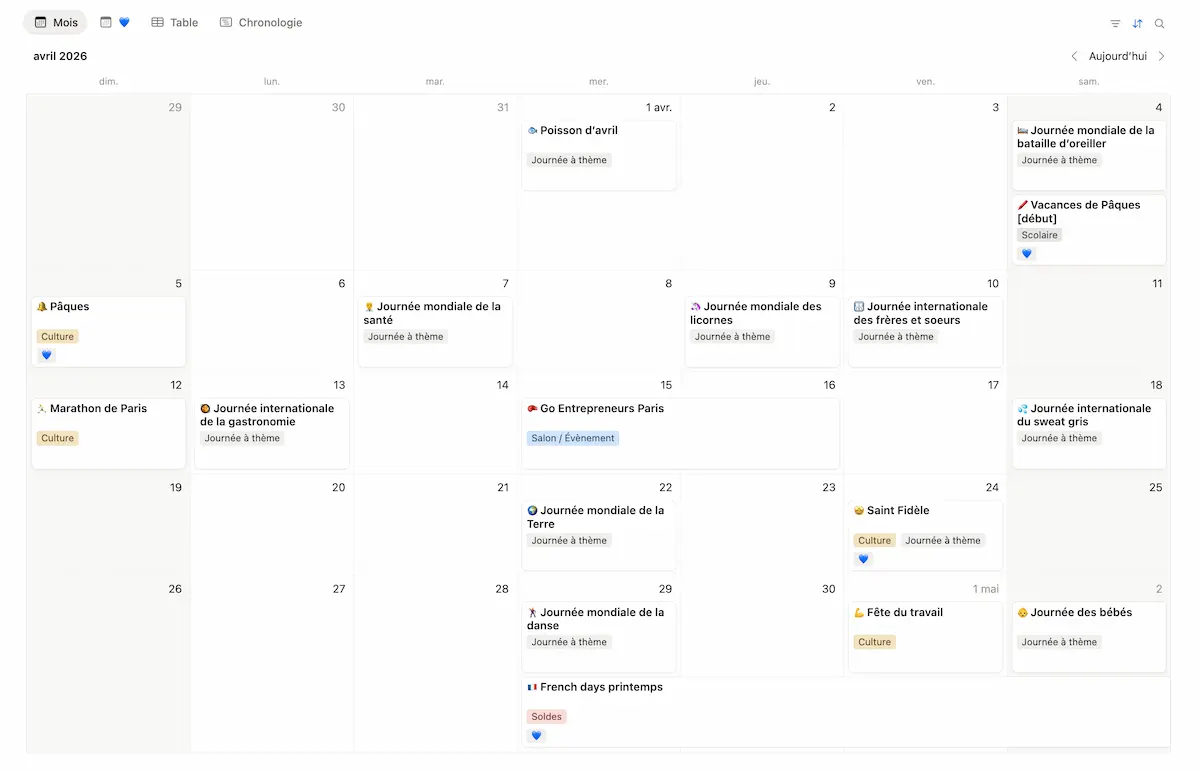
This 2026 ecommerce calendar covers all major events (from essentials like Black Friday and Christmas to more unexpected dates such as Customer Loyalty Day, perfect for rewarding your most engaged customers, or Buy Nothing Day), which can inspire original and impactful campaigns.
But did you know there’s an International Grey Sweatshirt Day? Or a Star Wars Day?
Or that World Chocolate Day and World Coffee Day can be powerful marketing levers for certain brands?
In the full version, you’ll find over 150 key dates for your e-commerce strategy.
Trade shows and ecommerce events for 2026, international awareness days, cultural celebrations, holidays and more.
Each date in the calendar is paired with actionable tips and real-life examples from our customers who successfully leveraged them.
💡 Bonus: we commit to regularly updating it with new insights and recommendations.
Prepare your online store for key ecommerce dates
Having a marketing calendar is one thing.
Turning each key date into growth requires preparation.
From website optimisation to stock planning and customer activation, every detail matters.
1. Anticipate traffic peaks and optimise your ecommerce site
Key ecommerce dates like Black Friday, Cyber Monday or major holidays drive massive traffic spikes from shoppers.
Make sure your site is ready:
- Improve site speed to reduce drop-offs
- Optimise product pages with clear descriptions, visuals and reviews
- Simplify checkout flows to avoid friction during peak season
📖 Need a detailed guide to smooth the purchasing process? Check out our ebook on customer experience.
2. Engage shoppers and build loyalty
Ecommerce campaigns shouldn’t only focus on short-term sales.
They are powerful opportunities to engage shoppers, celebrate loyalty and build long-term relationships with customers.
- Offer early access or exclusive rewards to loyal customers
- Encourage reviews and UGC across social media
- Use post-purchase journeys to re-engage after key ecommerce dates
3. Align stock and logistics with your ecommerce calendar
Stockouts during key ecommerce moments can cost significant revenue.
Plan ahead by:
- Identifying top-performing products by month
- Adjusting inventory for major dates like June, October or November
- Offering smart alternatives and personalised product recommendations when items sell out
Every event is an opportunity to build loyalty
Preparing an ecommerce store for major sales periods should not be a one-off action.
It is a strategic opportunity to strengthen customer engagement, maximize loyalty and lay the foundations for sustainable growth.
With a good retention strategy, you capitalize not only on a peak in sales, but on long-term growth.
The 2026 ecommerce calendar allows you to anticipate every marketing highlight, activate the right levers at the right time, and turn every event into an opportunity for customer loyalty.
All these dates are essential to keep track of, starting with Black Friday. According to a 2025 Uptain study, this event generates +103% traffic and +79% conversion rates, but only 22% repurchase within 12 months. The real challenge therefore lies not during the peak period, but after the purchase. This is precisely where Loyoly comes in, orchestrating personalised post-purchase journeys that transform each event into a lever for loyalty, engagement and sustainable CLTV, far beyond a simple promotional operation.



%20(1).webp)
.webp)