.png)


Your Shopify store is live, the products are good, and online sales are flat. That is the most common situation in ecommerce, and traffic is almost never the real problem.
Most Shopify stores lose potential customers between the product page and the checkout, not before they arrive. Fixing that gap costs nothing in advertising, and it helps every marketing channel you already pay for.
Start with your Shopify analytics rather than an opinion. The store reports show exactly where visitors stop, and that beats any theory about what shoppers want.
Knowing how to increase sales on Shopify is mostly about knowing which of your leaks to plug first, and in what sequence.
This guide covers why your store might be stuck, 25 ways to increase sales with the numbers behind them, how to increase sales without more traffic, and the questions Shopify merchants ask most often.
Why your Shopify store might not be getting sales
Traffic without sales is the first symptom. If a thousand sessions produce three sales, the problem sits on your product pages, not in your ad account.
A slow website is the most common silent killer. Online shoppers abandon a website that takes more than three seconds to load, and few of them try again later.
Trust is the second. Customers who have never heard of your brand look for ratings, clear terms and a real name to write to before ordering anything.
Your marketing may also be aimed at the wrong people. Visitors from a viral post convert far worse than someone arriving from a search for your product category.
The numbers back that up. According to the Industry Report 2025 by Loyoly, conducted among 1,016 consumers, 54% name positive customer reviews among the deciding factors in a first purchase from an unfamiliar store.
Price matters more than most founders want to admit, cited by 61% of the same panel, but it is not the whole story: brand values reached 34%, up 7 points on 2024.
The third cause is silence after the sale. Stores that never write to a customer again spend their entire marketing budget on acquiring customers they will only ever sell to once.
Diagnosis comes before strategy, so start there. Look at your conversion rate, your average basket and your repeat purchase rate, and start with whichever is furthest below where it should be.
Potential customers judge a store in seconds. Photos, reviews and delivery terms carry more weight on your website than anything you write about the business.
💡 Our advice: before adding tools, spend an hour buying your own product on a phone. Most online stores have three unnecessary steps nobody on the team has noticed in months.
25 proven strategies to skyrocket your Shopify sales
1. Uncover and highlight your unique value proposition (UVP)
Your UVP is the reason a shopper picks your store over the marketplace offering the same products for less. If you cannot say it in one line, neither can your visitors.
Look at how competing Shopify stores describe themselves. If three websites in your category promise the same thing, none of them has a proposition, and there is your opening.
Put it above the fold on your homepage, and repeat it on every product listing. Shoppers rarely scroll down to find out why you exist.
Try the line on someone outside the business as a first test. If they cannot repeat it back after ten seconds, it is a slogan rather than a proposition.
Put it in your marketing content everywhere: the blog, the about page, the packaging insert. Consistency is what makes a position stick in someone's memory.
For example, free next-day delivery is a proposition; "quality products at great prices" is not. The test is whether a competitor could copy the sentence word for word.
2. Deeply understand your target audience
Segment your Shopify audience by what they order, not by demographics. Buying behavior predicts the next sale far more reliably than age or location.
Ask your customers directly. A two-question survey after checkout gives you sharper information than any persona workshop, and it costs nothing to set up in Shopify.
Read your support tickets and your customer feedback. They tell you which objections stop a sale, in the words your customers actually use.
Use Shopify's customer reports to find your repeat buyers, then shape your strategy around shoppers who look like them.
Know which products your best customers start with. That first basket is the one your marketing should target, and most Shopify stores have never checked.
3. Optimize your website for user experience (UX) and mobile
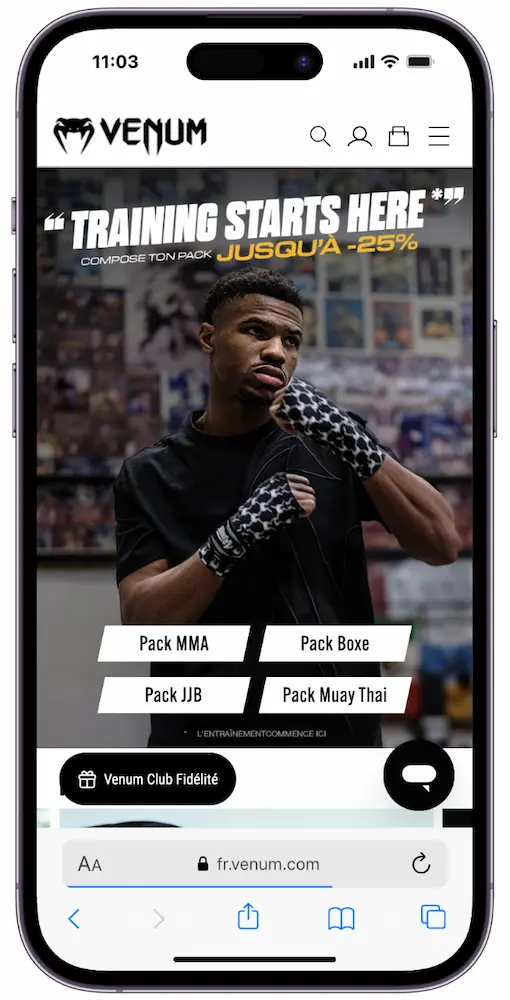
Most Shopify visits happen on mobile, so design for a thumb on a slow connection. A website that takes four seconds to load on 4G loses a large share of its audience before anything renders.
Speed is a feature of the website, not a technical detail. Compress your images, drop the tools you no longer use, and your online store gets faster without a redesign.
Cut the steps between landing on the store and checkout, because every removal helps. Each extra click, popup or interstitial costs you sales you never see in your reports.
Test your Shopify store on a real phone, not a desktop simulator. The gap between the two is where most sales problems hide.
Check your Shopify theme on three devices before you launch anything. Most themes look fine on a laptop and break quietly on a small screen.
4. Master customer acquisition strategies
Never base a whole business on paid traffic. Costs rise every year, and an online store with one channel has no defense when that channel gets more expensive.
Mix paid, organic search, social media content and referral marketing. Referral is the cheapest of the four: the Loyalty Benchmark 2026 by Loyoly puts first-purchase conversion at 37.1% among invited friends.
Track your cost per acquisition by channel, not in aggregate. It is the only reliable view of which one to increase. One good channel usually subsidizes two bad ones, and the average hides both.
Choose two channels and start learning them properly. A Shopify store spread across six platforms helps nobody, because it does none of them well enough to matter.
5. Offer strategic free shipping
Free delivery is the single most effective offer an online store can make, and a threshold makes that offer profitable. Set it 20 to 30% above your current average basket.
Show the gap in the cart, because it helps a shopper decide to increase the basket. "Only £12 to free delivery" moves more baskets than any banner on your homepage.
Be careful with delivery costs generally. Loyoly measured 39% of respondents walking away from a brand after a rise in delivery fees.
Free is the most powerful word in ecommerce marketing. Free delivery, free returns and a free gift all outperform an equivalent price cut on the same basket.
Test the threshold rather than guessing it, and boost it once the numbers hold. Shopify lets you change it in a minute, and the effect on sales shows up within a week.
6. Optimize product pages for conversions
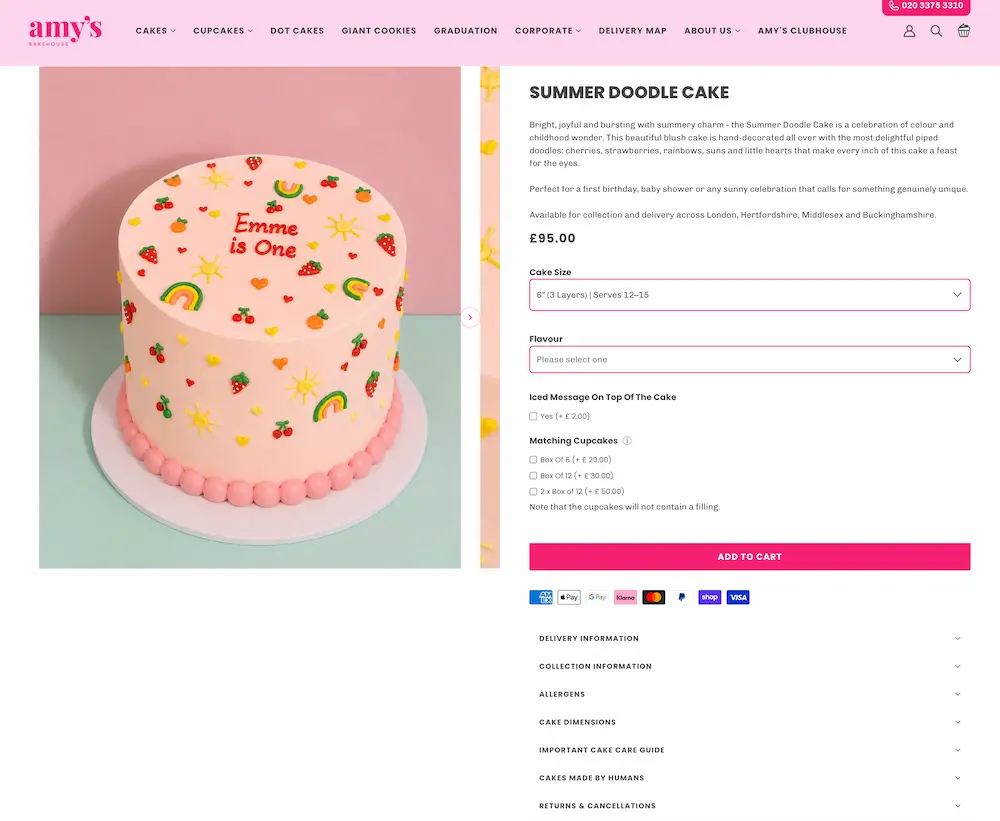
Your Shopify product page is where the sale happens. Six product photos, a short video, real dimensions and a clear returns policy answer most of what stops a sale.
Write the product description for the objection, not for the search engine. The customer wants to see whether it fits, how long it lasts and what happens if it is wrong.
Put the ratings, the stock level and the delivery date beside the add-to-cart button. Anything a shopper has to scroll for is information they will not find.
Add the product information a customer would otherwise have to ask for. Sizing charts, materials, care instructions and delivery terms remove most of the reasons to leave.
7. Build trust with social proof and trust signals
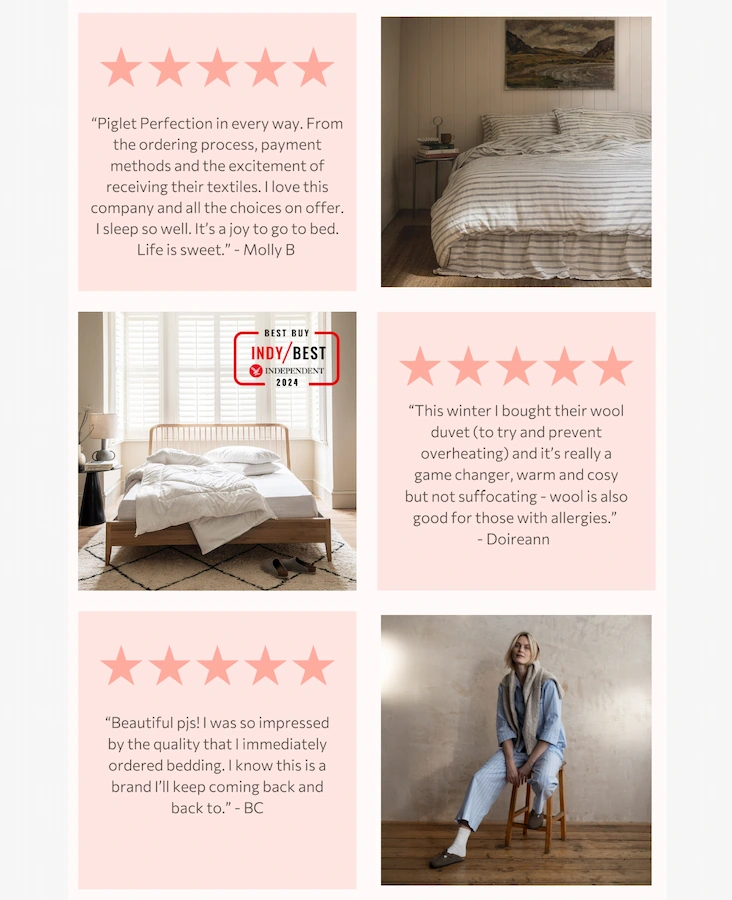
Social proof does the selling your own website copy cannot. Customer photos, ratings and visible sales counts all reduce the risk a first-time buyer feels.
Display trust signals near the payment step: secure checkout badges, your returns terms and a route that reaches a human.
Trust signals matter most on an online store nobody has heard of. A visible privacy policy, a real address and honest delivery dates do more than any badge you can buy.
Your privacy policy is part of this, and a link to it belongs on every page of the site. Shoppers increasingly check what a site does with their data before handing over an email address.
Loyoly rewards customers for leaving reviews on the platforms you already use, from product reviews to Trustpilot, which turns social proof into a repeatable process rather than a hope.
Customer feedback is the strongest social proof a store can show. Ask for it systematically after delivery, when the experience is still fresh.
8. Master upselling and cross-selling
Cross-sell complementary products on the product page, where customers are still deciding. An upsell after payment details are open reads as a trick.
Bundles are the safest place to start, because they increase the basket without a discount. A set priced below the sum of its parts raises the basket without teaching anyone to wait.
Keep it to three product suggestions. A crowded block of recommendations gets ignored entirely, and it slows the page.
The easy win is the accessory nobody thinks to add. A case beside a phone, a filter beside a jug: the obvious pairs work best, and they need no discount.
9. Personalize the shopping experience with AI
Personalization works best on the products a customer already bought. What a customer bought beats browsing data, and Shopify gives it to you for free.
Use AI tools for large catalogs, where a human cannot merchandise every combination. On a Shopify store with forty products, curated collections still win.
Personalization is a strategy, not a tool. Choose what you want to personalize before you choose the app that will do it for you.
Personalize the emails too. A message naming the product someone bought outperforms a generic newsletter by a wide margin.
10. Dominate social media marketing
Pick two social media platforms and do them properly. A store posting weekly on Instagram beats the same store posting monthly on five networks.
Create content people would share without being asked. Product photos are marketing; a good behind-the-scenes post is social media.
Sell where your customers already spend their shopping time on social media. The Loyoly panel puts Instagram and TikTok at 16% for brand contact, a small audience but a highly engaged one.
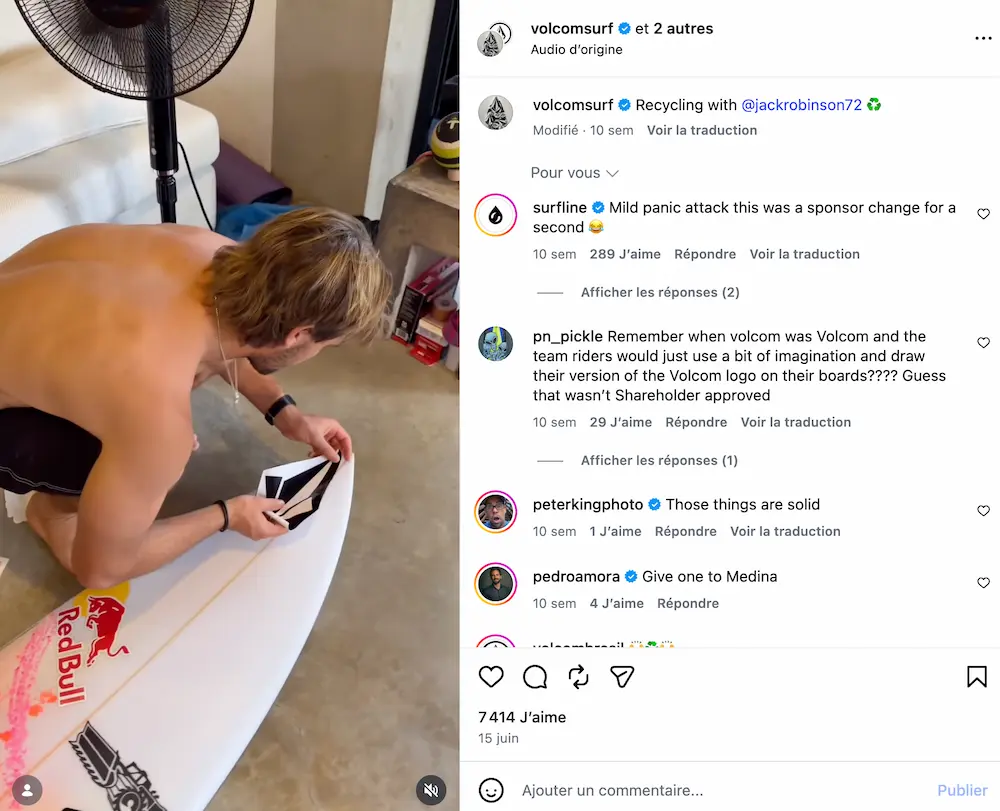
Turn customers into your social media content team. Loyoly rewards user-generated content, so the posts come from customers who actually bought the product.
Instagram and TikTok reward consistency more than production values. Three simple posts a week beat one polished film a month.
Facebook still works for reach on some audiences, and Instagram drives discovery. Pick by where your customers already are, not by what the guides say.
Facebook groups are underused in ecommerce. A small Facebook community around your products can drive more sales than a paid campaign at the same cost.
11. Leverage chatbots and live chat
Live chat answers the objection at the moment it appears on the website. A shopper who asks about sizing and gets an answer in ninety seconds usually completes the sale.
Use a chatbot for the repetitive questions: delivery times, returns, stock. Route everything else to a person, because users who get stuck in a loop leave for good.
A chatbot is only as good as its escalation. Users forgive a bot that lacks the answer, but not one that blocks them from a person.
Put the widget on the product listing and the cart, not on the homepage. That is where hesitation actually happens.
12. Use wishlists to drive future sales
A wishlist is a declared intention to buy later. It is the cheapest first-party signal your store can collect, it helps you plan stock, and it costs the customer nothing.
Trigger a message when a saved product drops in price or comes back in stock. Those emails convert far more strongly than any campaign you write from scratch.
Show wishlist counts on your most popular products. They help the next visitor decide, and they double as social proof.
Wishlists also tell you what to stock, and increasing the range this way carries less risk. The products customers save and never buy are a demand signal your sales reports cannot show you.
It also helps when you are creating a new drop. A waitlist tells you which of your new products will sell before you commit to stock.
13. Streamline returns and refunds
A generous returns policy drives more sales than it costs. Shoppers risk the uncertain size when they know sending it back is easy.
Publish the conditions plainly on the product listing, not buried in a footer link. Hidden conditions produce abandoned carts and support tickets in equal measure.
Process refunds before the customer chases you. In the Loyoly study, 28% of consumers break with a brand after a change to its returns policy.
Publish a returns guide rather than a policy, since shopping decisions turn on it. Clear tips in plain terms cut service tickets and help sales at the same time.
Free returns is the strongest version of this offer. It costs real money, and on most stores it still helps far more than it costs.
14. Craft killer email marketing campaigns
Email remains the highest-return channel in ecommerce, and consumers agree. The Loyoly study found 76% prefer email above every other channel.
Set up automated flows before campaigns. Welcome, browse abandonment, post-purchase and win-back run themselves and outperform anything you send manually.
Segment by behavior, for example by what someone last ordered. A customer who bought twice should not receive the same email as someone who never has.
Your email marketing list is the only audience you own, and it drives sales on demand. Social platforms change their rules whenever they like; your list does not.
Email marketing also serves information, not only offers. A guide, a launch announcement or a restock note all drive sales without a discount.
15. Embrace SMS marketing
SMS gets read within minutes, which makes it right for time-limited offers and delivery updates. It is wrong for weekly promotion.
Consumer appetite is real but narrower than email: 52% accept SMS and WhatsApp from brands in the Loyoly study, against 76% for email.
Collect opt-ins properly, with a clear privacy notice and a simple opt-out process. Loyoly collects phone numbers and consent through its engagement mechanics, then passes them to your SMS tool, which stays the sender.
16. Boost organic traffic with search engine optimization (SEO)
SEO is slow and compounding, which is exactly why most Shopify stores skip it. Collections and buying guides are where the traffic sits.
Target the search terms your customers actually type, not the ones with the biggest volume. "Waterproof dog coat for whippets" converts; "dog coat" does not.
Start with the keywords that show buying intent. A guide that ranks for a specific product sends sharper traffic than a blog post about the category.
Fix the basics first: unique titles, real descriptions on your collections, fast loading and a clean internal linking structure. Shopify handles the rest reasonably well.
Optimize your collection pages for search first. On most Shopify stores they carry more search potential than the listings, and almost nobody touches them.
Check Google Search Console monthly, since it is free and it helps you prioritize. It shows which keywords your Shopify store already ranks for, which is the cheapest place to start.
17. Partner with influencers and creators
Small creators outperform large ones on sales, which makes them the better bet for a young store. An account with 8,000 engaged followers in your niche sells more than a generalist with half a million.
Pay for content your business can reuse, because that is where the real return sits. The right to use their video as a paid ad is usually worth more than the organic post itself.
Measure with a unique code per creator, or you will never know what worked. Without it you are buying reach and calling it marketing.
Creators are a media channel, not a magic one. Treat the spend like any other marketing line and judge it on sales, not on impressions.
18. Run targeted paid advertising campaigns
Start with retargeting before prospecting, because those shoppers already know your store. The shoppers who came to your store last week are the cheapest sales available to you.
Use Facebook and Google for different jobs: Facebook to create demand, Google to capture it. Running both on the same creative wastes half the budget.
Set a payback window and stick with it. A campaign that breaks even in ninety days is fine if repeat sales support it, and fatal if they do not.
19. Build customer loyalty programs
Repeat business is where the compounding happens. The Loyalty Benchmark 2026, built on 600 ecommerce brands, shows program members placing 121.5% more orders and generating 175.4% more LTV than a comparable group over twelve months.
The average order value effect is immediate: baskets including a program reward run 21.1% higher, and the return on the program averages 20.1x.
Consumers want it too. The Loyoly study found 23% say a good program brings them back to an online store, and 71% name immediate discounts as what keeps them active.
Loyoly installs natively on Shopify and Shopify Plus, with more than 40 engagement features, a 5/5 rating on the Shopify App Store and pricing from 99 € excluding VAT per month.
A rewards program also gives you first-party data. Birthdays, preferences and channel consent come from customers who chose to share them, which matters more as privacy rules tighten.
The best programs start small and grow from there. One earning mechanic, one reward, and a way for customers to see their balance, then add features once people are using it.
.webp)
20. Deliver stellar customer support
Service quality decides whether a first sale becomes a second one. Loyoly recorded 33% of respondents abandoning a brand over unresponsive support.
Answer within one working day, in the channel the customer used. Speed helps more than a polished reply.
Give your service team visibility on the customer's history, because it helps them close a sale. Loyoly pushes its data into Gorgias, so the agent can see who they are talking to.
Good service is a sales channel in disguise. Customers who get a fast, useful answer buy more often than those who never asked anything at all.
Publish your service terms clearly on the website, and tell shoppers what the returns process involves. Response times, opening hours and the channels you actually monitor help customers more than any slogan.
21. Implement A/B testing for continuous optimization
Test one thing at a time: the product page hero, the free shipping threshold, the checkout button. Changing three at once tells you nothing.
Give each test long enough to be significant. Two days of data on a small Shopify store is noise dressed as insight.
Test what matters, not what is easy. Your checkout and your product listings carry more weight than a button color ever will.
Keep a log of what you tested and what happened, so the process improves. Most teams repeat the same failed experiment within a year.
22. Offer discounts and promotions strategically
Discounts work, and they are addictive. A store discounting every month teaches its customers to never pay full price.
Offer rewards rather than markdowns. Across the Loyoly panel, vouchers attract 71% of respondents and free products 57%, both of which cost less margin than a blanket discount.
Time-limit every offer and make the deadline real. There are few cheaper ways to create urgency. A permanent sale is just a price.
A discount code should have a job. Welcome, win-back, referral: three codes with three purposes beat a permanent banner on your website.
Try offers that cost you stock rather than margin. A free product, an upgrade or early access can be more attractive than money off.
23. Analyze your sales analytics
Shopify analytics answers most questions if you actually open it. Sales by device, sales by traffic source, and items per basket are the three reports that matter.
Watch cohorts, not totals: it is one of the best habits a growing store can adopt. An online store can grow sales for six months while every cohort weakens, and only cohort analysis shows it.
Set one metric per quarter for the business, and build the strategy around it. Teams tracking fifteen numbers act on none of them.
Connect Google Analytics to your website as well. It answers questions Shopify cannot, particularly about how shoppers find your website in the first place.
24. Expand your product range and collections
New products give existing customers a reason to come back to your online store, which is cheaper than finding new ones. Start with two or three, not twenty. Start with what your product reviews ask for, since those shoppers are already interested.
Build collections of products around shopping occasions, not categories. "Gifts under £30" sells better than "Accessories", because it matches how people actually shop.
Be careful about range creep, because more products is not automatically more sales. A catalog that doubles without a merchandising plan usually halves your sales rate.
Ask which products your customers are interested in before committing to stock. A waitlist tells you more than any market study will.
25. Run abandoned cart email campaigns
Cart abandonment is the largest single pool of recoverable sales in any Shopify store. Most of those shoppers meant to order.
Send three messages: one at an hour, one at a day, one at three days. Only the last message needs a discount, and often not even that.
Fix the cause as well as the symptom. If your abandoned cart emails work too well, your delivery costs are appearing too late in the checkout.
Boost the recovery rate with one useful tip in the email. Tips like that work better than a discount. Reminding someone of the free delivery threshold helps more often than another discount code, and it costs you nothing.
⚠️ Careful: do not run all 25 of these at once. Pick the three that address your worst metric this quarter, ship them properly, and measure before adding more.
How to increase sales on Shopify without increasing traffic
Focus on conversion rate optimization (CRO)
Optimizing your conversion multiplies everything you already pay for. Moving from 1.5% to 2% lifts revenue by a third with no extra traffic at all.
Shopify's funnel shows you whether you lose shoppers on the listing, in the cart, or at payment. Start where the drop-off is largest.
The cheapest wins are usually removals: a form field, a step in the process, an upsell popup, a required account.
Small gains compound quickly, and there are several ways to find them. Increased conversion on the same traffic is the cheapest revenue in ecommerce, and it is available to every Shopify store on the platform.
On most online stores that step is the cart, where shipping costs and forced sign-up do the most damage.
Improve average order value (AOV)
Raising the average basket helps with shoppers who already decided to spend. Bundles, thresholds and cross-sells all drive it up without touching your acquisition budget.
A rewards program does it automatically. That same benchmark measures a 21.1% gap between rewarded and unrewarded baskets across 600 stores.
Enhance customer retention and lifetime value
Retention is the only growth strategy that compounds, and it is where most revenue hides. A customer who buys four times costs you nothing in acquisition after the first one.
Quality is what breaks it, and no marketing can hide that. The Loyoly study found 72% of consumers abandon a brand after a drop in quality, ahead of price rises at 57%.
Build the post-purchase sequence deliberately: delivery updates, a usage tip, a review request, then a reminder timed to your product's actual life span.
This is where a Shopify store compounds or stalls. Two Shopify stores with identical traffic can differ by a factor of three in sales, purely on repeat business.
👉 Note: a 5% lift in sales, a 5% lift in average basket and a 5% lift in repeat sales compound. Chasing traffic alone almost never beats increasing all three.
Frequently asked questions (FAQ)
What is the fastest way to increase sales on Shopify?
Abandoned cart emails and a free shipping threshold, in that sequence. Both take an afternoon to launch, both help on the traffic you already have, and neither needs a new budget. Everything slower than that is a longer strategy rather than a quick win.
How can I attract more visitors to my Shopify store?
Organic search and social media are the two marketing strategies that compound, and referral is the cheapest way per customer. Paid ads bring visitors immediately but stop the moment you stop paying, so treat them as a test rather than a foundation. Social media and content reach further over time.
Why do customers leave without buying?
Unexpected delivery costs, a slow site, missing information and weak trust signals account for most of it. Buy from your own website on a phone and you will usually find the reason within five minutes. It helps more than any audit.
How can I increase my average order value?
Set a free delivery threshold above your current average, bundle complementary products, and reward spending with loyalty points rather than discounts. Rewarded baskets sit 21.1% higher on average across the 600 stores in the Loyalty Benchmark 2026.
Is email marketing effective for Shopify sales?
Yes, and it remains the most effective channel by a distance. In the Loyoly panel, 76% of respondents put email ahead of every other channel. Automated flows outperform campaigns, so create welcome, abandonment and post-purchase sequences before writing a newsletter. Nothing else pays back as fast.
How do I make my Shopify store popular?
Popular is a byproduct, not a strategy. Consistent content, real customer reviews, a recognizable brand and a reason for people to talk about your products are what create it, and a loyalty or referral program turns that word of mouth into something you can measure.




.webp)