.png)


You're comparing Loyoly vs Yotpo vs Rivo and you're not sure which platform actually deserves a spot in your ecommerce stack. Fair question.
Three tools, three very different philosophies, three pricing structures that can take your budget in very different directions. And the stakes are high: your loyalty program, your referral engine, your post-purchase experience, these are retention levers you can't afford to get wrong.
So let's cut through the marketing noise and get to what actually matters: features, positioning, pricing, and the use cases where each platform genuinely shines (or quietly disappoints).
What is Loyoly?
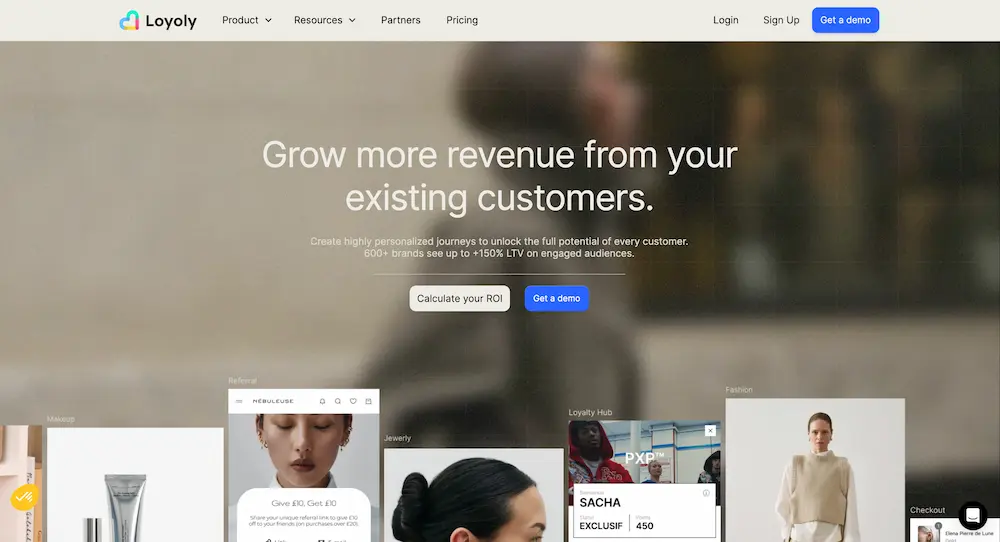
Loyoly is a post-purchase engagement platform built for ecommerce and retail brands that want to go beyond transactional loyalty. It orchestrates personalized customer journeys across 40+ mechanics (referrals, UGC, reviews, social interactions, surveys) and adapts continuously to each customer's actual behavior.
Unlike most loyalty tools, Loyoly comes with a native automation engine (triggered journeys, conditional logic), a proprietary Apple and Google Wallet developed in-house, and geo-based push notifications. It's designed for brands on Shopify and PrestaShop that want to drive LTV, reduce CAC, and build a real relationship with their customers.
Loyoly currently works with 600+ ecommerce and retail brands across fashion, beauty, food, home, and more. On average, engaged users show a 150% increase in LTV compared to non-engaged customers (Loyoly internal data, 2025).
What is Yotpo?
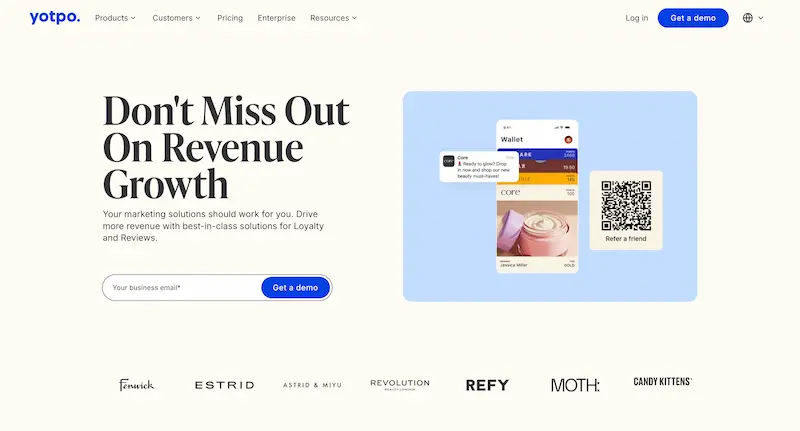
Yotpo is an ecommerce marketing platform combining loyalty, reviews, SMS, and referral in a single suite. It's one of the most established names in the space, with over 100 integrations and a strong presence among mid-size to large brands.
Yotpo's main differentiator is the integration between its loyalty module and its review engine, which allows brands to reward customers for leaving reviews and leverage that UGC directly inside their marketing stack. Its AI-powered campaign personalization is also a notable feature for teams running high-volume CRM operations.
The trade-off is complexity. Onboarding Yotpo takes time, dedicated support is reserved for top-tier plans, and omnichannel capabilities remain limited, no CEGID or Fastmag integration, no native wallet development.
What is Rivo?
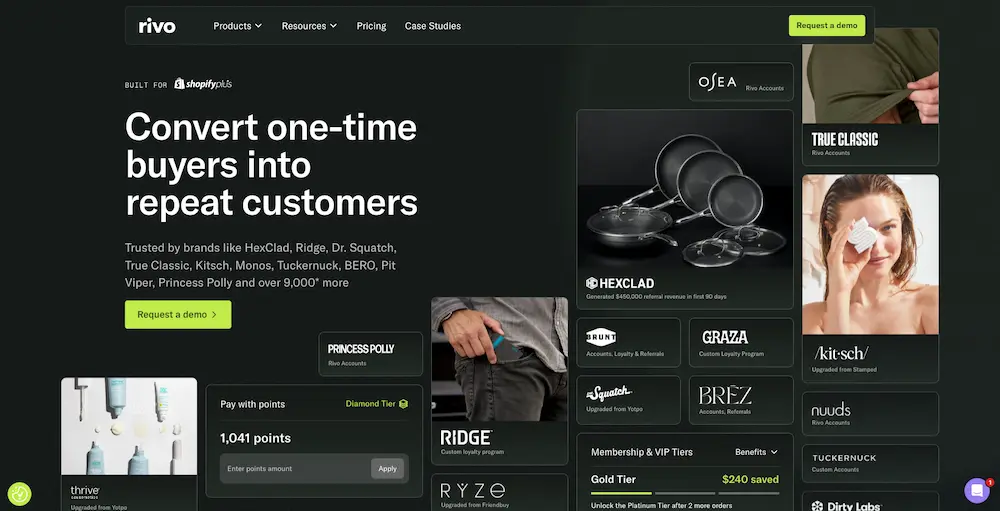
Rivo is a modern retention platform built natively for Shopify. It positions itself as developer-friendly, with an open API, webhooks, and a "Built for Shopify" badge. Brands that need deep customization and are comfortable using a Developer Toolkit appreciate Rivo's flexibility.
Rivo ships weekly product releases, which signals a fast-moving roadmap. But its footprint is essentially limited to the US DTC market, European presence is very limited. And unlike Loyoly, Rivo has no native wallet, no push notifications, and no in-store earning and redemption.
Pricing is custom from the entry level ($499/month), which makes it a significant commitment for brands that haven't already validated their loyalty strategy.
Loyoly vs Yotpo vs Rivo: feature-by-feature comparison
Let's get into what separates these three platforms on the criteria that actually drive retention performance. Each dimension matters differently depending on your brand's size, stack, and ambitions.
Engagement mechanics: who offers the most depth?
Loyoly offers 40+ engagement mechanics out of the box, with unlimited custom actions available via webhook. These include auto-verified social missions (Instagram posts, Reels, TikTok, story reshares), multi-platform review generation, UGC collection, surveys, birthday rewards, and more. The auto-verification is a major operational advantage, no manual checking required.
Yotpo covers around 20 actions. Social interactions are limited to follows, and there's no auto-verification. Review generation is solid (it's Yotpo's DNA), but UGC collection as a loyalty mechanic is absent.
Rivo doesn't publish a specific count. Social mechanics are limited to follows. No auto-verification, no UGC. This makes Rivo more of a straightforward points-and-tiers engine rather than a full engagement platform.
.webp)
Automation engine: who actually personalizes at scale?
Loyoly is the only platform among the three to include a native automation engine, triggered journeys and conditional logic built directly into the platform. This allows brands to react in real time to customer behavior, send the right reward at the right moment, and build dynamic CRM flows without relying entirely on external tools like Klaviyo for the logic layer.
Yotpo and Rivo both lack a native automation engine. They integrate with marketing automation tools, but the loyalty logic itself is static. You set up the rules, and they fire when conditions are met, there's no dynamic adaptation to individual customer paths.
For brands that want to turn their loyalty program into a genuine CRM asset, this difference is significant.
Omnichannel: who bridges online and in-store?
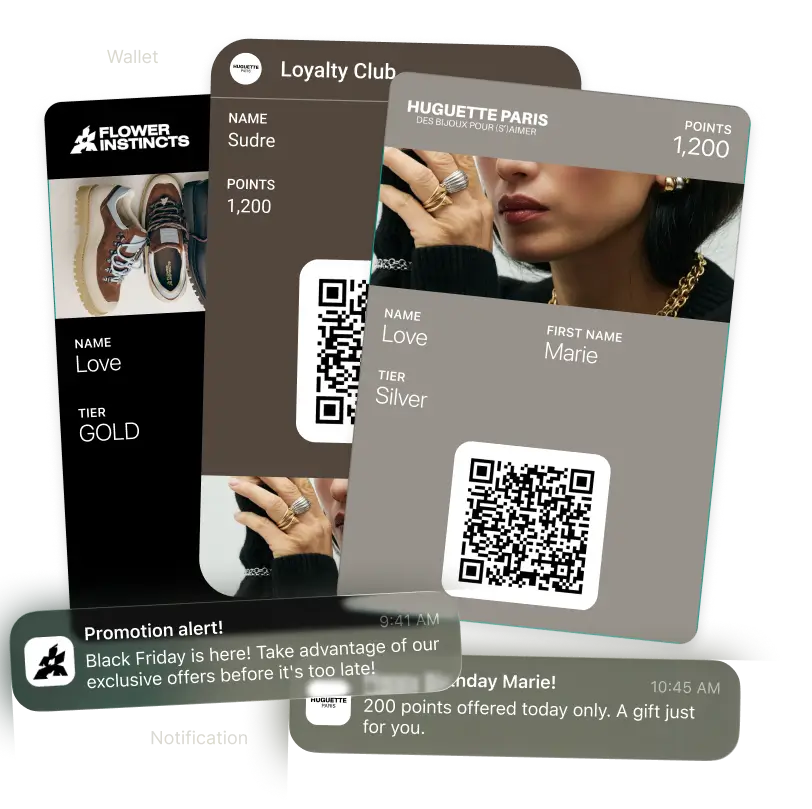
Loyoly is the clear leader here. It offers in-store earning and redemption via Shopify POS, Cegid, and Fastmag, making it one of the few loyalty platforms genuinely built for omnichannel retail. Its proprietary Apple and Google Wallet (developed in-house, not via a third-party partnership) enables dynamic card updates and geo-based push notifications. Customers can scan a QR code to redeem rewards in-store.
Yotpo offers wallet functionality via a partnership with Novel (not developed internally). In-store redemption is limited to Shopify POS via API, no Cegid, no Fastmag. No push notifications, no QR redemption.
Rivo has no wallet, no push notifications, no in-store earning or redemption beyond Shopify POS. For brands with physical retail, Rivo simply isn't a complete solution.
On-site experience and UX customization
Loyoly delivers full custom UI, custom CSS, multi-language, multi-currency, floating widget, customer account module, checkout extension, and product page extension. The checkout extension shows customers their points and lets them redeem rewards directly at checkout. The product page extension displays points earnable on each product. Brand coherence is total.
Yotpo also offers full custom UI with a review display widget (which Loyoly doesn't have). No floating widget, but strong customization options overall. Multi-language and multi-currency supported.
Rivo supports full custom UI but requires custom CSS for a clean design, it's not plug-and-play. Multi-currency support is unconfirmed. Floating widget available, but no review display widget.
Integrations and API
Loyoly currently has 20+ integrations (Klaviyo, Gorgias, Recharge, Trustpilot, Shopify POS, Cegid, Fastmag...). Its API is in development and expected in Q2 2026, this is an honest limitation worth noting if deep API connectivity is a hard requirement today.
Yotpo leads with 100+ integrations and a live API, a real advantage for complex tech stacks. Rivo offers 50+ integrations and an open API, which makes it a strong choice for developer-heavy teams building custom experiences on Shopify.
Support quality: who actually shows up?
Loyoly sets itself apart with an average support response time under 2 minutes, a dedicated account manager, strategic sessions, MBR/QBR reviews, and custom development options. For mid-market brands that don't have a full in-house technical team, this level of partnership matters.
Yotpo offers dedicated account managers and MBR/QBR, but strategic sessions and custom developments are not on the menu. Dedicated support is reserved for top-tier plans.
Rivo has dedicated account managers but no strategic sessions, no MBR/QBR, and inconsistent support quality at scale, a reported weakness as brands grow.
Loyoly vs Yotpo vs Rivo: pricing comparison
Pricing is where the three platforms diverge most sharply, and where your actual TCO (total cost of ownership) can look very different from the sticker price.
Loyoly pricing
Loyoly starts at $99/month for entry-level access. SMB plans run around $523/month, mid-market around $823/month, and enterprise pricing is custom. The pricing model is transparent and mid-to-upper market, no free plan, but no pricing surprise either.
Given the breadth of features included (automation engine, native wallet, push notifications, omnichannel, 40+ mechanics), the value-to-price ratio is strong for brands that actually use the full platform.
Yotpo pricing
Yotpo starts at $79/month for the loyalty module. SMB plans reach around $599/month, mid-market around $899/month, enterprise is custom. The catch is that Yotpo's full power comes from stacking modules (reviews, SMS, loyalty), and each module adds to the bill. A brand trying to use Yotpo's unified suite will spend considerably more than the entry price suggests.
Rivo pricing
Rivo starts at $499/month, already a significant entry point compared to the other two. All other tiers (SMB, mid-market, enterprise) are fully custom-quoted. The lack of pricing transparency makes budgeting harder, and the Developer Toolkit required for advanced customization adds a learning curve that implies internal technical resources.
Loyoly vs Yotpo vs Rivo: who is each platform for?
Choosing the right platform isn't just about features, it's about fit. Here's the honest breakdown of where each tool makes sense.

Choose Loyoly if...
You're a mid-market ecommerce or retail brand on Shopify or PrestaShop that wants to go beyond transactional loyalty. Loyoly is the right fit if omnichannel engagement is a priority (physical stores, wallet, push notifications) or if you want a platform that can genuinely drive UGC, referrals, and social amplification from a single engine. The built-in automation engine and fast support make it a strong choice for brands that want results without building a loyalty tech team from scratch.
According to the Loyoly Loyalty Benchmark 2026, brands with engaged loyalty program members see LTV increases ranging from +28% (beauty) to +117% (home & decoration) compared to non-engaged customers. The platform built to maximize that engagement matters.
Choose Yotpo if...
You're a large ecommerce brand that needs a unified marketing suite (reviews, loyalty, SMS) and you have the team and budget to onboard a complex platform. Yotpo's 100+ integrations make it a powerful choice for brands with sophisticated tech stacks. If UGC and reviews are central to your acquisition strategy and you want them tightly coupled with loyalty, Yotpo is built for that.
Choose Rivo if...
You're a Shopify-native DTC brand with an in-house development team, a strong design culture, and a US-centric audience. Rivo's open API and developer-friendly architecture give technical teams maximum flexibility to build highly customized experiences. If you don't need omnichannel, a native wallet, or deep engagement mechanics, and your main goal is a beautifully branded loyalty strategy on Shopify, Rivo can work well.
Key data: what the numbers say about loyalty program performance
Before picking a platform, it's worth grounding your decision in actual performance benchmarks. The tool is a vehicle, the strategy and the mechanics are what drive results.
From the Loyoly Industry Report 2025 (surveying 1,016 French consumers):
- 23% of consumers say an attractive loyalty program is a key reason to make a second purchase.
- 30% say they'll leave a brand if they feel their loyalty isn't rewarded.
- 59% are willing to recommend a brand they feel loyal to.
- 71% of consumers cite immediate discounts as the top incentive to stay active in a loyalty program.
- 30% value omnichannel point-earning (online and in-store) as a key driver of program participation.
These numbers reinforce why the platform you choose matters: omnichannel capability, reward depth, and ease of engagement directly correlate with program participation and business outcomes.
The Loyoly Loyalty Benchmark 2026, built from data across 600+ ecommerce brands, shows that in the fashion sector, engaged loyalty members generate +41% more orders, +12% higher AOV, and +60% higher LTV compared to non-engaged customers. In health and supplements, the LTV delta reaches +67%.
Loyoly vs Yotpo vs Rivo: the head-to-head summary
Here's the no-fluff version of what separates the three platforms on the dimensions that matter most for ecommerce brands in 2026.
Engagement depth
Loyoly leads with 40+ auto-verified mechanics including UGC, social amplification, and reviews. Yotpo covers reviews and basic social follows. Rivo focuses on transactional mechanics with limited social depth. If your UGC strategy is a priority, only Loyoly and (partially) Yotpo cover it inside the loyalty layer.
.webp)
Automation
Loyoly is the only platform with a native automation engine. Yotpo and Rivo both require external tools to handle dynamic loyalty logic. For brands that want personalized triggered journeys without bolting on a separate tool, this is a decisive difference.
Omnichannel readiness
Loyoly wins clearly: native wallet (Apple + Google), geo-based push notifications, in-store earning and redemption, QR code redemption, and PoS integrations including Cegid and Fastmag. Yotpo covers wallet via a partnership. Rivo offers none of this.
Integrations
Yotpo leads with 100+. Rivo follows with 50+. Loyoly currently has 20+ with an API coming in Q2 2026. If you need a massive integration ecosystem today, Yotpo or Rivo has the edge.
Pricing transparency and entry point
Yotpo has the lowest sticker entry at $79, but costs escalate quickly when modules are stacked. Loyoly starts at $99 with a broad feature set included. Rivo starts at $499 with fully custom pricing beyond that.
Support and partnership
Loyoly leads on support quality: sub-2-minute response time, strategic sessions, custom development. Yotpo offers strong account management for top-tier clients. Rivo has inconsistent support at scale.
To sum up: Loyoly is the strongest all-in-one engagement platform for mid-market brands that want omnichannel loyalty, automation, and deep engagement mechanics. Yotpo is the go-to for large brands needing a unified review-loyalty-SMS suite with extensive integrations. Rivo is the right pick for developer-friendly Shopify DTC brands prioritizing design and API flexibility over omnichannel depth.
Loyoly works with 600+ ecommerce and retail brands and delivers, on average, a 150% increase in LTV among engaged users. If post-purchase engagement is a strategic priority for your brand and you want a partner that shows up in under 2 minutes when something needs fixing, it's worth a look. Discover the Loyoly loyalty platform and see what a complete engagement engine looks like in practice.
FAQ
Is Loyoly better than Yotpo?
Loyoly outperforms Yotpo on engagement depth (40+ auto-verified mechanics vs. ~20), omnichannel capabilities (native wallet, in-store redemption, push notifications), and support quality (sub-2-minute response). Yotpo holds an advantage in integrations (100+ vs. 20+) and its built-in review display widget. The right choice depends on whether your priority is omnichannel engagement or a unified review-loyalty suite.
Is Loyoly better than Rivo?
For most mid-market ecommerce brands, yes. Loyoly includes a native automation engine, a proprietary Apple and Google Wallet, in-store earning and redemption, and 40+ engagement mechanics, none of which Rivo offers. Rivo's advantage is developer flexibility and a Shopify-native architecture suited to DTC brands with strong technical teams and no omnichannel needs.
What are the main differences between Loyoly, Yotpo, and Rivo?
Loyoly focuses on post-purchase engagement with 40+ mechanics, a native automation engine, and full omnichannel capability. Yotpo is a marketing suite combining loyalty, reviews, and SMS for larger brands. Rivo is a Shopify-native tool built for design-first DTC brands with developer resources. The three platforms target different maturity levels and use cases.
Which loyalty platform is best for Shopify brands?
It depends on your size and ambition. Rivo is built natively for Shopify and offers maximum developer flexibility. Loyoly runs on Shopify with deep integrations including checkout extensions, product page extensions, and Shopify POS, plus native wallet and push. Yotpo also integrates with Shopify but is better suited to larger operations. For a growing Shopify brand wanting a complete loyalty and referral engine, Loyoly is often the strongest fit.
How does Loyoly handle referral programs compared to Yotpo and Rivo?
All three platforms include referral marketing functionality. Loyoly's referral engine is embedded within a broader engagement platform, it triggers automatically (including on the Shopify "Thank You" page), tracks conversions, and integrates with automation flows. According to the Loyoly Loyalty Benchmark 2026, referral conversion rates across sectors range from 29.5% (sports) to 41.5% (fashion). Yotpo and Rivo offer referral features but without the same level of automation and engagement context.
Does Loyoly offer a free plan?
No, Loyoly does not offer a free plan. Entry-level pricing starts at $99/month. Yotpo's loyalty module starts at $79/month. Rivo's entry point is $499/month. None of the three offer a free tier, though Loyoly's feature depth at entry level is significantly broader than most competitors in the same price range.




.webp)