
.png)


Most customer loyalty programs don't actually build loyalty. That's a tough thing to say, but it's what we observe. Having supported over 600 e-commerce brands over two years, we've seen plenty of programmes that looked great on paper yet generated no real engagement.
The problem is almost never your customers' loyalty. It's the number of reasons you give them to engage.
In this guide, we share everything we've genuinely learnt: the types of programmes that perform well by sector, the rewards that convert, the mistakes we keep seeing, and data drawn from more than 500 programmes analysed in our Loyalty Benchmark 2026.
What is a customer loyalty program and how does it work?
A customer loyalty program is a marketing mechanic that rewards your customers every time they engage with your brand. A purchase, a review left, a friend referred, a post shared: all actions that generate points, benefits, or rewards.
The objective is straightforward on paper. Give your customers a reason to come back to you rather than go elsewhere. In practice, it's a direct lever on customer retention, average order value (AOV), and customer lifetime value (CLTV).
What we observe among the brands we support is that the programmes that work don't stop at purchases. They reward the entire customer journey. When a customer earns points by buying, leaving a review, and referring a friend, they're no longer just a buyer. They become an asset for your brand.
71% of consumers remain active in a programme primarily for immediate discounts on purchases (Loyoly Industry Report, 2025). That's no surprise. But it means that if your rewards aren't perceived as accessible and tangible, your programme will be ignored, regardless of how sophisticated it is.
Why some customer loyalty programs fail: the 5 most common mistakes
When you support as many brands on customer retention as we do, you start to recognise the warning signs. A stagnating points redemption rate, signed-up customers who no longer buy, a ROI that never takes off. The causes vary, but the underlying mistakes often look the same.
Mistake #1: Building the programme around purchases alone
This is by far the most common mistake. The brand sets up a points-on-purchases system and stops there. In doing so, they only activate a fraction of their customers' potential.
Our data is clear on this. When a customer completes several engagement mechanics (reviews, referrals, social interactions) the business impact is radically different. In ready-to-wear, for example, LTV increases by +60% between a low-engagement and a highly active customer (Loyoly Benchmark 2026). That's the difference between a programme that costs money and one that makes it.
Mistake #2: Rewards that are out of reach
We've worked with brands whose programme had thousands of sign-ups and a points redemption rate close to zero. The reason was always the same: rewards took too long to reach. Customers would sign up, look at the points balance required, and move on.
39% of consumers remain active in a programme because the rewards are easy to obtain (Loyoly Industry Report, 2025). If your customers feel it will take two years of purchases to unlock a £5 voucher, they won't play along.
Mistake #3: Launching the programme and never mentioning it again
A customer loyalty program is not a purchase funnel you configure once and forget. It's a communications programme in its own right. We've seen brands invest months building their programme, launch it with a newsletter, and then never mention it again.
The result: customers forget they have points, that they can refer friends, that the brand rewards them. 39% of consumers are happy to receive communications from their favourite brand at least once a week (Loyoly Industry Report, 2025). You have their permission to talk to them. Use it.
Mistake #4: Not verifying actions
Awarding points for a Google review or a social media share without checking that the action was actually completed opens the door to fraud. We've seen programmes distribute thousands of points for fictitious actions, which skews metrics and inflates costs with no return whatsoever.
This problem is more widespread than people think. The majority of platforms on the market do not technologically verify actions declared by customers. It's a blind spot that many brands discover far too late.
Mistake #5: Ignoring what drives customers away
We spend a great deal of time designing what draws customers into a programme. We spend far less time understanding what drives them out. 30% of consumers believe that loyalty that goes unrewarded can break their attachment to a brand (Loyoly Industry Report, 2025). And 72% leave primarily due to a perceived drop in quality.
A customer loyalty program does not compensate for a poor product or customer experience. It amplifies what already exists. If the foundations aren't solid, points won't change anything.
What are the 6 types of customer loyalty programs?
There is no universal customer loyalty program. The right model depends on your sector, your customer base, and what you're looking to activate first. Here are the 6 types we encounter most often, with what genuinely distinguishes them in practice.
1. Points-based programme
The most widespread, and often the starting point. Customers accumulate points with each purchase or defined action: leaving a review, following the brand on social media, referring a friend. These points are then exchanged for rewards.
When to use it: when you want a programme that's easy to understand, quick to deploy, and compatible with a broad customer base.
Best suited to: all e-commerce brands, particularly those with a regular purchase frequency. It's the foundation on which more advanced mechanics are layered.
Primary KPI: incremental revenue, measured via the activation rate , that is, the proportion of orders that include a reward from the programme. In our data, this rate ranges from 3.6% in sports & fitness to 5.7% in beauty & wellbeing (Loyoly Benchmark 2026). It's the indicator that tells you whether your programme is genuinely generating additional purchases, or simply rewarding purchases that would have happened anyway.
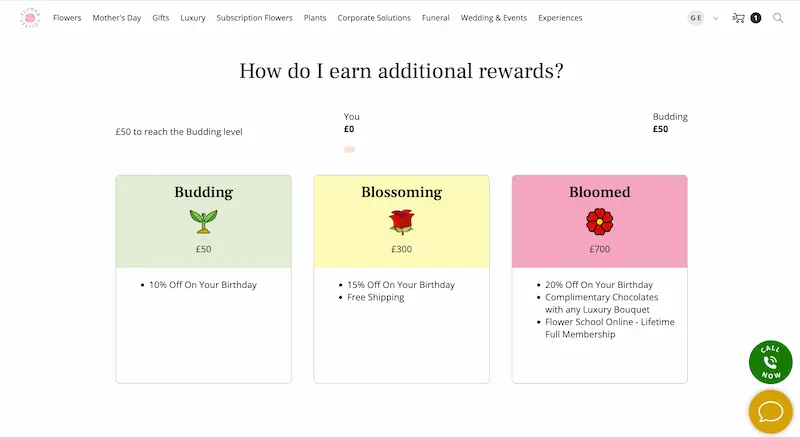
2. Tiered programme
Here, a dimension of progression is added. Customers are ranked in levels according to their engagement: bronze, silver, gold. Each tier unlocks access to increasingly exclusive benefits.
When to use it: when you want to segment your customer base and concentrate your efforts on your best customers without neglecting the others.
Best suited to: brands with a heterogeneous customer base, where some customers buy ten times a year and others just once. A tiered programme allows these profiles to be treated differently, automatically and transparently.
Primary KPIs: average order value and the LTV of your Gold customers. These are what validate that your programme is genuinely creating value for your most engaged segment. If the gap between your Gold and Bronze customers is small, your tiers aren't sufficiently differentiated.
Read our full blog post on tiered loyalty programs
3. Paid programme
Customers pay a subscription or membership fee to access premium benefits, free delivery, early access to new products, events reserved for members. Amazon Prime is the best-known example, with over 200 million members worldwide.
When to use it: when you have a sufficiently engaged customer base and genuine benefits to offer in exchange for the subscription. A paid programme without strong perceived value will hinder acquisition, not drive retention.
Best suited to: brands with a high purchase recurrence and a differentiating value proposition. Subscriptions work particularly well in beauty, dietary supplements, and food.
Primary KPI: the subscription renewal rate. That's what validates that the perceived value exceeds the cost. Members of a paid programme are 60% more likely to spend more, compared to 30% for free programmes (McKinsey Consumer Paid Loyalty Survey, 2020).
4. Value-based programme
This model rewards non-transactional behaviours: recommendations, content creation, social media engagement, CSR actions. The goal is to recognise the value your customers bring to your brand beyond their purchases.
When to use it: when you want to activate your community and generate UGC, reviews, and word of mouth in a structured way. It's often a layer added on top of an existing points programme.
Best suited to: brands with a strong community dimension, in beauty, sport, fashion, or dietary supplements. Brands with strong values that want to embody them through their programme.
Primary KPIs: volume of UGC generated, number of reviews collected, and organic reach on social media. What we observe in practice is that without a reward mechanic, the vast majority of customers don't take the time to leave a review or create content, even when they're satisfied. The reward doesn't create the desire. It removes the friction.
5. Cashback programme
Simple and direct. The customer receives a percentage of their purchases as a refund, credited to their account or usable on future purchases.
When to use it: when your audience is price-sensitive and you want a loyalty argument that's instantly understandable. Cashback speaks to everyone, with no learning curve.
Best suited to: brands positioned in a competitive market where price is a key purchase criterion. Bear in mind that cashback can trigger a race to the bottom if poorly calibrated. It must be designed as a perceived benefit, not a disguised discount.
Primary KPIs: repurchase rate and changes in average order value. Cashback must generate more revenue than it costs.
6. Coalition programme
Several brands join forces to create a shared rewards programme. Customers accumulate points across all partners, which accelerates access to rewards and strengthens overall engagement.
When to use it: when you want to extend your reach without bearing the costs of the programme alone. It's also a way to reach customers who don't yet know you, via your partners' customer bases.
Best suited to: brands whose customer base overlaps with that of complementary partners. The Nectar programme in the United Kingdom is a reference for this model, with over 24 million members.
Primary KPIs: new customer acquisition rate through partners and cross-engagement rate between the brands in the programme.
Pssst... You might find this interesting!
Loyalty programs are strategic for your brand, and we can probably help. Check out our platform!
The business results we observe among our e-commerce brands
A well-built customer loyalty program is not a cost centre. It's a growth lever. Here is what we genuinely measure among the brands we support.
A direct impact on LTV, AOV, and revenue
The data is clear. Customers engaged in a programme consistently generate more value than non-engaged customers, measured over 90 days (Loyoly Benchmark 2026):
- Home & Décor: LTV +117%, orders +61%, AOV +34%
- Pets & Accessories: LTV +85%, orders +44%, AOV +29%
- Sports & Fitness: LTV +73%, orders +39%, AOV +33%
- Health & Supplements: LTV +67%, orders +31%, AOV +26%
- Food & Drink: LTV +62%, orders +27%, AOV +25%
- Ready-to-Wear: LTV +60%, orders +41%, AOV +12%
- Beauty & Wellbeing: LTV +28%, orders +17%, AOV +9.5%
And it's not all or nothing. The more a customer gets involved, the more their value increases. At Atma, LTV increases by +50% from the 4th completed mission, and by +140% from the 7th. La Belle Boucle generated £969,400 in additional revenue in 7 months. We Are Jolies recorded +40% in average order value in 5 months.
And 26% of consumers are willing to pay more for a brand they're loyal to (Loyoly Industry Report, 2025). Every additional engagement action counts. And you can see it in the numbers.

Referrals that become a genuine acquisition channel
Referrals are often the most underestimated lever. Yet according to our data, between 30% and 41.5% of people invited by an existing customer end up making a purchase. It's an acquisition channel at near-zero cost, with customers who stay longer and spend more.
At Atma, over 80% of the £459,000 in revenue generated in one year came from referrals. That's no coincidence. 59% of consumers are willing to recommend a brand spontaneously when they feel loyal to it (Loyoly Industry Report, 2025). Word of mouth already existed within your base. The programme gives it a structure to activate it at scale.
Check this article to learn everything about referral marketing
UGC and reviews in industrial quantities
UGC has become a marketing asset in its own right. Authentic product photos, unboxing videos, and verified reviews reassure new buyers and feed your channels with no additional creative budget.
Without a programme, 12% of consumers spontaneously send content to a brand. With a reward mechanic, 59% say they're willing to leave a positive review in exchange for points (Loyoly Industry Report, 2025). The difference is considerable.
This content feeds your product pages, your adverts, your emails. Terre de Bougies collected 1,500 pieces of UGC and 645 Trustpilot reviews in 3 months. The more you engage your customers, the more you collect, the more you convert.
Strengthened brand awareness and genuine differentiation
Engaged customers don't just talk about your products. They talk about their experience with your brand. And that is precisely what creates lasting differentiation.
In a market where products are increasingly similar, it's not price or delivery that truly drives loyalty. It's the experience you offer after the purchase. And that is something your competitors cannot copy overnight.

How to build a customer loyalty program that truly performs
Many brands launch their programme by starting with the platform, or worse, by copying what a competitor is doing. That's almost always a mistake. A programme that performs is built in order: objectives first, tools second. Here are the steps we guide our brands through, along with what we've learnt at each stage.
Step 1: Define business objectives, not intentions
"Retaining our customers" is not an objective. It's an intention. An objective is increasing the repurchase rate by 10 points in 6 months, or generating 500 customer reviews by the end of the quarter.
The objective concretely determines the type of programme, the mechanics to activate, the rewards to offer, and the KPIs to track. Without a precise objective, you build a programme that tries to do everything and excels at nothing. We see this regularly with brands that contact us after a first failed attempt.
Ask yourself these three questions before anything else. Do I primarily want to retain existing customers, acquire new ones through referrals, or generate content and social proof? Your answer determines everything that follows.
Step 2: Know your customer base before building anything
A generic programme retains no one. What engages your customers is a mechanic that feels designed for them. And for that, you need to genuinely know them.
Analyse your CRM data. Who buys most frequently, who has the highest average order value, who already talks about you on social media. Motivations vary by sector and profile. What works for a dietary supplements brand won't necessarily work for a fashion brand.
What we consistently observe is that the best-performing brands are those that took the time to understand why their customers buy from them, before building anything at all.
If you don't yet have this data, start with simple surveys. Typeform, an email to your best customers, a post-purchase question. You'll be surprised what comes back.
Step 3: Choose the right structure for your brand
We outlined the 6 existing programme types above. The choice is not trivial. The wrong structure, and you'll reward the wrong behaviours, or create a programme so complex that nobody truly understands it.
A few concrete questions to help you decide. Does your customer base buy frequently or occasionally? A high purchase frequency favours a points-based programme, where each transaction creates a visible micro-reward. A low frequency but a high basket value points more towards a tiered or paid programme, where perceived value doesn't depend on purchase volume.
Is your positioning premium? A paid programme can reinforce that perception, provided the benefits are up to scratch. Do you have an engaged community on social media? A value-based programme that rewards UGC and social interactions will be far more effective than a simple points system.
What we observe among the brands we support is that the best-performing programmes are not necessarily the most sophisticated. They're the ones that are best aligned with the reality of customer behaviour.
Step 4: Design rewards that genuinely inspire
This is often where things get stuck. The rewards exist, but they don't excite anyone. Too long to reach, too generic, not visible enough.
The first reflex to have: diversify. According to our data, 97% of programmes rely solely on transactional rewards. And 77% of those programmes fail within the first two years. The reason lies in the law of diminishing marginal utility. The more a customer receives the same type of reward, the less satisfaction they derive from it.
The right approach is to blend two main families. Transactional rewards (vouchers, free products, free delivery) generate immediate ROI. Experiential rewards (VIP events, personalised services, challenges) build long-term attachment.
The most attractive rewards remain vouchers (71%), free products (57%), and promotional codes (44%). But what genuinely makes the difference is the perception of accessibility. A £5 reward reachable within the first month is worth more than a £50 reward that nobody ever reaches.
Also consider gamification. Challenges, time-limited missions, and badges add a playful dimension that extends engagement between purchases. Starbucks Rewards is the best-known example, stars to collect, personalised challenges, statuses to unlock. A programme that millions of customers follow not because they need a coffee, but because they want to reach the next tier.

Step 5: Calibrate the right number of points per pound spent
This is the step most brands rush. Too many points and your programme costs more than it generates. Too few and no one engages.
At Loyoly, the default setting is 5 points per pound spent. If you offer a £5 reward for 500 points, you're at a cashback equivalent of 5%. This ratio adjusts by sector:
- Fashion and ready-to-wear: 5 to 10%
- Beauty and skincare: 6 to 12%
- Home and décor: 7 to 12%
- Health and supplements: 5 to 15%
- Food: 2 to 5%
- Toys and childcare: 4 to 8%
On the first reward, the rule is simple. A customer should be able to access it within the month following their first purchase. Calibrate it just above what they can accumulate without buying, but reachable from the second or third purchase.
And think about real value versus perceived value. If a product sells for £20 but only costs you £10 to produce, a reward at 200 points doesn't cost you £0.10 per point but £0.05. That calculation determines whether your programme is profitable.
Step 6: Structure and animate your VIP tiers
Tiers are not just a progression mechanic. Well designed, they automatically segment your base and create a sense of belonging that goes beyond simple rewards.
The key lies in a healthy distribution. At Loyoly, we recommend the following balances as a percentage of the customer base:
- Gold tier: between 5 and 10%
- Silver tier: between 20 and 30%
- Bronze tier: between 60 and 75%
And as a percentage of revenue generated:
- Gold tier: 20 to 30%
- Silver tier: 20 to 30%
- Bronze tier: 40 to 60%
If your Gold tier includes 40% of your customers, it no longer creates exclusivity. It really is that simple.
On benefits, the principle is clear. The higher the tier, the more exclusive they must be. Visible progress bar, early access to new products, rewards reserved for the Gold tier. And always show the distance remaining to the next tier: it's the most effective gamification lever.
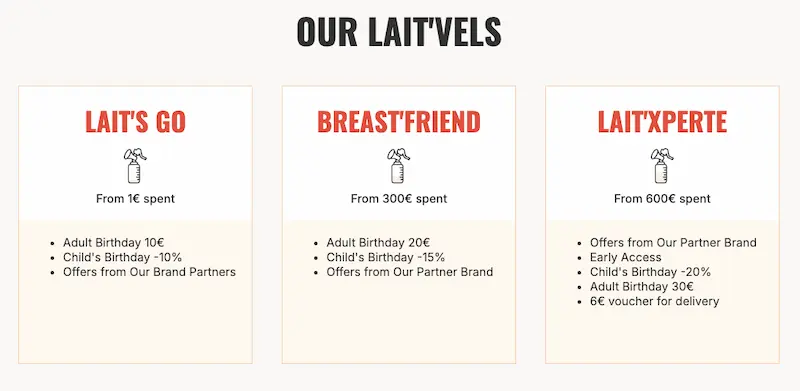
One last thing: inject your brand identity into your tiers. At Tajinebanane, the playful tier names (LAIT'S GO, SEIN'GRAAL…) transform a levels system into a fully-fledged brand experience.
Step 7: Make the programme visible at every stage of the journey
A programme your customers can't see is a programme that doesn't exist. It's a mistake we see often. The brand invests months in building it, and the programme ends up hidden in a forgotten tab in the footer.
Display available points at the point of payment. Integrate the points balance into your post-purchase emails. And simplify sign-up as much as possible: the more friction there is at entry, the fewer participants you'll have.
Email remains the preferred channel for 76% of consumers when communicating with a brand (Loyoly Industry Report, 2025). Use it to keep your programme alive throughout the year, not just at launch. Remind customers of available rewards before the holidays, before birthdays, before high-traffic periods. A programme that goes quiet is a programme that gets forgotten.
.webp)
Step 8: Choose the right tool
The platform you choose determines what you can and cannot do. And it's often a decision that brands regret not having taken more seriously upfront.
Three criteria are non-negotiable. The richness of the actions library, because a programme limited to 7 or 10 types of action will quickly box you in. Technological verification of actions, because awarding points for reviews or shares without verifying that the action was actually completed opens the door to fraud and skews all your indicators. Compatibility with your stack, CRM, ESP, review tool, point-of-sale system if you have physical retail.
And one criterion that's always underestimated: the quality of support. A bug in your programme during the sales period or a product launch can be costly. Check response times, the language of support, and whether or not a dedicated account manager is available.
Step 9: Animate, measure, and evolve
Launching the programme is 20% of the work. The remaining 80% is animation and continuous optimisation.
A programme that stagnates is a programme that slowly dies. Regularly introduce new missions, time-limited offers, and surprises for your best customers. Listen to behaviours. Which rewards are used most, which missions generate the most engagement, at what point in the journey customers drop off.
And measure the right indicators, not the number of sign-ups. The points redemption rate, the repurchase rate of engaged vs non-engaged customers, the evolution of AOV and CLTV across active cohorts. That's what will tell you whether your programme is genuinely creating value, or simply subsidising purchases that would have happened anyway.

Examples of customer loyalty programs that truly performed
Theory is all well and good. Seeing what it produces in real programmes we've supported is better. Here are a few cases that illustrate what a well-built programme can concretely deliver.
La Belle Boucle: over £1 million in additional revenue in 1 year
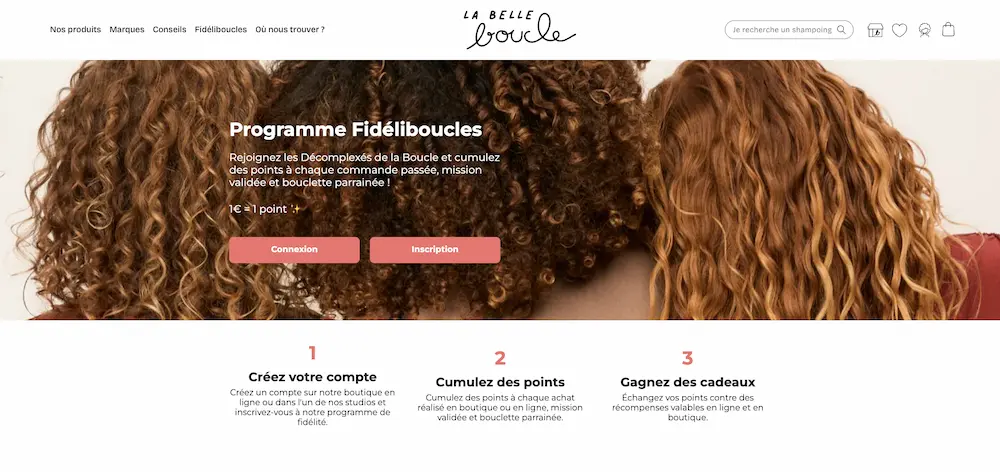
La Belle Boucle is a brand specialising in products for curly hair, with 9,000 orders per month and several physical shops in France.
A strong community, genuine potential, but a customer loyalty program that was no longer keeping pace. Impossible to measure precisely what was working, difficult to mobilise customers to generate UGC, and too little visibility on actual performance.
They launched a programme connected to Shopify POS, with engaging missions, a referral offering 10% for both the referrer and the referred, and rewards usable online as well as in-store.
In 7 months, the programme generated £969,400 in additional revenue with an annual ROI of 4,682%. Engaged customers show a repurchase rate of 73%, four times higher than non-engaged customers, and 5,834 reviews were collected on Google and Trustpilot.
Tajinebanane: +176% in orders in 9 months
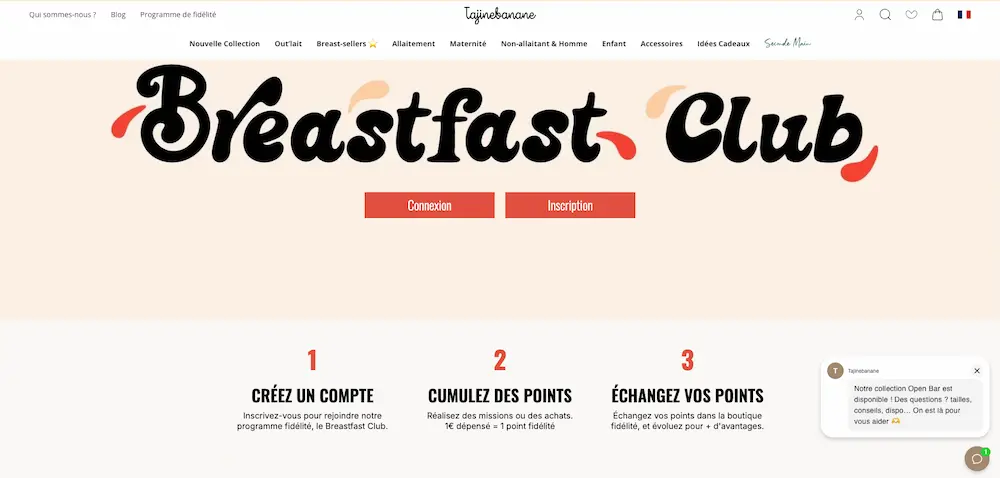
Tajinebanane is far more than a breastfeeding clothing brand. It's a tight-knit community built around parenthood, with customers who identify deeply with the brand's values. They already had a loyalty programme, but it didn't reflect that momentum. Too focused on purchases, not lively enough, it was missing everything the community was ready to do spontaneously.
The response took the form of the Breastfast Club (a tongue-in-cheek nod to the cult film) featuring £10 referrals, varied relationship-based missions, and four VIP tiers with playful names that reinforce the brand identity.
In 9 months, orders from engaged customers jumped by +176%, LTV increased by +117%, and the programme generated £258,200 in additional revenue. In parallel, 16,600 opt-ins were collected and over 450 reviews submitted.
Pimpant: +240% LTV in 8 months
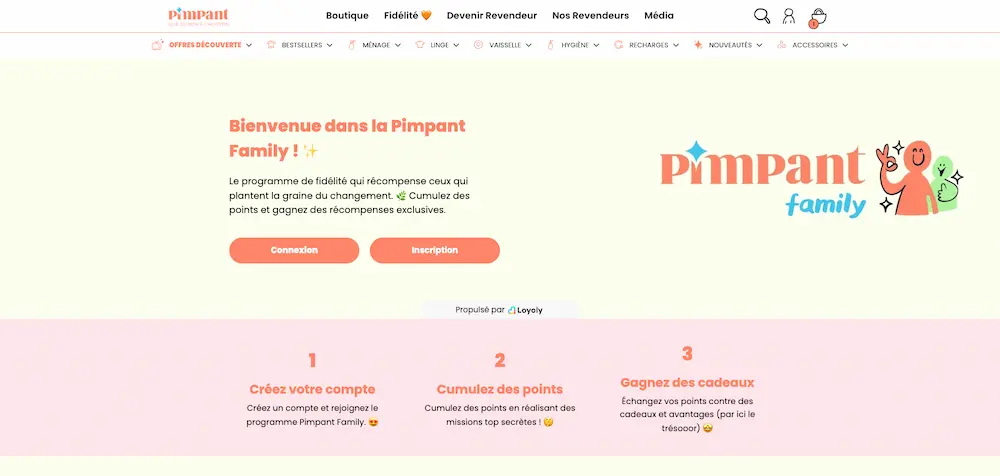
Pimpant is a French brand reimagining everyday products to make them more responsible. A strong mission, a convinced community, but a customer loyalty program that didn't do justice to that commitment. The existing mechanic was rigid, purely transactional, with no way of recognising customers who left reviews, created content, or talked about the brand to those around them.
Pimpant Family changed that. A simple mechanic (£1 spent = 1 point) enriched with relationship-based missions and a checkout extension displaying points and rewards at the moment of payment.
In 8 months, the LTV of engaged customers grew by +240%, the programme generated £90,100 in additional revenue with a monthly ROI of 17, and more than 71,600 opt-ins were collected.
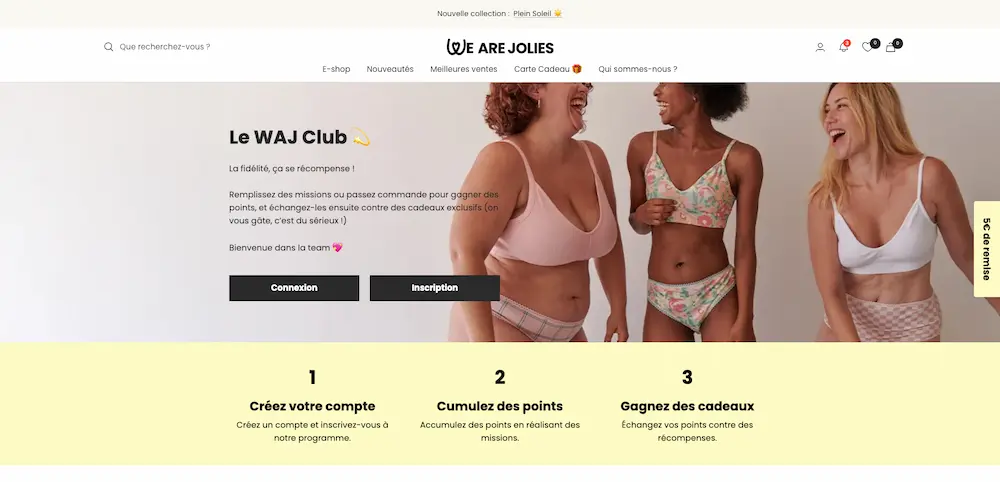
We Are Jolies: +134% LTV and +40% average order value in 5 months
We Are Jolies is an ethical and inclusive lingerie brand that celebrates all women, supported by a genuine community. The brand had a solid customer base, but a programme that couldn't bring it to life. Customers would sign up, buy, and leave without engaging any further. The challenge was to give them reasons to return, to interact, and to talk about the brand to those around them.
The new programme rewarded far beyond purchases: engagement missions, £10 referrals, three VIP tiers, and rewards ranging up to £100 vouchers or free products.
In 5 months, average order value increased by +40%, LTV by +134%, and the programme generated £288,000 in additional revenue with a monthly ROI of 176.
Piglet in Bed: +45% LTV and £153,800 generated in 3 months
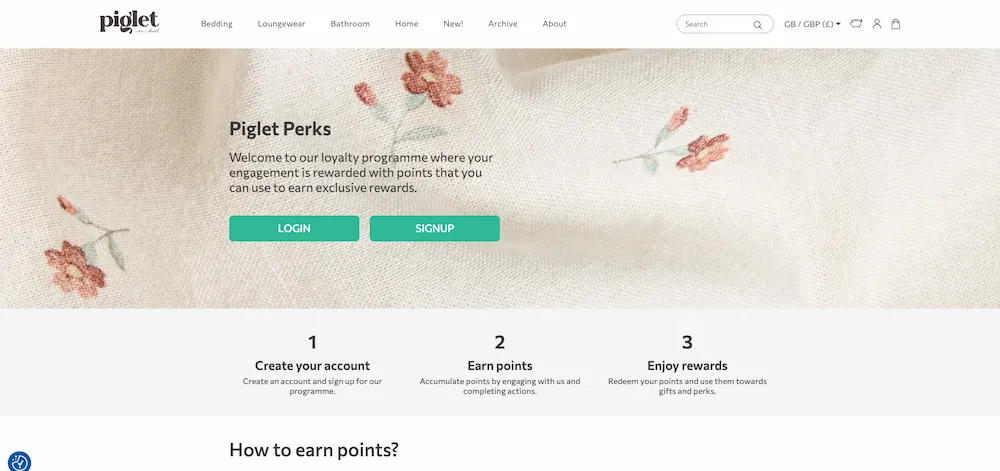
Piglet in Bed is a premium British bed linen brand founded in 2017 in Sussex, with a warm aesthetic and a community as attached to style as to comfort. The existing programme was functional but didn't reflect this world: unremarkable design, overly transactional missions, and an experience that didn't do the brand justice.
Piglet Perks changed that. A programme connected to Shopify, Klaviyo, and Trustpilot, enriched with varied relationship-based missions, four VIP tiers, and a win-win referral at £15 in both directions. The brand animates its programme continuously: a selfie in front of the Christmas window displays in December, an exclusive points multiplier for VIPs during Black Friday.
In just 3 months, the results were already there: 7,000 opt-ins collected, 700 pieces of customer feedback via survey missions, 1.8 times more orders among loyal members, +45% LTV, and £153,800 in additional revenue for a ROI of 51.
The KPIs you absolutely must track
A customer loyalty program that isn't measured will drift. We've seen brands run for two years with a single indicator: the number of sign-ups. It's the most flattering and least useful KPI. Here's what you really need to look at.
Points redemption rate
This is the first warning signal. If your customers are accumulating points without ever redeeming them, your rewards aren't being perceived as accessible or desirable. In our Loyalty Benchmark 2026, this rate ranges from 5.6% in sports & fitness to 12.3% in beauty & wellbeing. If you're below these benchmarks, something is wrong with your rewards catalogue.
Engagement mechanic participation rate
How many of your active customers have completed at least one mission beyond a purchase? A review, a share, a referral? In our Loyalty Benchmark 2026, this rate ranges from 8% in ready-to-wear to 16% in health & supplements. It may seem low, but these customers are your best brand ambassadors. They generate more revenue, stay longer, and talk about you.
AOV by cohort
Track the evolution of average order value across your engaged customer cohorts, month by month. This is what allows you to see whether engagement creates value over time, or whether the effect fades after the first few weeks. At Coucou Suzette, engaged customers show an average order value 54% higher than non-engaged ones.
Number of orders from engaged vs non-engaged customers
This is the most honest measure of what your programme is genuinely delivering. Not the total order count, which mixes everything together. The gap between those who participate actively and those who don't engage at all. At Humble+, engaged customers place 4.5 times more orders than non-engaged customers over 8 months. If this gap is small in your programme, it's subsidising purchases that would have happened anyway.
CLTV by cohort
Customer lifetime value is the indicator that brings everything else together. An average order value that grows, a purchase frequency that increases, retention that holds over time. It's CLTV that measures the cumulative effect. At Coucou Suzette, engaged customers show a LTV 5 times higher than non-engaged ones. These figures are the direct result of a programme that rewards the right behaviours, at the right time.
Programme ROI
Revenue generated through loyalty and referrals, divided by the total cost of the programme — tool and rewards combined. It's the figure your CFO will ask for sooner or later. In our Loyalty Benchmark 2026, the average monthly ROI ranges from 11.5 in beauty & wellbeing to 23.2 in sports & fitness. Better to build it from the outset with a clear methodology, rather than having to justify it under pressure during a budget review.
Customer loyalty program trends in 2026
Over the past few months, we've seen things shift in the programmes we build and optimise. Here's what's beginning to establish itself.
Personalisation is no longer a nice-to-have
The brands achieving the best results are those that adapt mechanics to each customer's real profile. A first-time buyer doesn't receive the same missions as a Gold-tier customer on their 15th order. This logic of differentiated journeys is what takes a programme from functional to genuinely engaging. Brands that are still sending the same communication to their entire base will pay for it in disengagement.
Omnichannel is becoming an expectation
Customers want to find their points and rewards everywhere — online, in-store, at pop-ups — without having to remember which account they used. What we observe among the brands we support is that as soon as you unify the experience between digital and physical, engagement rates climb. Siloed programmes create friction that directly harms retention.
Real life is making a comeback
This is the trend we didn't anticipate as much. Customers want to meet their favourite brands in person. Events, workshops, experiences reserved for VIP members. Pomponne, for example, organises physical events for its community, turning digital loyalty into concrete human connection. That's something no points mechanic can replicate on its own, and the brands that have understood this create an attachment of an entirely different nature.
AI is about to shop on behalf of your customers
This is the trend few brands are anticipating yet. AI agents are beginning to make purchasing decisions on behalf of consumers. And an agent feels nothing. It doesn't prefer your brand. It scans what's available and optimises according to legible criteria. Are there benefits? A tier? A clear reason to come back here rather than go elsewhere?
This shift reshuffles the cards. Growth will no longer be driven by campaigns, but by systems. Clean data, real-time availability, smooth logistics, solid social proof, verified reviews, authentic UGC, controlled return rates. That's what AI agents optimise for first.
A well-structured customer loyalty program fits directly into this logic. Clear tiers, explicit benefits, accessible eligibility rules. Not for your customers, but for the agent buying on their behalf. If your programme is readable by a machine, it will choose you. If it's poorly structured storytelling, it will move on.
Why your customer loyalty program must go omnichannel and how to do it
Many brands claim to be omnichannel. Few truly manage it when it comes to their customer loyalty program. Points earned online can't be used in-store. The physical loyalty card isn't connected to the online customer account. The experience is fragmented, and customers can feel it.
In our Industry Report 2025, 30% of consumers cite the ability to earn points both online and in-store as their primary motivation for remaining active in a programme.
The Wallet as a single point of contact
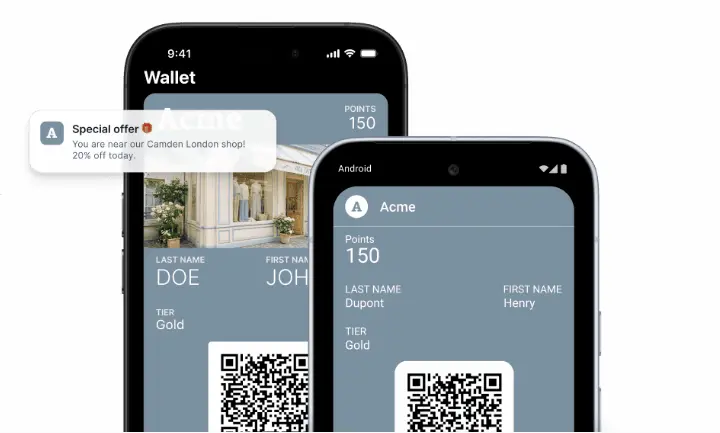
The good news is that the Wallet resolves much of this problem. Integrated into Apple Wallet and Google Wallet, the loyalty card becomes a single point of contact, accessible in-store and online, updated in real time. The customer can see their points, their rewards, their missions, with no app to download, no friction.
It's also a communication channel you genuinely control. No algorithm filtering your message, no per-send cost that spirals at scale. Wallet notification read rates reach up to 5 times those of email. You can remind a customer that their points are about to expire, notify them of their new VIP status, or send them an offer when they walk past your shop. Without any intermediary.
Integration with your point-of-sale system
The Wallet isn't enough if your point-of-sale system doesn't communicate with your loyalty programme. This is often where omnichannel comes to a halt. The programme exists online, but in-store the sales assistant can't see the customer's points, can't apply a reward, doesn't know whether they're a VIP member. The experience is broken before it even begins.
The connection between your programme and your POS system (Shopify POS above all) allows points to be synchronised in real time with every physical transaction. An in-store purchase generates points that are immediately visible online. A reward earned on the website can be used in-store without friction. It's this consistency that transforms a multichannel programme into a truly omnichannel one.
At La Belle Boucle, it was precisely this Shopify POS connection that allowed customers to enjoy the same experience in-store and online — and generate £969,400 in additional revenue in 7 months.
How to choose your loyalty platform
The choice of tool determines what you can and cannot do. Here are the four solutions we see most often among e-commerce brands, with what genuinely distinguishes them.
Loyoly
The post-purchase engagement platform with over 40 verified mechanics, an integrated wallet, and compatibility with Shopify and PrestaShop. For brands that want to go beyond a points programme and activate the full range of customer behaviours — from UGC to referrals and reviews. What truly sets it apart: actions are technologically verified, support is available in French with a response time of under 3 minutes and a dedicated account manager. Its only real weakness: it's less well-known than Yotpo or Smile.io on the international market.
Yotpo
A suite combining loyalty, customer reviews, and UGC in a single ecosystem, well regarded among Shopify Plus brands with substantial budgets. Shopify and Klaviyo integrations are robust, and customer review generation is well established. However, the pricing becomes difficult to justify for growing brands, actions are not technologically verified, and several users report long support response times.
Smile.io
The most accessible solution on the market, from $49/month, with quick onboarding and a rating of 4.9/5 on the Shopify App Store. Ideal for small shops launching their first programme. The limitation is clear: only 10 types of actions available, no technological verification, and no ability to reward UGC creation.
LoyaltyLion
Classic retention and referral mechanics, well integrated into the Shopify ecosystem, for mid-market brands looking to cover the basics. The solution is stable and proven in this segment. But with only 7 types of actions available, pricing starting at $199/month, and incompatibility with PrestaShop, it quickly reaches its limits for brands wanting to go further.
For a full comparison of features, pricing, and integrations, see our selection of the best loyalty software in 2026.
FAQ
How long does it take for a customer loyalty program to become profitable?
Between 2 and 6 months. Two variables make the difference: purchase frequency and average order value. High repeat purchases with a small basket reach profitability quickly. An infrequent purchase with a large basket takes longer and requires an active referral programme to compensate. So'Cup achieved a positive ROI in 2 months. What accelerates it in all cases: quickly accessible rewards and regular communication from launch.
How do you prevent points from piling up and never being redeemed?
Three levers: regularly remind customers of their points balance by email, create an expiry date to generate urgency, and ensure the rewards are sufficiently attractive to make redeeming them worthwhile. A redemption rate that's too low always signals a problem with the rewards catalogue.
Does a customer loyalty program work for a small e-commerce shop?
Yes, provided you don't over-engineer it. La Crème Libre had 500 to 600 orders per month at launch. In 4 months, the brand achieved +150% LTV and 167 reviews collected. The size of the base is not the limiting factor. It's the relevance of the mechanics that makes the difference.
What's the difference between a loyalty programme and a subscription programme?
A loyalty programme rewards behaviours: purchases, reviews, referrals. It's free and open to all. A subscription programme requires a financial commitment in exchange for premium benefits. The two are complementary, the first broadens engagement, the second monetises it.
A customer loyalty program rewards customers for their purchases and engagement behaviours in order to increase retention, AOV, and CLTV. Its effectiveness rests on the relevance of the rewards, the personalisation of customer journeys, and the quality of the omnichannel experience.
Loyoly's advice:
What we consistently observe among underperforming brands: their programme is limited to purchases. They reward the transaction, not the relationship. Activating reviews, UGC, referrals, and social interactions through verified mechanics is what takes a programme from functional to genuinely profitable. That's precisely what Loyoly enables you to do, with over 40 engagement mechanics and journeys adapted to each customer's real level of engagement.